

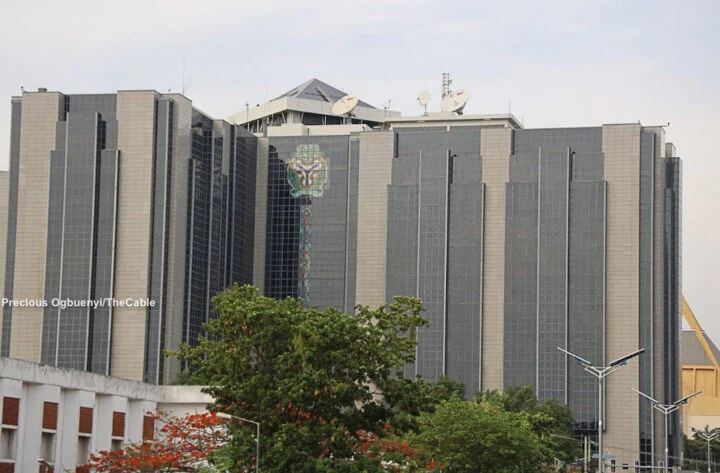
…CBN slashes interest rate to 23%, external balances strengthen
By Emmanuel Olugua
The Presidency on Tuesday celebrated a fresh set of economic indicators from the Central Bank of Nigeria (CBN), describing them as further evidence that the economic reforms of President Bola Ahmed Tinubu are yielding results.
The figures showed Nigeria’s foreign reserves rising to $55.25 billion as of September 18, 2026, which the Presidency said was the highest level in 18 years and sufficient to finance about 11.3 months of imports of goods and services.
The positive external-sector numbers came as the Monetary Policy Committee (MPC) of the CBN reset the benchmark Monetary Policy Rate (MPR) from 26.5 per cent to 23 per cent, a significant downward adjustment in the headline policy rate.
Special Adviser to the President on Information and Strategy, Bayo Onanuga, hailed the developments, saying the new figures showed that the Tinubu administration’s economic reform agenda was strengthening the Nigerian economy.
According to figures presented at the 307th meeting of the MPC, Nigeria’s current account surplus jumped by 67.92 per cent from $4.49 billion in the first quarter of 2026 to $7.54 billion in the second quarter.
The country’s balance of payments surplus also strengthened, rising from $2.38 billion in the first quarter to $3.51 billion in the second.
CBN Governor, Olayemi Cardoso, said the improving external position had helped reduce pressure on the foreign exchange market as Nigeria rebuilt its external buffers.
The latest indicators reinforce the administration’s argument that the difficult reforms undertaken since 2023 are beginning to translate into greater macroeconomic stability. President Tinubu had said in August that the economy was stabilising following what he described as the “hard part” of implementing reforms, pointing to rising reserves, trade surpluses, and improving investor confidence.
Announcing the MPC decision in Abuja, Cardoso said the committee reset the MPR and recalibrated the Standing Facilities Corridor to +50/-300 basis points around the MPR, from +50/-450 basis points.
The Cash Reserve Requirement was retained at 45 per cent for deposit money banks, 16 per cent for merchant banks, and 75 per cent for non-TSA public-sector deposits.
Cardoso stressed that the resetting of the MPR was principally an operational realignment intended to strengthen monetary policy transmission rather than, by itself, a change in the underlying monetary policy stance.
He said the MPC was encouraged by what it described as the increasing resilience of the economy, including moderating inflation, stronger external reserves, improved external-sector fundamentals, and investor confidence.
Cardoso also used the occasion to assess the performance of the CBN management three years after assuming office, declaring that the apex bank had made substantial progress in restoring confidence and returning monetary policy to its core mandate.
“We have done well at CBN,” he said, recalling that the current leadership inherited a period of severe exchange-rate instability, elevated inflation, and weakened confidence in the currency.
Financial expert and Director of the Institute of Capital Market Studies, Prof. Uche Uwaleke, welcomed the reduction in the MPR, saying moderating inflation, exchange-rate stability, improved foreign-exchange liquidity and rising external reserves provided justification for the decision.
For the Presidency, the combination of record reserves, stronger external balances, easing inflationary pressures and the reset of the benchmark interest rate represents another milestone in its effort to move the economy from the painful reform phase towards stability and growth.
Discover more from Keeping Them Honest
Subscribe to get the latest posts sent to your email.