

…Global agency says fuel import cuts boosted reserves, strengthened current account surplus for FG
By Emmanuel Olugua
The operational success of the Dangote Petroleum Refinery & Petrochemicals is emerging as a major force behind Nigeria’s improving foreign reserves and renewed investor confidence, following the sovereign credit rating upgrade announced by S&P Global Ratings.
In its latest assessment, S&P upgraded Nigeria’s long-term foreign and local currency sovereign credit ratings from “B-” to “B”, citing stronger economic growth, improved external balances, rising crude oil production and expanded domestic refining capacity as critical drivers of the country’s economic recovery.
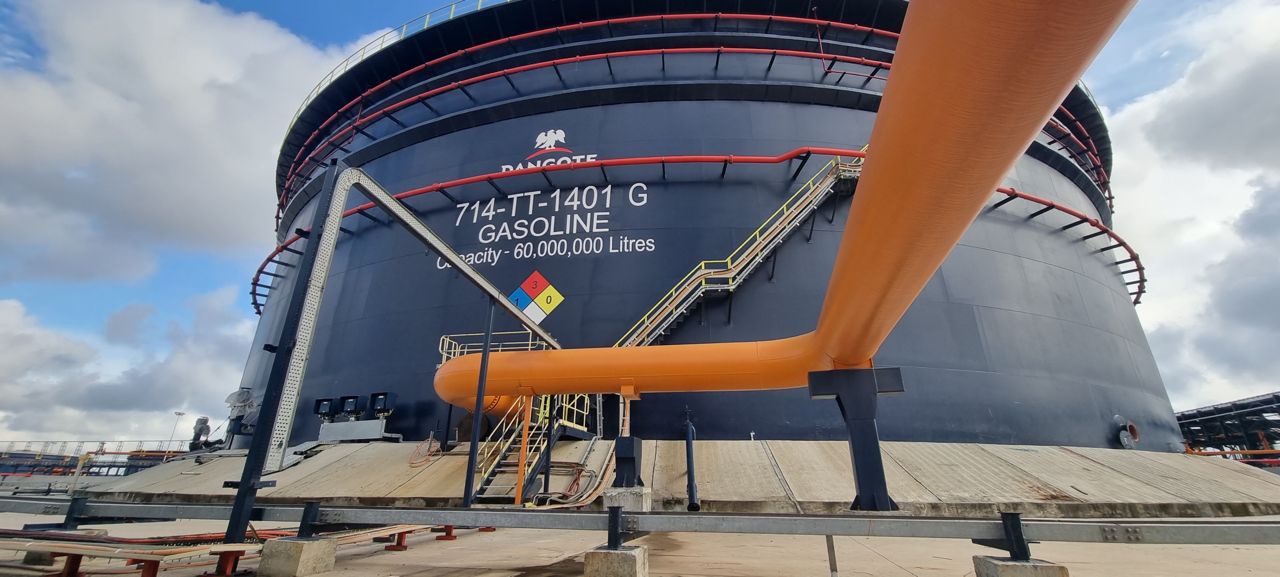
At the centre of the improved outlook, according to the global ratings agency, is the rapid ramp-up of the 650,000 barrels-per-day Dangote Refinery, which it said is already transforming Nigeria’s balance of payments position and reducing pressure on the foreign exchange market.
S&P noted that the refinery’s near full-capacity operations are significantly reducing Nigeria’s dependence on imported refined petroleum products, improving foreign exchange liquidity and strengthening the country’s current account surplus.
“Significant refining capacity is now also online; Dangote Industries Ltd.’s large-scale refinery and petrochemical complex has ramped up to near its maximum capacity of 650,000 barrels per day,” the report stated.
The agency projected that Nigeria’s current account surplus would rise to 5.8 per cent of GDP in 2026, up from 4.8 per cent in 2025, with increased domestic refining and hydrocarbon exports expected to play a major role in sustaining the improvement.
S&P further disclosed that Nigeria’s foreign exchange reserves have climbed sharply from about $33 billion in 2023 to nearly $50 billion by early 2026, aided partly by lower demand for imported fuel following the commencement of operations at the Dangote Refinery.
Economic analysts say the refinery’s impact is already being felt across Nigeria’s macroeconomic landscape, particularly in easing pressure on the naira, reducing import bills, and improving dollar liquidity within the financial system.
The report also highlighted the refinery’s role in guaranteeing the availability of refined fuel, gas, and fertiliser for the domestic market, while shielding the country from global supply disruptions linked to geopolitical tensions in the Middle East.
According to S&P, Nigeria’s improving external position has also been supported by the removal of fuel subsidies, exchange rate liberalisation, and higher crude oil production driven by improved security interventions in the Niger Delta.
Beyond Nigeria’s immediate economic gains, the ratings agency said the Dangote Refinery is positioning the country as an emerging exporter of refined petroleum products, marking a significant transition from its long-standing dependence on crude oil exports alone.
S&P disclosed that Dangote Industries has already unveiled plans to conduct feasibility studies aimed at expanding refining capacity from the current 650,000 barrels per day to about 1.4 million barrels per day.
The agency noted that the planned expansion, combined with the rehabilitation of other local refineries, could further strengthen Nigeria’s external reserves, improve the balance of payments, and deepen industrial growth over the coming years.
While acknowledging that global crude oil prices and market-driven pricing mechanisms still influence domestic fuel costs, S&P maintained that Nigeria’s growing local refining capacity provides greater energy security and reduces exposure to international supply shocks.
The report equally linked Nigeria’s improving macroeconomic outlook to reforms introduced since 2023, including fiscal restructuring, higher petroleum revenue remittances, and efforts to improve oil production efficiency.
Despite persistent inflationary pressures and structural challenges such as a narrow tax base and low formal employment levels, S&P said ongoing reforms and stronger industrial capacity are helping to sustain economic growth and bolster investor confidence in Africa’s largest economy.
Discover more from Keeping Them Honest
Subscribe to get the latest posts sent to your email.