

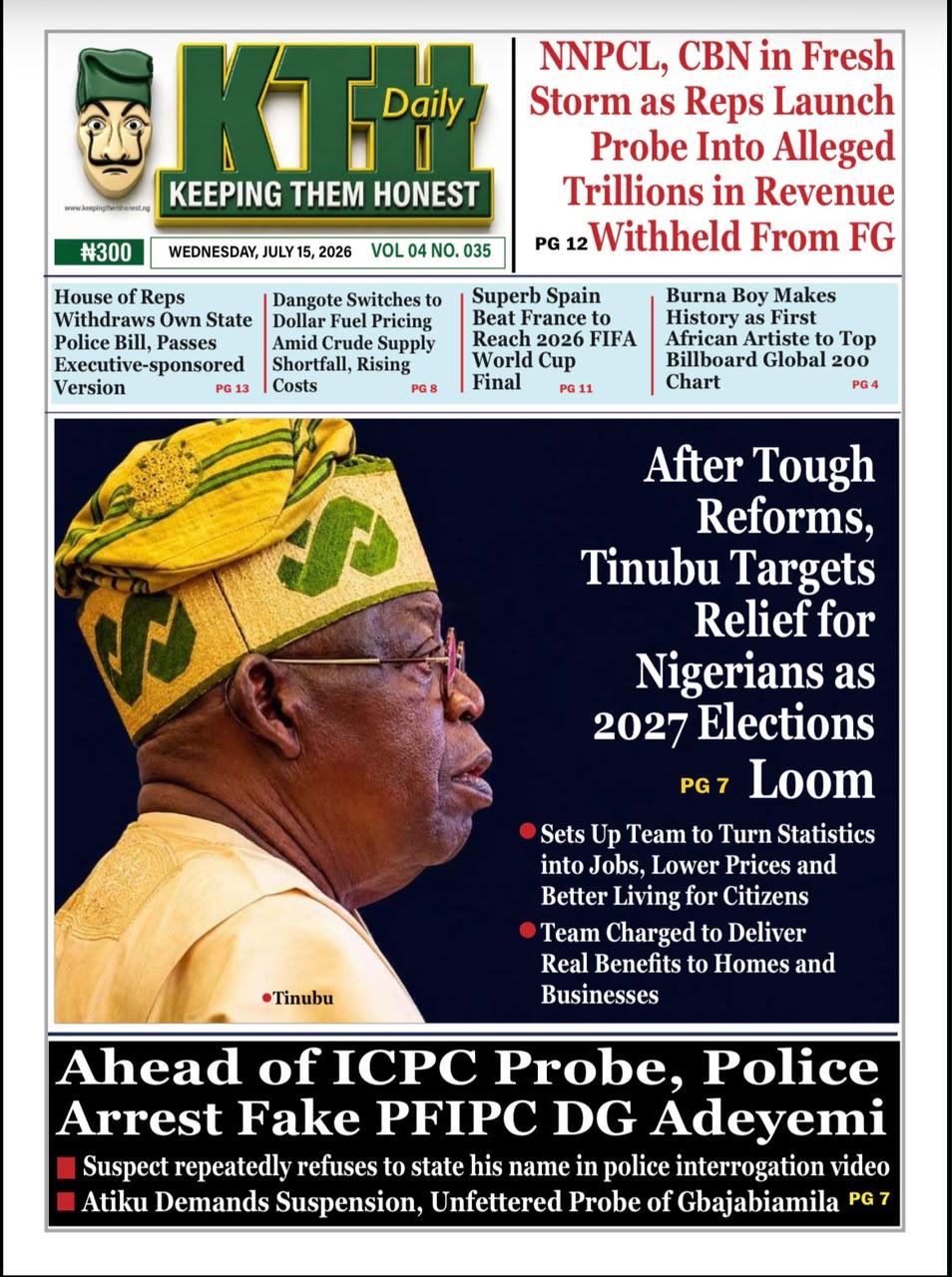
…. Sets Up Team to Turn Statistics into Jobs, Lower Prices and Better Living for Citizens
…Team Charged to Deliver Real Benefits to Homes and Businesses
By Chike Ofili
The Federal Government has acknowledged that while recent economic reforms have stabilised Nigeria’s macroeconomic outlook, the real test now is ensuring that the gains are reflected in the everyday lives of citizens, prompting the inauguration of a high-powered Ministerial Advisory Committee (MAC) to help drive the next phase of economic transformation.
The committee, inaugurated in Abuja on Tuesday by the Minister of Finance and Coordinating Minister of the Economy, Mr. Taiwo Oyedele, is expected to provide strategic advice on fiscal policy, public financial management, economic coordination and the implementation of reforms aimed at delivering tangible benefits for businesses, households and communities across the country.
The move comes amid growing public concern over the high cost of living despite government assurances that major reforms, including the removal of fuel subsidy, exchange rate liberalisation and sweeping tax reforms, have begun restoring macroeconomic stability.
Speaking during the inauguration, Oyedele said Nigeria had already undertaken some of the most far-reaching economic reforms in its recent history, but stressed that the next priority must be translating improved economic indicators into measurable improvements in the welfare of ordinary Nigerians.
According to him, the committee will strengthen evidence-based policymaking, improve public financial management, deepen stakeholder engagement and provide independent advice that will help the government implement reforms more effectively.
He explained that the body was deliberately constituted as an external, non-executive advisory committee to offer objective perspectives without duplicating the responsibilities of existing government institutions.
Rather than merely endorsing government policies, the committee, he said, would challenge assumptions, identify emerging economic risks, evaluate policy options, and recommend practical solutions capable of strengthening fiscal sustainability and improving Nigeria’s economic competitiveness.
“The work before us is not merely about managing today’s challenges; it is about building the institutional foundations for a stronger, more resilient, and globally competitive Nigerian economy. We must continue to pursue reforms with courage while ensuring that implementation delivers tangible improvements in the daily lives of our people,” the minister said.
Oyedele added that the advisory body would serve as a bridge between government, the organised private sector, academia, and development partners to ensure that economic policies continue to benefit from broad-based expertise and constructive feedback while reflecting international best practices suited to Nigeria’s realities.
The committee is chaired by Mr. Abubakar Sulaiman, with Dr. Ayo Teriba serving as Vice Chairman and Idris Belo-Osagie as Secretary. Its membership comprises economists, financial experts, business leaders, public policy professionals, academics, and representatives of major private sector organisations, all serving on a voluntary basis.
Responding on behalf of members, Sulaiman pledged that the committee would provide honest, evidence-based, and independent advice in the national interest.
He said the committee had not been constituted to merely validate existing government positions but to challenge conventional thinking, introduce fresh perspectives, and support decision-making through rigorous analysis and professional integrity.
According to him, members would match the government’s sense of urgency by offering practical recommendations capable of producing meaningful economic outcomes.
Under its terms of reference, the committee will advise the government on macroeconomic strategy, fiscal policy, productivity, economic growth, fiscal governance, government efficiency, accountability, and stakeholder engagement.
It will also prepare periodic fiscal risk assessments, policy recommendations, stakeholder impact analyses, and early-warning reports designed to strengthen government planning and improve policy execution.
The Federal Ministry of Finance said the establishment of the committee underscores the administration’s commitment to institutionalising evidence-based policymaking, strengthening collaboration with the private sector, and sustaining reforms aimed at achieving long-term economic stability, stronger public finances, and shared prosperity for Nigerians.
Discover more from Keeping Them Honest
Subscribe to get the latest posts sent to your email.