

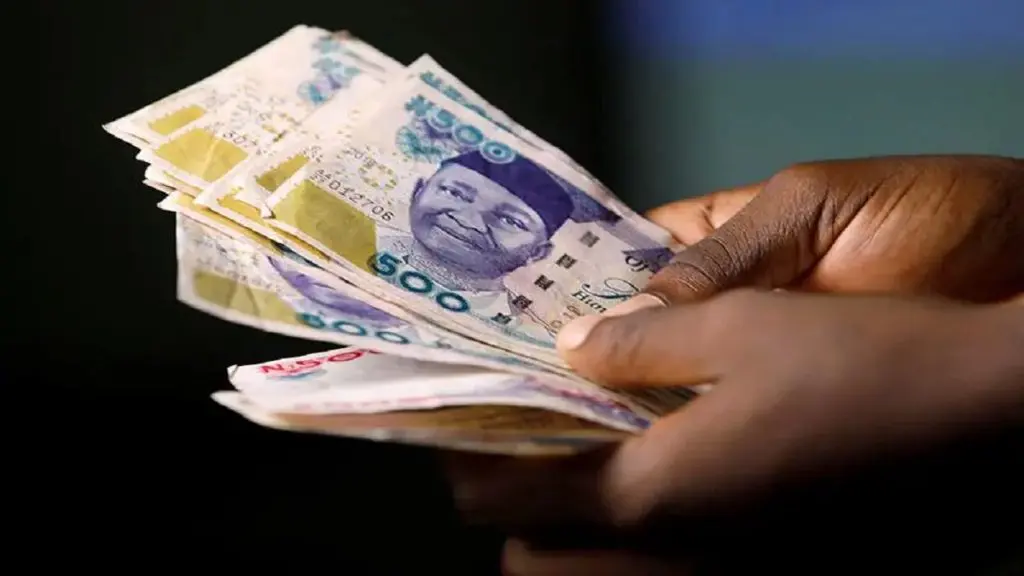
…Currency sheds N27.12 in two days—Observers fear rising anti-reform rhetoric could unsettle investor confidence ahead of 2027 polls
Nigeria’s foreign exchange market may be beginning to feel the first tremors of the 2027 election season, as the naira weakened sharply against the United States dollar despite the country maintaining a robust external reserves position of more than $55 billion.
The naira lost N27.12 against the dollar in just two trading days at the official foreign exchange market, sliding to N1,361.84/$ on Friday from N1,334.72/$ on Wednesday — a depreciation of about 2.03 per cent.
The currency also weakened at the parallel market, where Bureau de Change operators quoted the dollar at about N1,375, even as Central Bank of Nigeria data showed external reserves at $55.16 billion as of October 22.
The movement is attracting attention because it comes just as Nigeria formally enters the decisive phase of the political season ahead of the January 16, 2027 presidential and National Assembly elections. INEC has fixed the presidential election for that date.
Economic analysts and market observers say it is too early to attribute the naira’s latest weakness solely to politics, noting that foreign exchange rates respond to several factors, including dollar demand, portfolio flows, oil receipts, liquidity, and market positioning.
However, they say election uncertainty can introduce an additional “political risk premium” into emerging markets as foreign portfolio investors reassess exposure and wait for greater clarity about the direction of economic policy after an election.
The question confronting investors in Nigeria, analysts say, is particularly significant because the January contest is increasingly presenting competing approaches to some of the economic reforms implemented by President Bola Tinubu since 2023.
The Tinubu administration abolished the decades-old petrol subsidy, liberalised the foreign exchange market, and introduced fiscal and tax reforms which, although painful for households, have won positive assessments from international financial institutions and improved several macroeconomic indicators.
President Tinubu, followed by the Finance and Coordinating Minister of the Economy, Taiwo Oyedele, said only last week that the government would not return to petrol subsidy or multiple exchange rates, telling investors and international institutions that policy reversal was off the table. The government argues that the reforms have strengthened reserves, improved public finances, and created a more sustainable foundation for private investment.
But the election has introduced uncertainty over whether every element of that policy framework would survive a change of government.
ADC presidential candidate Atiku Abubakar has repeatedly pledged to restore petrol subsidy if elected, putting him directly at odds with one of the Tinubu administration’s flagship reforms. Peter Obi of the NDC has taken the same position about subsidy, claiming that what needs dealing with is the corruption in the system, even though he says he would retain the floating exchange-rate system and strengthen the naira through higher domestic productivity.
Analysts say such sharply differing policy prescriptions can naturally make some investors more cautious in the run-up to an election.
For foreign investors, observers say, the concern is about policy continuity, predictability, and the rules governing capital.
Portfolio investors can reduce positions, delay new commitments, or move into shorter-term assets when they perceive heightened uncertainty. Even relatively modest changes in foreign portfolio flows can affect dollar supply and sentiment in an FX market.
Observers therefore caution against interpreting the naira’s N27.12 fall as evidence of a new currency crisis. Nigeria’s $55.16 billion reserve position provides a substantial external buffer, while the currency remains far stronger than some of the levels witnessed during earlier periods of FX instability.
Instead, analysts say the coming weeks will show whether the latest depreciation is a temporary market adjustment or the beginning of a broader election-related risk repricing.
President Tinubu formally launched his re-election campaign on Saturday as the political contest gathered momentum, while INEC has scheduled the presidential and National Assembly elections for January 16.
For the foreign exchange market, economists say January may become a referendum on whether Nigeria stays the course on the economic reforms of the last three years, and that investors may increasingly price that uncertainty into their decisions before Nigerians cast their ballots.
Discover more from Keeping Them Honest
Subscribe to get the latest posts sent to your email.