

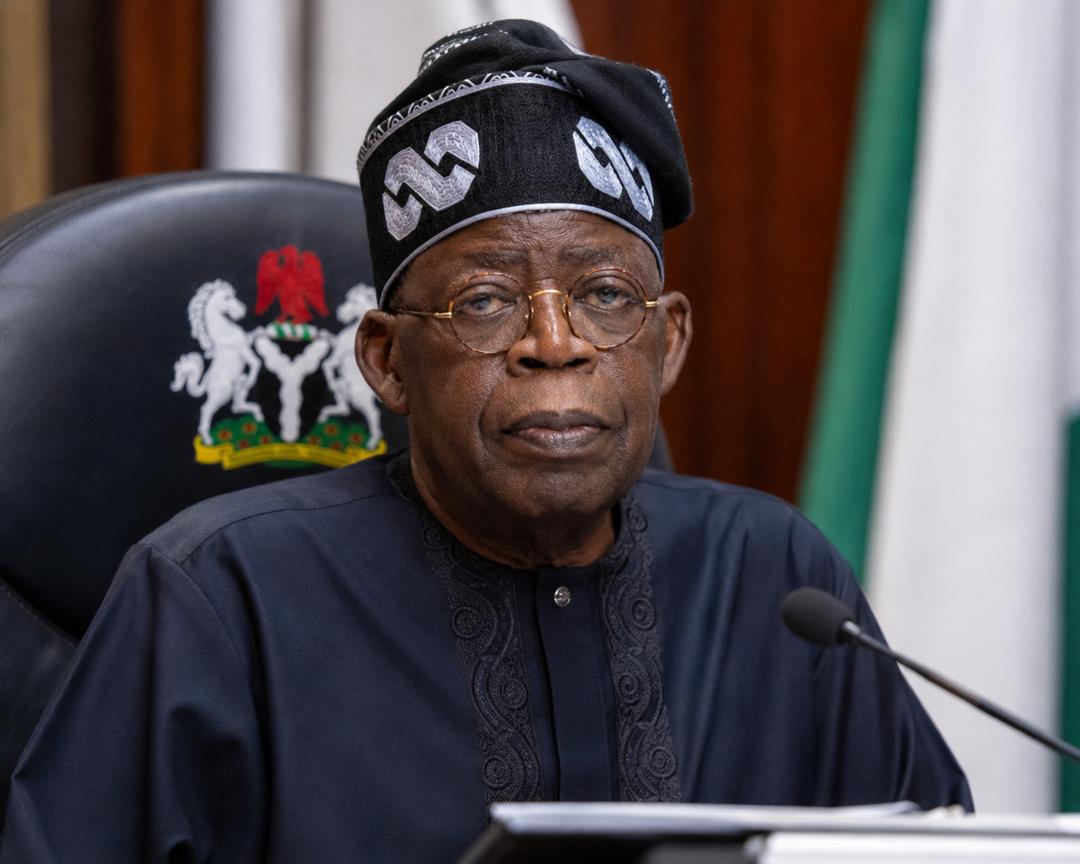
President Bola Tinubu has assured local and international investors of regulatory clarity, policy stability, and a predictable business environment as Ogun State sealed agreements with global ports and logistics giant DP World for the development of the Gateway Deep Seaport and the Blue Marine Special Economic Zone.
Tinubu spoke in Paris, France, at the signing of Memoranda of Understanding between the Ogun State Government and DP World for the two projects, which are expected to attract an initial investment exceeding $7 billion into Nigeria.
At full development, the projects are projected to create more than 50,000 direct jobs, generate additional indirect employment, and significantly boost Nigeria’s non-oil exports, manufacturing, and maritime trade.
Governor Dapo Abiodun led the Ogun State delegation to the ceremony, attended by Minister of Marine and Blue Economy Adegboyega Oyetola, Nigeria’s Ambassador to France Emmanuel Ayodele Oke, Nigerian Ports Authority Managing Director Dr Abubakar Dantsoho, and senior officials of DP World and financial adviser SkyKapital.
DP World Group Chief Executive Officer Yuvraj Narayan and other executives of the international ports operator were also present.
Tinubu described the agreements as a significant milestone in Nigeria’s drive to attract foreign direct investment and position the country as a major maritime, logistics, manufacturing, and export hub.
“The agreements before us bring together vision, expertise, capital, and execution capacity,” the President said.
He assured DP World and other investors that the Federal Government would provide regulatory and institutional support necessary to move the projects from agreements to actual implementation while holding all parties accountable for their commitments.
The proposed Gateway Deep Seaport at Ogun Waterside will have a four-kilometre berth and an 18-metre draft, enabling it to receive larger, deeper-draft vessels used in modern international shipping.
The project is expected to help decongest the Lagos port corridor, reduce pressure on Apapa and Tin Can Island ports, and cut logistics costs and delays confronting importers and exporters.
It is also being positioned as a major gateway into the African Continental Free Trade Area, giving Nigerian businesses greater access to a continental market of about 1.4 billion people.
The Blue Marine Special Economic Zone, meanwhile, is proposed to occupy about 10,000 hectares and accommodate manufacturing, processing, and export-oriented industries.
Tinubu said the zone was already attracting interest from major international manufacturing and industrial companies.
“Within the zone, imported inputs will be transformed into finished goods, Nigerian raw materials will be processed for export, and, most importantly, our young men and women will find dignified, productive, and sustainable employment,” he said.
The President described the deep seaport as the infrastructure necessary to unlock the full economic potential of the industrial zone.
“A port moves cargo; a port integrated with a special economic zone helps to build an economy. Each reinforces the other,” he said.
Tinubu commended Abiodun and the Ogun State Government for securing the land, developing the investment framework, and reducing project risks, describing the partnership between the federal and state governments as an example of cooperative federalism.
He pledged federal support for road, rail, and power connectivity while promising stronger investment security, maritime protection, and the removal of unnecessary bureaucratic obstacles.
The President identified the Lagos-Calabar Coastal Highway as a critical component of the emerging industrial and maritime corridor.
According to him, the 28-kilometre Ogun section of the 700-kilometre highway, scheduled for completion before the end of the year, would provide a crucial transport connection between the proposed port, economic zone, Lagos, the Nigerian hinterland, and other African markets.
Tinubu said the projects would also form part of a wider strategic corridor incorporating the proposed Nigerian Navy Operating Base and Dockyard and the OK LNG Project, linking maritime infrastructure with Nigeria’s industrial, energy, and gas-export ambitions.
He acknowledged that despite Nigeria’s strategic position at the centre of West African trade, port congestion, inadequate draft capacity, and logistics bottlenecks had continued to raise the cost of doing business.
The Gateway Deep Seaport and Blue Marine Special Economic Zone, he said, were designed to tackle those constraints directly.
“These agreements envisage an initial investment of more than $7 billion in the Nigerian economy,” Tinubu said.
“This is economic diversification made tangible. This is industrialisation made visible. This is Renewed Hope in action.”
The President urged Ogun State and the investors to move quickly from the signing ceremony to implementation, pledging that the Federal Government would continue working with states to facilitate investments capable of creating jobs, expanding productive capacity, and generating value for Nigerians.
Discover more from Keeping Them Honest
Subscribe to get the latest posts sent to your email.