

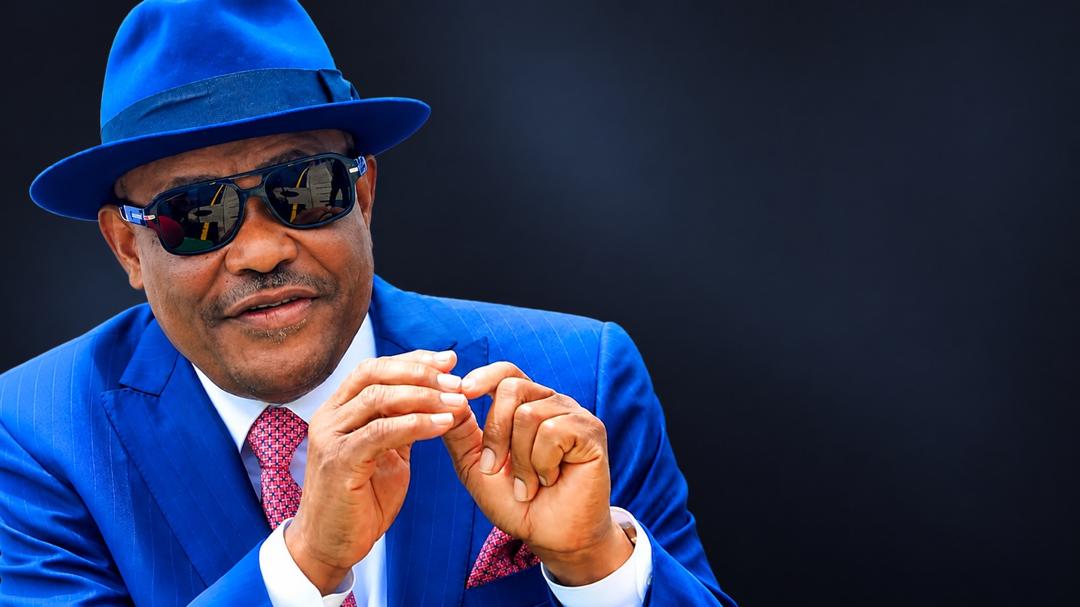
…Says G5 strategy was political calculation, not election rigging
By Yinka Giwa
Minister of the Federal Capital Territory (FCT), Nyesom Wike, has opened up on the political calculations deployed by the defunct G5 governors in the 2023 presidential election, revealing that the group encouraged support for Labour Party candidate Peter Obi in parts of the South-South to deny Peoples Democratic Party candidate Atiku Abubakar the huge bloc of votes he needed from the region.
Wike said the strategy was based on the G5’s calculation that Atiku, rather than Obi, posed the greater electoral threat and that allowing the PDP candidate to harvest the party’s traditional South-South support could have significantly altered the outcome of the presidential contest.
The former Rivers State governor, however, strongly rejected claims that his disclosure amounted to an admission that the election was rigged or results manipulated to favour President Bola Tinubu.
“We felt that Atiku was more of a factor in that election than Obi. So our strategy was that, make sure that you vote for Obi to win in order to deny Atiku the votes,” Wike said while addressing journalists in Abuja on Wednesday.
“South-South was purely a PDP (zone) and so if we had voted for PDP all through, then Atiku would have won. That was a threat.”
The clarification followed controversy generated by Wike’s earlier comments on TVC’s Journalists’ Hangout, with some opposition figures and commentators interpreting his account of the G5 strategy as an admission of electoral manipulation.
But Wike dismissed that interpretation, insisting that the G5 merely made a political calculation about where votes should go to weaken its principal opponent.
According to him, it was implausible to suggest that he could have personally altered results across thousands of polling units.
“People who don’t understand, how can they say I rigged the election? How would I have done it? So, I just took the result sheets, wrote it, and gave it to INEC?” he asked.
Wike argued that the G5’s opposition to Atiku, who was then the presidential candidate of their own PDP, meant that allowing the party to retain its traditional dominance across the South-South would have strengthened Atiku considerably.
The calculation, he said, was therefore to prevent the consolidation of the region’s votes behind Atiku by encouraging votes for Obi in areas where the Labour Party candidate could make inroads.
“We had our strategy, and that strategy worked well for us,” Wike said, adding: “Our major opponent was Atiku Abubakar and if we didn’t do that, something would have happened.”
He also rejected suggestions that Obi’s performance in Rivers State had been overturned through manipulation, arguing that those making the allegation did not establish it during the post-election litigation.
“You remember that when they went to the tribunal, did anybody tender any result from Rivers to say, ‘look, this is the result, we won’?” he asked.
Wike maintained that social media sentiment should not be confused with actual electoral strength, saying conclusions about nationwide election results could not be drawn from results circulating from a fraction of the country’s polling units.
He further argued that successful electoral manipulation was difficult in places where politicians lacked genuine grassroots support because voters would resist it.
“When you talk about rigging, you cannot rig an election where you are not popular. You cannot. If you try that, then you see what will happen to you. People will resist it,” he said.
Wike said the lesson from 2023 was that elections involved strategic calculations about the relative strength of opponents, insisting that the G5 identified Atiku as its biggest threat and acted politically to reduce the votes available to him in what had traditionally been one of the PDP’s strongest regions.
Discover more from Keeping Them Honest
Subscribe to get the latest posts sent to your email.