

…NNPCL’s Ojulari Leads Charge for Country’s Energy Future
By Jeremy Fregene
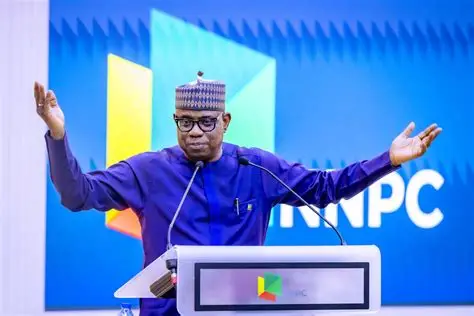
In Milan this week, the Nigerian National Petroleum Company Limited (NNPCL) stepped onto the world stage not just to talk energy, but to sell Nigeria’s future as a prime investment destination in an increasingly crowded marketplace.
Group Chief Executive Officer Bashir Ojulari, fielding questions from NBC’s Hala Gorani at the Gastech Exhibition and Conference, pitched Nigeria as the continent’s best bet for gas-driven industrialisation, even as over 1,000 exhibitors from 150 countries made similar appeals for global capital.
“This is about eradicating energy poverty,” Ojulari declared, framing Nigeria’s energy transition as both a business opportunity and a moral imperative. “Gas is our fuel of choice for industry, and LPG will power cleaner kitchens for millions of households.”
It was a carefully crafted message at an event where every nation was vying for investor dollars in a world rapidly tilting toward renewables. Nigeria’s edge, Ojulari argued, lay in its scale: Africa’s largest reserves of natural gas, over 200 undeveloped oil fields, and a current output of 1.7 million barrels per day that could climb higher with the right backing.
Ojulari pointed to ongoing projects: the $2.8bn Ajaokuta-Kaduna-Kano pipeline, the NLNG Train 7 expansion, and heavy investment in carbon capture and flaring reduction as proof that Nigeria was aligning with global financiers’ climate priorities while still betting big on hydrocarbons.
But the pitch was also defensive. Investors, wary of Nigeria’s track record of missed targets and stalled refinery revamps, needed reassurance. Ojulari credited President Bola Tinubu’s reforms with improving the business climate and insisted the restructured NNPC was now laser-focused on delivering shareholder value.
Around him, other energy giants were making their own promises: Qatar talked about LNG dominance, the U.S. touted shale resilience, while smaller African states promoted new frontier discoveries. Against this backdrop, Nigeria cast itself as both a giant and an underdog: too big to ignore, but still fighting to win confidence.
Discover more from Keeping Them Honest
Subscribe to get the latest posts sent to your email.