

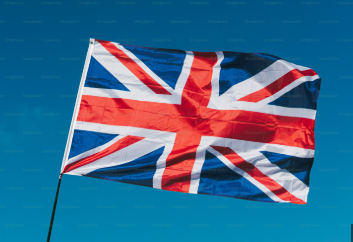
The UK government has hit back against claims by opposition parties that the newly-agreed trade deal with India could disadvantage British workers.
Business Secretary Jonathan Reynolds told the BBC there was “no situation” in which he would “ever tolerate” British workers being undercut as a result of a trade agreement.
One part of the deal extends an exemption on national insurance contributions (Nics) from one to three years – meaning people on short-term visas will only make social security payments in their home country when working abroad.
Opposition parties claim this could mean Indian workers are cheaper to employ than British workers – not least since UK employer Nics have just risen.
Conservative leader Kemi Badenoch claimed she had refused a similar trade-off when she was business secretary, because the deal contains “two-tier taxes” which would cost the UK “hundreds of millions”.
Liberal Democrat deputy leader Daisy Cooper said the exemption risked “undercutting British workers at a time when they’re already being hammered by Trump’s trade war and Labour’s misguided jobs tax”.
Reform UK leader Nigel Farage described the deal as “truly appalling”, adding: “This government doesn’t give a damn about working people.
But Reynolds said the deal would not impact British workers, pointing out the UK has 16 agreements preventing double taxation of work, which cover more than 50 countries – including the US, EU and South Korea.
“The Conservatives recently, well a few years ago when they were in government, signed one with Chile for five years. So no, British workers are not being undercut,” he said.
“What the Conservatives are confused about, and Reform as well, is a situation where a business in India seconds someone for a short period of time to the UK, or a UK business seconds a worker to India for a short period of time, where you don’t pay in simultaneously now to both social security systems,” he told the BBC’s Today programme.
But Conservative MP Matt Vickers said his party was not “confused”.
“We always want to see trade deals done with other countries… that’s what we had Brexit so we could open up some of those deals, but actually this is a bad deal.”
Reynolds said the deal was a “huge economic win for the UK and would deliver “faster growth, higher wages, more tax revenue brilliant wins for goods and for services”.
He said previously that Indian workers would still be required to pay the NHS immigration surcharge and would not be eligible for benefits from the National Insurance system.
The Business Secretary also dismissed opposition claims that many more Indian workers would come to the UK than British workers would go to India.
The deal – which took three years to negotiate – will make it easier for UK firms to export some goods including whisky, cars and other products to India, and cut taxes on India’s clothing and footwear exports to the UK.
Last year, trade between the two countries totalled £42.6bn. The government has said the deal would boost that trade by an additional £25.5bn a year by 2040.
The UK government said lowering tariffs on the likes of clothing, jewellery, and frozen prawns “could” lead to cheaper prices and more choice for consumers.
Tariffs on Scotch whisky are set to fall from 150% to 75% and are expected to be tapered down to 40% over the next decade.
Jean-Etienne Gourgues, chair of the SWA and chief executive of Chivas Brothers, said the deal was a “gamechanger” for the industry.
“We will have suddenly 10 million consumers who cannot today afford our product, which will be in a position to afford our product so that’s a big change for us,” he told the BBC.
He added it would provide “a lot of safety and long term safety” for the business.
“We’re going to increase the number of jobs because everything is produced in Scotland, so the more we produce the more people we need so it will have a straight impact directly for us but also indirectly with all the companies we’re working [with],” he said.
The Department for Business and Trade said for the first time, UK firms would have “guaranteed and unprecedented access to India’s vast procurement market” with access to “approximately 40,000 tenders with a value of at least £38bn a year”.
“We are the only other country in the world with access to that procurement market so when you have that kind of success that will involve more British workers on a short term basis going to India,” Reynolds said.
He said it was the biggest trade deal the UK had done since Brexit and that it would “benefit every part of the UK, but particularly Scotland, the North, the Midlands because of where some of our industries are located”.
India-Pakistan deadly strikes force airlines to re-route, cancel flights
Foreign airlines were forced to take longer routes or cancel flights to avoid airspace of both India and Pakistan.
Several Asian airlines have announced they were re-routing or cancelling flights to and from India and Pakistan, as the two neighbouring countries are racked by the deadliest exchange of fire in the last two decades.
Navigational data yesterday indicated that the airspace over northern India and southern Pakistan had been completely cleared. Pakistan’s entire airspace was nearly free of civilian aircraft, barring a few flights.
Sanad, Al Jazeera’s verification agency, monitored Indian military aircraft flying over northern India and a Pakistani government aircraft in the south of the country via air navigation tracking sites. This occurred just hours before the airspace was entirely cleared, coinciding with several flights diverting their routes from Pakistan.
According to FlightRadar24, which monitors flights worldwide, 52 flights to and from Pakistan were cancelled as of yesterday morning.
There were 57 international flights operating in Pakistan’s airspace when India struck, according to a Pakistan army spokesperson.
At Karachi’s airport, only two international flights were reported so far after an eight-hour suspension due to heightened tensions.
Other domestic flights in both countries were also disrupted.
Air India cancelled flights to and from Jammu, Srinagar, Leh, Jodhpur, Amritsar, Bhuj, Jamnagar, Chandigarh and Rajkot due to the closure of airports following the tensions with Pakistan.
India’s flagship carrier said flights would be suspended until at least May 10.
India has also shut down multiple airports in its northern region. Additionally, other airlines IndiGo, SpiceJet, and Akasa Air cancelled flights to 10 cities in northern and northwestern India near the border with Pakistan.
The changing airline schedules are set to further complicate operations in the Middle East and South Asia for carriers, who are already grappling with a fallout from conflicts in the two regions.
International carriers affected
According to local Malaysian outlet The Star, Malaysia’s flagship carrier Malaysian Airlines has cancelled flights to Amritsar, India, and rerouted two long-haul flights after the closure of Pakistan’s airspace.
Meanwhile, Indonesia’s Batik Air said it had cancelled several flights to and from Lahore, Pakistan, and India’s Amritsar.
A spokesperson for Dutch airline KLM said it was not flying over Pakistan until further notice. Singapore Airlines also announced that it had stopped flying over Pakistani airspace since May 6.
Taiwan’s EVA Air said it would adjust its flights to and from Europe to avoid airspace affected by the fighting between India and Pakistan.
Korean Air said it had begun rerouting its Seoul Incheon-Dubai flights on Wednesday, opting for a southern route that passes over Myanmar, Bangladesh, and India, instead of the previous path through Pakistani airspace.
Thai Airways said flights to destinations in Europe and South Asia would be rerouted starting early on Wednesday morning, while Vietnam Airlines said tensions between India and Pakistan had affected its flight plans.
Taiwan’s China Airlines said flights to and from destinations including London, Frankfurt and Rome had been disrupted, with some cancelled and others having to make technical stops in Bangkok and Prague to refuel and change crews, before taking longer flight paths.
Some flights from India to Europe were also seen taking longer routes.
Lufthansa flights from Delhi to Frankfurt turned right towards the Arabian Sea near the western Indian city of Surat, taking a longer path compared with Tuesday, according to FlightRadar24.
Meanwhile, Sri Lankan Airlines said its flights were unaffected and there is no change to their four weekly flights to Pakistan’s Lahore and Karachi.
As of 1100 GMT, Pakistan’s Dawn quoted a Pakistan International Airlines spokesman as saying that the Pakistani airspace has been restored for flights. But it is still unclear when the airlines would resume their flights.
Sudan cuts ties with UAE over alleged paramilitary support
Sudan has cut diplomatic ties with the United Arab Emirates (UAE), after repeatedly accusing the Gulf nation of backing the rival Rapid Support Forces (RSF) in the country’s civil war.
The announcement came as the RSF were blamed for attacks on the usually safe city of Port Sudan, which started on Sunday and have continued until yesterday.
On Tuesday, Sudan’s Defence Minister Yassin Ibrahim accused the UAE of violating his country’s sovereignty through its “proxy”, the RSF.
The UAE has repeatedly denied allegations that it is giving financial, military and political support to the paramilitary force.
Two years of conflict has killed thousands, forced millions from their homes and created the world’s worst humanitarian crisis.
As a result of the defence minister’s announcement, the Sudanese ambassador will be withdrawn from the UAE and Sudan will shut its diplomatic missions in the Gulf nation.
The army has accused the RSF of being behind the assault, but the paramilitary group is yet to comment.
Yesterday the Sudanese army said it had foiled a strike on the country’s biggest naval base.
“They [the drones] were met with anti-aircraft missiles,” an unnamed source told the AFP news agency.
Until now, Port Sudan had avoided bombardment and was regarded as one of the safest places in the war-ravaged nation.
Sudan’s army has often accused the UAE of arming the RSF.
Both the UK and the US have singled out the UAE in separate appeals for outside countries to stop backing Sudan’s warring parties.
However, on Monday, the UN’s top court dismissed Sudan’s case against the UAE, in which it accused the Gulf state of complicity in genocide.
The International Court of Justice in The Hague ruled that the case could not proceed because the UAE had opted out Article 9 of the Genocide Convention, which means that it cannot be sued by other states over genocide allegations.
Reem Ketait, the UAE’s deputy assistant minister for political affairs, said the court’s decision was “clear and decisive”.
“The international community must focus urgently on ending this devastating war and supporting the Sudanese people, and it must demand humanitarian aid reaches all those in need,” she said.
Both the army and RSF have been accused of war crimes.
Discover more from Keeping Them Honest
Subscribe to get the latest posts sent to your email.