

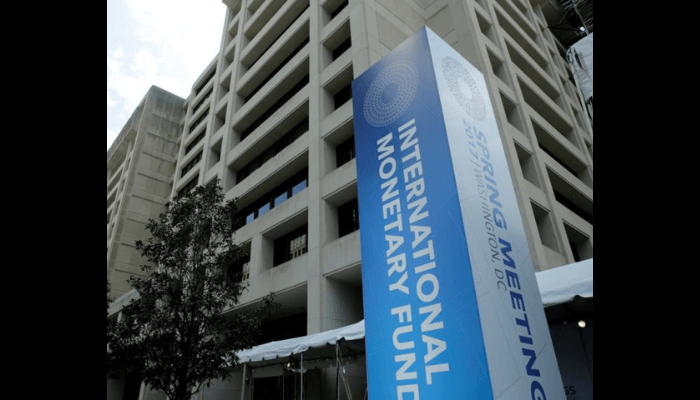
The International Monetary Fund (IMF) has commended the Central Bank of Nigeria (CBN) over its monetary policy reforms, which are significantly contributing to the nation’s economic recovery.
IMF gave the commendation in its 2025 Article IV Consultation report on Nigeria.
The fund commended the Federal Government for bold and politically difficult policies that had improved macroeconomic stability and enhanced resilience.
IMF further said that critical pillar of Nigeria’s economic reset had been the restoration of CBN’s independence.
The fund noted that after years of excessive fiscal influence for deficit financing, CBN had curtailed the use of the “Ways and Means” facility, an emergency funding channel that ballooned beyond statutory limits.
It said that CBN’s commitment to price stability was yielding tangible results and headline inflation, which peaked above 40 per cent, dropped to 22.9 per cent in May.
According to IMF, CBN is appropriately maintaining a tight monetary policy stance, which should continue until disinflation becomes entrenched.
The IMF directors also hailed reforms in the foreign exchange market that supported price discovery and liquidity.
IMF in the report, noted that gross and net international reserves increased in 2024, with a strong current account surplus and improved portfolio inflows.
The FX premium, or gap between official and parallel markets, has fallen from over 60 per cent to below 3 three per cent.
FX inflows surged to $6.9 billion in first quarter 2025, and external reserves climbed to a peak of $40.9 billion at the end of 2024, providing over eight months of import–well above benchmark thresholds.
“Reforms to the FX market and foreign exchange interventions have brought stability to the Naira,” IMF said.
“The fund recognised actions to strengthen the banking system, including the ongoing process of increasing banks’ minimum capital,” it added.
It also commended Olayemi Cardoso led CBN’s efforts in boosting financial inclusion and promoting capital market development.
It noted progress in measures to strengthen the banking system, including the ongoing recapitalisation exercise and other initiatives to deepen financial inclusion and expand the capital market.
It noted that CBN’s recapitalisation plan would see banks’ minimum capital raised, significantly by March 2026.
IMF also stressed the need for robust risk-based supervision covering mortgage lending, consumer credit, fintech operations, and cryptocurrencies to preserve financial sector stability.
IMF also commended the nation’s efforts in improving its anti-money laundering and counter-terrorism financing (AML/CFT) framework, calling for further steps to exit the Financial Action Task Force (FATF) grey list.
Discover more from Keeping Them Honest
Subscribe to get the latest posts sent to your email.