

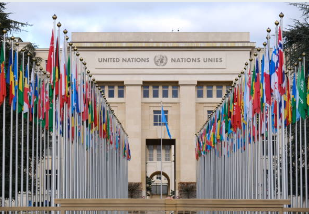
The UN’s refugee agency, UNHCR, has expressed concern over Germany’s decision to tighten border controls and reject asylum seekers at the country’s borders.
UNHCR’s representative in Germany, Katharina Thote, told dpa that the agency was worried about the government’s move to stop accepting asylum applications at the border.
She noted that Germany has been a key partner for UNHCR for decades and remains an important country of asylum in Europe.
Stricter border controls were introduced on the orders of newly appointed Interior Minister Alexander Dobrindt last Wednesday, with exemptions applying to vulnerable groups.
This included heavily pregnant women, women with young children and seriously ill individuals.
The measures after Chancellor Friedrich Merz’s conservative-led government took office, pledging to maintain temporary border checks already in place and to turn back illegal migrants at the border, even if they apply for asylum.
Thote said international law did not force refugees to apply for asylum in the first country they arrived in.
In some cases, they can be sent to other safe countries provided their rights were protected and it helped share responsibility fairly between nations, she added.
However, closing the country’s borders to all asylum seekers could undermine the principle of fair distribution.
She warned and called on Germany to uphold existing EU agreements on managing asylum claims.
Border rejections of people without valid visas are not new in Germany.
However, until now, these measures mainly applied to people who did not apply for asylum or had been previously banned from entering the country, for example after deportation.
A spokesman for Germany’s Interior Ministry said it was too soon to assess the full impact of the policy.
Since January, 45,681 people have applied for asylum in Germany for the first time down from 84,984 in the same period last year, marking a 46per cent decrease.
Trump’s mediation offer on Kashmir puts India in a tight spot
For decades, if there’s one thing that’s been a taboo in the Indian foreign ministry, it is third-party mediation – particularly in the long-running dispute with Pakistan over Kashmir.
Those in the know, then, are not surprised that US President Donald Trump – known for his unorthodox diplomacy – has touched a raw nerve in Delhi.
On Saturday, he took to social media to announce that India and Pakistan – after four tense days of cross-border clashes – had agreed to a “full and immediate ceasefire”, brokered by the US.
Later, in another post he said: “I will work with you both to see if, after a thousand years, a solution can be arrived at, concerning Kashmir.”
The Kashmir dispute dates back to 1947, when India got independence from British rule and was partitioned to create Pakistan. Both neighbours claim the Kashmir region in whole, but administer it only in part.
Several rounds of bilateral talks over the decades have not yielded any resolution. India treats Kashmir as an integral part of its territory and rules out any negotiation, particularly through a third party.
The latest flare-up began after India carried out air strikes on what it called terrorist infrastructure inside Pakistan in the aftermath of the attack on tourists in Indian-administered Kashmir last month, killing 26 people, mainly tourists.
India blames Pakistan of involvement in the incident, a charge denied by Islamabad.
Trump’s intervention came as fighting between the two nuclear-armed rivals was threatening to spiral into a full-blown conflict.
The two sides were using fighter jets, missiles and drones and said they were targeting each other’s military installations, mainly in the border areas.
While US mediators, alongside diplomatic backchannels, prevented a bigger conflagration, President Trump’s offer has put Delhi in a spot.
“Obviously, it would not be welcome by the Indian side. It goes against our stated position for many years,” Shyam Saran, a former Indian foreign secretary, tells the BBC.
Discover more from Keeping Them Honest
Subscribe to get the latest posts sent to your email.