

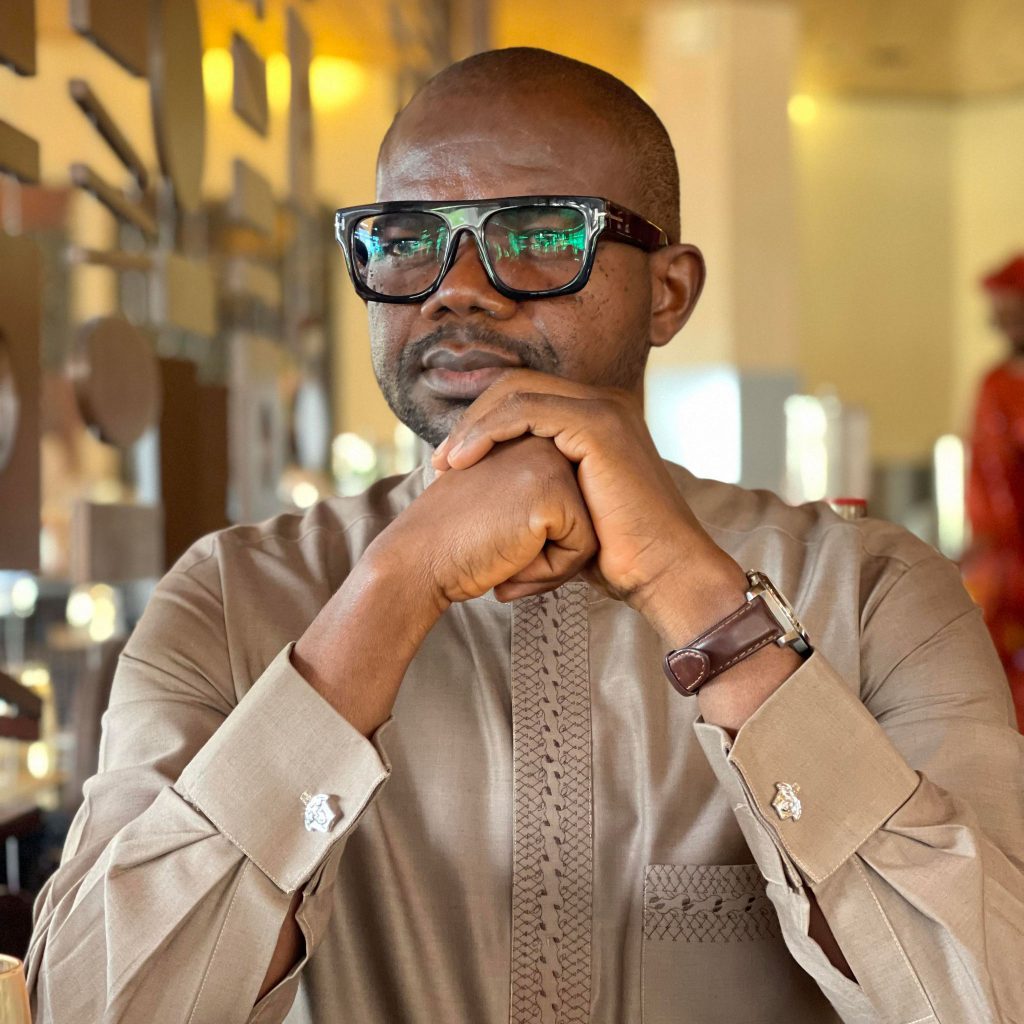
By Ima Niboro
First, I must state that I am a member of the ruling All Progressives Congress, APC, and that I am a supporter of President Bola Ahmed Tinubu. Not that this membership or support has yielded me anything other than more and more money spent in political pursuits that led some people somewhere and the rest of us nowhere. Which to me is neither here nor there. Let everyone go back to their professions—that’s why I set up your favourite digital newspaper, KTH Daily. So I have gone back to my profession. Go back to yours. Yes, you! lol.
I insist, however, that my support for Tinubu isn’t such that I’ll see a valuable argument and shout it down as has been the response to former Vice President Atiku Abubakar’s proposal to bring back fuel subsidies, but in a rather creative way.
Atiku, politics aside, is a man we all have a rather avuncular fondness for (I am sure he has once played on the same team as nearly every notable politician alive in Nigeria today). And I don’t think hurling insulting epithets at him is a political strategy. (Like I don’t think, conversely, that re-litigating Tinubu’s credentials or hiring lobby firms to unearth the FBI’s Chicago Files would have any impact whatsoever on the 2027 presidential election.)
To my mind, I think Atiku appears to have a solid point on the issue of petrol subsidy. And if I were still a presidential strategist, I would sit down with my president and quietly persuade him to take up aspects of the Atiku plan (we still have crucial months before the general elections) and, by so doing, pull the rug beneath the feet of the opposition. Because then the argument will be, if Tinubu is already doing what Atiku says he is coming to do, then what’s the point of electing him over the incumbent?
I have personally spent long hours mulling this issue of fuel subsidy. And since Atiku released his plan last week, I have been waiting for a coherent expert response to its details. So far, no one has taken on the plan itself point by point and torn it apart. Which in itself says something.
I have always said that if Tinubu loses the 2027 election, it will not be for lack of performance, foresight, capacity, or courage. It will be because, as the trained accountant that he is, he met the nation’s accounts, ex-Buhari, in unprecedented tatters. And he went to work with forensic “brutality”. No blame games. No name-calling. No “PDP’s 16 years of rot” that our man Flint chanted while setting Nigeria back 50 years between 2015 and 2023.
Today, even Tinubu’s worst enemies admit that in terms of balancing the books, he has done a damn good job. I tell the younger ones around me, among other things, that the reason they can now swipe their Naira cards abroad once again to purchase goods and services is as a result of the work Tinubu has done. I tell them that the reason why foreign airlines are no longer insisting on selling their tickets in dollars is for the same reason—that we now have largely sufficient forex backing for our global naira transactions.
There’s so much this president has achieved, but if there’s anywhere he has done rather poorly, it is in converting these towering economic gains into cash in the pocket, food on the table, for millions and millions of Nigerians.
And I have been very concerned about this. I tell everyone who cares to listen that Tinubu has functioned in the mould of his profession—accounting. The fallout of tough accounting decisions in corporate governance is usually left for Human Resources and Corporate Social Responsibility departments to deal with. Believe it or not, some accounting department decisions end up in the company clinic. Do what you want with that analysis while assuming that this were, for instance, Nigeria PLC.
And the question I asked a top minister very close to the President over one year ago is: who are the President’s HR and CSR Team Leads? I then submitted to him an executive summary of a presidential poverty reduction strategy. (I will deal with that subject in my next article.) I hope it got to its final destination. It’s been over a year. And like I feared, the elections are upon us.
Back to Atiku’s plan. When the President made his ex cathedra announcement of the removal of fuel subsidy at the Eagle Square on inauguration day in 2023, I was alarmed, but not for the reasons you might think. This is because the outgoing Buhari administration had made no further provision for subsidy in the supplementary budget Tinubu had just inherited that day, and to my mind, all he needed to do was to say so, and not take ownership of what has now become the most contentious, even if inevitable, decision of his presidency.
I know that Tinubu, pre-presidency, was a man with absolute ears to the ground, so I am certain he was aware that when Buhari abolished fuel subsidy, the late former President had even recorded a national broadcast to inform the nation about it. I am absolutely certain that Tinubu was aware that the broadcast was cancelled merely hours before the 7 a.m. broadcast time because Buhari’s powerful strategists, when they became aware of the broadcast, woke the man up in the dead of night to tell him to perish the thought, and to pass the responsibility of the announcement to the incoming President.
Which is what eventually happened, quite unfortunately. It was for this reason that I granted an interview to The Cable not long after to say that Tinubu did not remove the fuel subsidy, that it was Buhari that removed it, but in the last minute, chickened out of announcing it.
Even though I don’t agree with Tinubu’s decision to absorb the public backlash of Buhari’s end-game decision on fuel subsidy, I however acknowledge the chivalry behind it, considering that he probably saw Buhari as his comrade-in-arms in the APC political movement—I have strong doubts as to whether Buhari saw him in the same light though—and would rather take the bullet than pass the blame.
Be that as it may, I believe that as the elections approach, the President needs to take a second look at the issue of fuel subsidy. Not by returning to the arbitrary past of subsidising imports and all the stealing that came with it. That’s an absolute no!
But the federal government can subsidise the crude oil that goes to the local refineries, and by that means, bring down petrol prices, and at the same time insulate our local populations from the vagaries of global oil price volatility.
I recall that when the issue of fuel subsidy removal raged, I wondered why, as an oil-producing nation, we could not keep aside more than the so-called 450,000 barrels per day that was once earmarked for local refining—I wonder what is happening to that allotment now. Out of curiosity, I called a great friend of mine, a former Group Managing Director of NNPC.
He explained to me that the situation is far more complicated than I thought, but that anyway, whatever will be kept for local refining will still be part of our OPEC quota. So it’s going to be a decision between earning money on the crude internationally or pushing it in the direction of local refineries, and losing income on the international market.
I see Atiku’s plan as a variant of my initial thoughts: subsidise the crude—not give it free and have Nigerians pay for only the cost of refining as I had presented to my friend the former GMD. By Atiku’s plan, rather than, for instance, Dangote Refinery purchasing crude at international prices as is currently the case, we give it to them at concessionary rates, work out associated costs, and agree on XYZ as ex-depot prices. This would bring fuel prices down considerably, even if it would eat more than a little bit into our sales margins in the international market.
I am no expert, so I stand to be corrected by superior argument. But to my mind, we must also have a thriving country, made up of a bustling, taxable population, even as we count our dollars, pounds, and yen on the international crude market. I also suppose that if this were the case, one Mr. Zach Adedeji at the National Revenue Service would not be one of the most reviled government operatives in Nigeria today just for the fact that he’s so damn good at a job Nigerians hate—collecting taxes.
I humbly suggest that the President takes a look at aspects of a reworked subsidy plan—if only to “allow the people to breathe”, and ensure that they smile at us even more broadly on election day next year.
…Niboro, former presidential spokesman and former MD, News Agency of Nigeria, works for KTH Daily
(www.keepingthemhonest.ng)
Discover more from Keeping Them Honest
Subscribe to get the latest posts sent to your email.