

… FG working intensively to diversify, stabilise economy-Edun
By Peter Salami
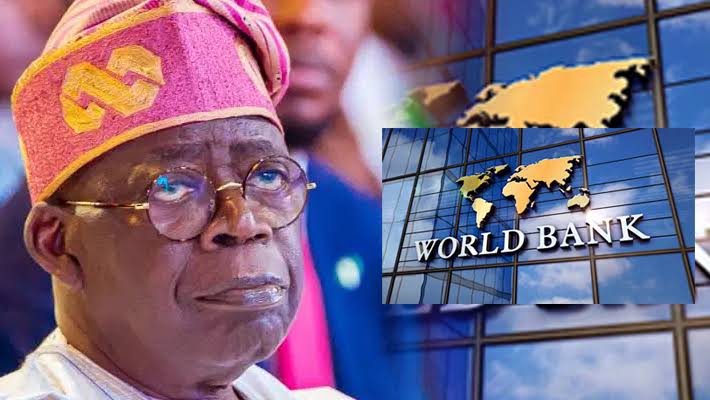
In what would appear to be mixed messages from the World Bank on the Nigerian economy, the global financial body yesterday predicted that poverty in Nigeria will increase by 3.6 percentage points over the next five years, rising through 2027.
This was contained in the Bank’s Africa’s Pulse report, released at the ongoing Spring Meetings of the International Monetary Fund (IMF) and the World Bank in Washington, DC.
The report painted a troubling outlook for poverty reduction in Nigeria, highlighting that despite some recent gains in economic activity, particularly in the non-oil sector during the last quarter of 2024, structural issues related to resource dependence and national fragility are likely to hinder progress.
Nigeria watchers found the latest World Bank assessment mildly intriguing because only last Friday, its Vice President for Western and Central Africa, Ousmane Diagana, had hailed Nigeria’s current economic reforms initiated by the President Bola Tinubu administration, which he said “had direct impact on millions of Nigerians”.
Diagana, had, in a high level meeting with Nigeria’s Finance Minister and Coordinating Minister of the Economy, Wale Edun, applauded Nigeria’s economic resilience, noting that the country’s GDP growth of 3.4% is its strongest since 2014 — a clear signal of recovery.
He had stressed the importance of keeping the reform momentum alive to fuel job creation and inclusive growth.
“Nigeria remains our largest portfolio in Africa, with over $17 billion in commitments. The world is watching, and we believe this country can lead the way in development,” Diagana had said.
But in it’s latest report, the World Bank, painted a gloomy picture for Nigeria, stating that the country will, alongside other resource-rich and fragile countries in Sub-Saharan Africa, will experience a worsening poverty situation, unlike non-resource-rich countries, which are expected to see faster poverty reduction.
“Poverty in resource-rich, fragile countries, including large economies like Nigeria and the Democratic Republic of Congo is projected to increase by 3.6 percentage points between 2022 and 2027,” the report stated.
The report underscored that Sub-Saharan Africa continues to have the highest extreme poverty rate globally, with a disproportionate concentration of the poor: In 2024, 80% of the world’s 695 million extreme poor lived in Sub-Saharan Africa.
Within the region, half of the 560 million extreme poor were located in just four countries.
In comparison, South Asia accounted for 8%, East Asia and the Pacific 2%, the Middle East and North Africa 5%, and Latin America and the Caribbean 3%.
Resource-rich countries are expected to lag in poverty reduction due to slowing oil prices and weak fiscal structures. Conversely, non-resource-rich countries are benefiting from high agricultural commodity prices, which are fueling stronger growth despite fiscal pressures.
“This follows a well-established pattern whereby resource wealth combined with fragility or conflict is associated with the highest poverty rates—averaging 46% in 2024, which is 13 percentage points higher than in non-fragile, resource-rich countries,” the report added.
In light of these projections, the World Bank recommends that Nigeria and similar economies focus on improving fiscal management and building a stronger fiscal contract with citizens to promote inclusive economic development and long-term poverty alleviation.
Meanwhile, the Minister of Finance Edun has assured investors that Nigeria is a safe haven for foreign investments.
He spoke at the Nigeria Investment Forum, in the ongoing World Bank/International Monetary Fund (IMF) Meetings in Washington D.C on Wednesday.
According to him, all efforts are geared towards maintaining fiscal congruence, while working intensively to diversify and stabilise the economy.
He said that the optimisation of asset was another route to closing gaps in the budget. “We need to ensure that we maintain fiscal congruence, the mandate of NNPCL is to increase production and save cost, we are also diversifying the economy.
“We are committed to stabilising the economy so that the private sector will find it attractive to invest. Optimisation of assets is another route to closing the gap in the budget, the government believes in the sanctity of contracts,” Edun said.
He said that the administration of PresidentTinubu had implemented foundational reforms that were now yielding results, with the country’s economy expanding.
“Our goal is not just to maintain this momentum, but to accelerate it. We are targeting seven per cent annual growth, and we believe the policies we have implemented have laid the groundwork to achieve this,” Edun said.
He said that the macroeconomic stability was gradually returning as reflected in narrowing budget deficits, improved trade balance, and a stabilising exchange rate.
Edun said the government was now shifting its focus to targeted sectoral growth.
According to him, the government top list is agriculture as the entire value chain, with the goals of boosting food security and enhancing productivity.
“We aim to close the food supply gap, not by importing more, but by enabling domestic producers to scale up and innovate,” he said.
According to the minister, about 90,000km fiber optic cable to enhance digital connectivity has been rolled out, it is important to empowering Nigeria’s youth and tech entrepreneurs.
Edun said that additional 4,000km of roads have been tendered for private sector participation, with the first 1,000km already signed off for delivery.
The Central Bank of Nigeria (CBN) Governor, Yemi Cardoso, said that the difficult reforms put in place has begun to yield fruits and the country has been able to stabilise the macroeconomy.
He said that the country was not relenting on its oars in spite its period of crisis in the past 18 months.
Cardoso said that the efforts were all geared towards building confidence and trust.
“The difficult reforms undertaken have begun to bear fruits. We have been able to stabilise microeconomy. Fitch has upgraded us more recently, no doubt we are in a period of heightened uncertainty.
“We have for the past 18 months been in a period of crisis and our response to that period is to roll our sleeves and ensure we build a stronger economy with respect to resilience and capacity to people and institutions.
“This is all about building confidence and trust but moving in a direction of more confidence and hope, if we continue in this direction we will achieve our set goals,” he said.
Discover more from Keeping Them Honest
Subscribe to get the latest posts sent to your email.