

By Abu Adamu
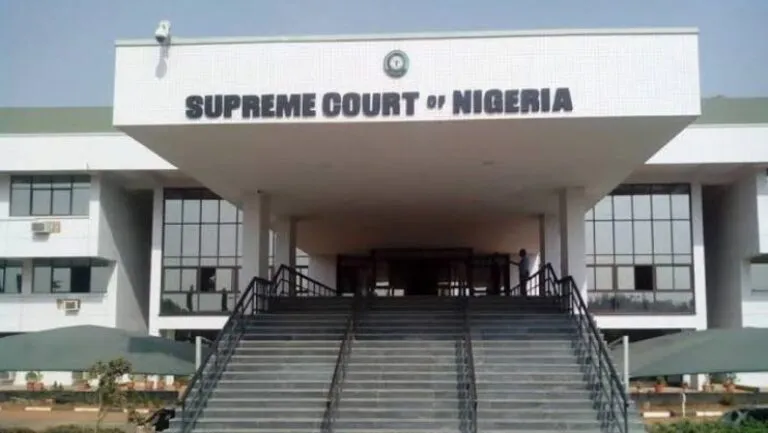
The Supreme Court of Nigeria is set to deliver judgment today in a series of appeals that will determine the fate of Nigeria’s two major opposition parties, the Peoples Democratic Party (PDP) and the African Democratic Congress (ADC), ahead of the 2027 general elections.
A five-member panel led by Justice Mohammed Lawal Garba had reserved judgment on April 22 after parties adopted their final briefs in four separate appeals arising from internal disputes within both parties.
For the PDP, the apex court will decide on the legality of the party’s national convention held in Ibadan in November 2025, which produced a factional leadership led by Tanimu Turaki, SAN. Lower courts had invalidated the exercise, citing disobedience to an earlier Federal High Court order that barred the convention pending the inclusion of former Jigawa State Governor Sule Lamido as a contestant.
The Court of Appeal upheld the decision, ruling that the PDP acted in contempt by proceeding with the convention despite a subsisting court order, and described the move as an abuse of court process.
In the ADC case, the Supreme Court will rule on an appeal filed by former Senate President David Mark, challenging a Court of Appeal decision which ordered the maintenance of the status quo in the party’s leadership dispute. Mark contends that the matter is an internal party affair beyond judicial interference and is seeking recognition of his faction by the Independent National Electoral Commission (INEC).
INEC had earlier removed Mark and the party’s national secretary, Rauf Aregbesola, from its records, citing the appellate court ruling, and stated it would not recognise any faction pending final judicial determination.
Meanwhile, a Federal High Court in Abuja has restrained INEC from recognising or participating in any congress organised by the disputed caretaker leadership of the ADC.
In a judgment delivered by Justice Joyce Abdulmalik, the court also barred the Mark-led leadership from interfering with the tenure and functions of elected state executive committees of the party.
The court held that only duly elected state structures have the constitutional authority to conduct congresses, declaring invalid the appointment of any committee by the national caretaker body for that purpose.
The suit was instituted by aggrieved ADC state chairmen who challenged the legality of actions taken by the interim national leadership, arguing that it violated both the party’s constitution and the 1999 Constitution.
Discover more from Keeping Them Honest
Subscribe to get the latest posts sent to your email.