

By Emmanuel Olugua
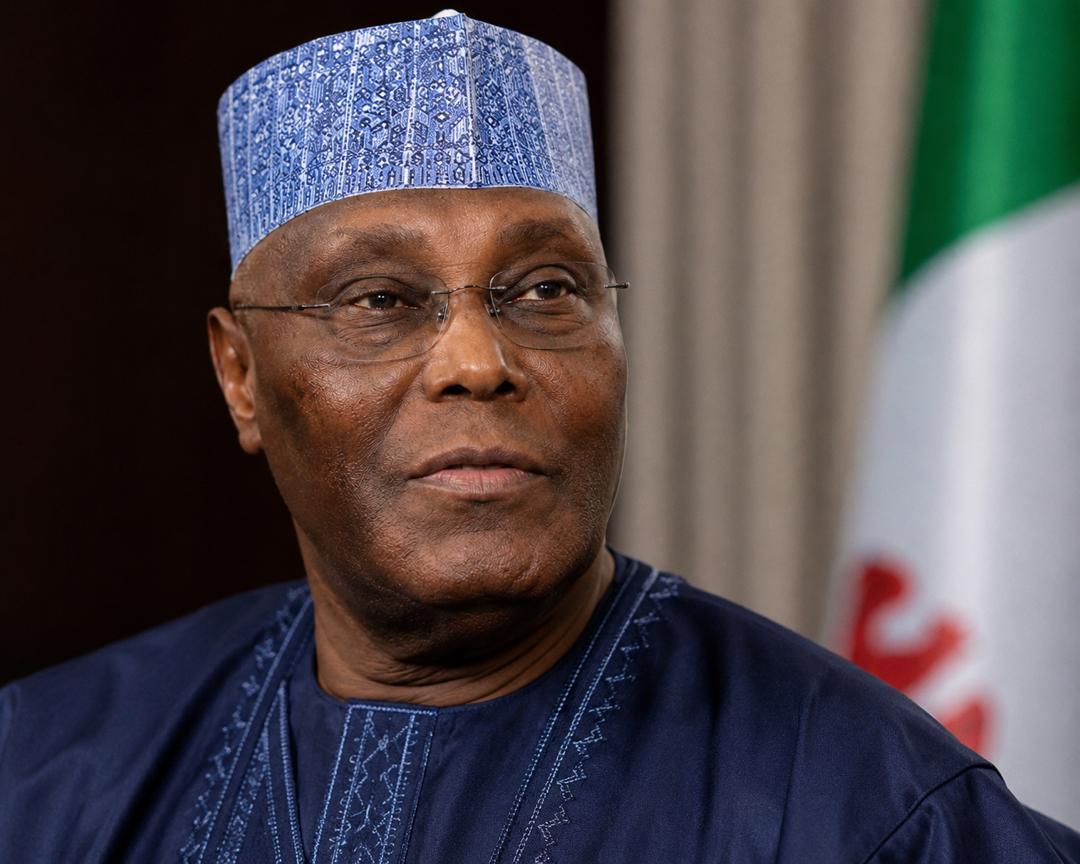
Minister of Interior, Olubunmi Tunji-Ojo, has challenged former Vice President Atiku Abubakar’s pledge to reopen Nigeria’s land borders if elected President in 2027, saying the country’s borders are already open and cannot be reopened.
Tunji-Ojo, whose ministry supervises the Nigeria Immigration Service and oversees border and migration management, said Atiku’s assertion failed to distinguish between border closures imposed for trade reasons and restrictions necessitated by security threats.
“Nigerian borders are not closed and so cannot be reopened,” the minister said in a statement on Saturday.
He recalled that the process of reopening the country’s land borders began under the previous administration on December 16, 2020, when Seme, Illela, Maigatari and Mfum were reopened.
According to him, the Idiroko and Ikom borders were subsequently reopened for goods and services on April 20, 2022, while the Tinubu administration reopened the Kamba and Tsamiya crossings in Kebbi State in February 2026, restoring links with Niger Republic and Benin Republic respectively.
Tunji-Ojo also disputed Atiku’s characterisation of the situation along Nigeria’s borders with Cameroon, Chad, Niger and Benin Republic.
He explained that some prolonged restrictions along the Cameroon border, particularly at Banki and Amchidé, had nothing to do with the Federal Government’s 2019 trade policy.
Instead, he said, the closures dated back to 2014, when the Boko Haram insurgency and deteriorating security forced authorities to restrict movement across the affected corridors.
The minister said the crossings reopened in 2019 following joint military and stabilisation efforts involving Nigeria, Cameroon, Niger, and Chad, while Fotokol and Gambaru followed in 2021.
According to him, presenting the security-driven restrictions and the 2019 trade-related border closure as one continuous shutdown creates a misleading picture of what actually happened.
“Folding this separate, security-driven history into one continuous 2019 shutdown misrepresents two distinct issues, trade regulation and counter-insurgency, as a single failure,” Tunji-Ojo said.
He acknowledged that not every crossing in northern Nigeria currently operates without restrictions, but stressed that controls remaining in some locations were imposed because of banditry and residual insurgent activity.
Such restrictions, he argued, should not be interpreted as evidence that Nigeria’s borders remain generally closed.
“Where banditry or residual insurgent activity persists, tighter control is a deliberate security judgement, not neglect, since reopening ahead of the security situation would expose traders and border communities to greater risk,” he said.
Tunji-Ojo said contemporary border management could not simply be reduced to a choice between shutting borders completely and allowing unrestricted movement.
According to him, effective border administration requires authorities to balance national security with proper documentation, customs compliance, migration management, and the facilitation of legitimate trade.
The minister consequently urged political actors to base the debate over Nigeria’s borders on the facts rather than campaign rhetoric.
“Political competition should not become a competition to rewrite recent history,” he said.
Tunji-Ojo challenged Atiku to spell out precisely what he intends to change if elected President, arguing that any new border policy should be clearly differentiated from measures already being implemented by the current administration.
“If he has a new border proposal, he should set it out and explain how it differs from the current approach, rather than treating separate trade, security, and infrastructure issues as one and the same,” the minister said.
Discover more from Keeping Them Honest
Subscribe to get the latest posts sent to your email.