

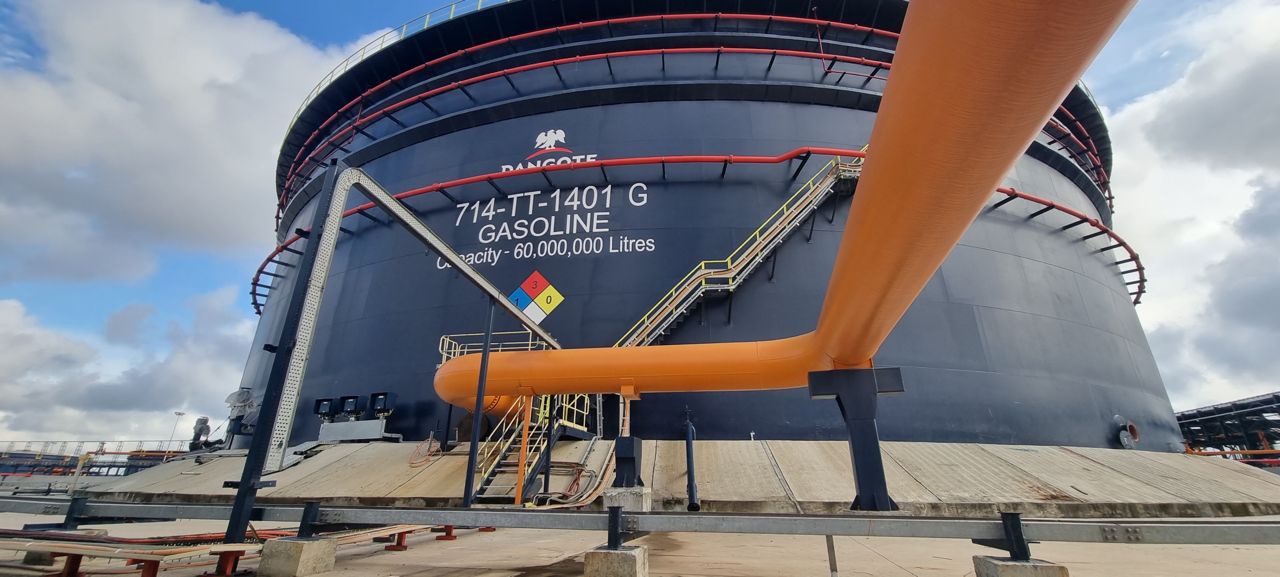
The Dangote Petroleum Refinery has achieved a major operational milestone by increasing crude oil processing capacity to 700,000 barrels per day (bpd), surpassing its installed nameplate capacity of 650,000 bpd and reinforcing its growing influence in regional and global energy markets.
The development comes as Nigeria seeks to strengthen domestic refining, reduce reliance on imported petroleum products and capture greater value from its crude oil resources.
According to Dangote Industries Limited, the performance level was attained during a test conducted by the refinery’s process licensors, demonstrating the facility’s ability to process higher crude volumes while maintaining operational efficiency across its production units.
Industry analysts view the achievement as a significant endorsement of the refinery’s technical capabilities and a signal that the facility is moving beyond its initial stabilisation phase into full-scale commercial optimisation.
Vice-President, Oil and Gas, Dangote Industries Limited, Devakumar Edwin, said the company plans to more than double the refinery’s processing capacity to 1.4 million bpd within the next 30 months.
If achieved, the expansion would place the refinery among the largest refining complexes globally and further strengthen Nigeria’s position in international petroleum product markets.
The refinery, owned by industrialist Aliko Dangote, commenced fuel production in 2024 and has steadily increased output of petrol, diesel, aviation fuel and other refined products. Its emergence has altered the dynamics of Nigeria’s downstream petroleum sector, historically dependent on imports despite the country’s status as one of Africa’s largest crude oil producers.
Beyond meeting domestic demand, the refinery has rapidly expanded its export footprint, supplying refined products to several African countries and key European markets, including the United Kingdom, France, Spain, Italy and the Netherlands. It has also exported gasoline to the United States and jet fuel to Saudi Arabia, underscoring its growing relevance in international fuel trade.
Analysts say the refinery’s increasing output is particularly significant at a time of persistent volatility in global energy markets, driven partly by geopolitical tensions in the Middle East and disruptions in traditional supply chains.
These conditions have encouraged many African countries to seek alternative and more reliable sources of refined petroleum products, creating opportunities for Dangote Refinery to emerge as a regional energy security hub.
The facility’s growing importance was highlighted in April when S&P Global Commodities identified it as the world’s largest exporter of jet fuel, reflecting the scale of its production and export operations.
For Nigeria, the refinery’s expansion carries broader economic implications. Increased local refining has helped reduce dependence on imported fuels, easing pressure on foreign exchange demand and improving energy supply stability.
The refinery is also expected to stimulate downstream industrial activity through the production of liquefied petroleum gas (LPG), polypropylene and other petrochemical feedstocks used in manufacturing, packaging and consumer goods production.
As the facility ramps up capacity, industry observers say its success could become a defining factor in Nigeria’s drive for industrialisation, export diversification and energy security, while strengthening the country’s ambition to become a major refining and petrochemicals hub in Africa and beyond.
Discover more from Keeping Them Honest
Subscribe to get the latest posts sent to your email.