

By Yinka Giwa
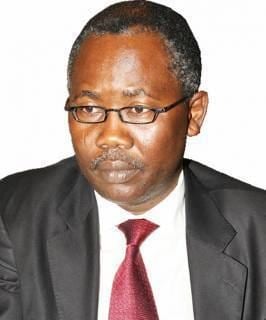
Former Attorney-General of the Federation and Minister of Justice, Mohammed Bello Adoke, has raised fresh concerns over the state of Nigeria’s democracy, warning that the country risks democratic collapse if citizens continue to lose confidence in the electoral process.
Adoke spoke on Wednesday while delivering the keynote address at the 2026 Annual Law Week of the Nigerian Bar Association in Abuja, where he painted a grim picture of Nigeria’s democratic trajectory ahead of the 2027 general elections.
In a strongly worded address titled “Safeguarding Nigeria’s Democratic Process: Issues and Prospects,” the former justice minister said Nigeria was standing at “democracy’s precarious crossroads,” insisting that merely conducting elections was no longer enough to sustain democratic legitimacy.
According to him, the real danger confronting the nation is the gradual erosion of public trust in elections, warning that democracy “does not collapse overnight; it erodes slowly, quietly, almost imperceptibly.”
Adoke cited the violence and controversies that trailed the 2023 general elections, noting that low voter turnout, allegations of vote-buying, delayed electoral justice, and disputes over electronic transmission of results severely damaged public confidence in the Independent National Electoral Commission, INEC.
“The real question before us is not whether Nigeria is democratic,” he declared. “It is whether we are safeguarding the democratic process or merely managing its appearance.”
The former AGF lamented that elections in Nigeria had increasingly become transactional, alleging that rampant vote-buying and the high cost of nomination forms imposed by political parties had effectively excluded many competent Nigerians from participating in the democratic process.
He described the monetisation of politics as a major threat to democracy, saying political contests were now dominated by money rather than ideas or competence.
Adoke also criticised political parties for undermining internal democracy through the imposition of candidates and manipulation of party primaries, despite clear provisions of the Electoral Act mandating democratic processes.
According to him, the judiciary has become overly entangled in political disputes, warning that courts were gradually replacing voters as the ultimate deciders of electoral outcomes.
Referencing recent electoral litigations involving former Vice President Atiku Abubakar and Labour Party presidential candidate Peter Obi, Adoke said the phrase “go to court” had become a disturbing reminder that elections were increasingly being settled by judges instead of the electorate.
He aligned himself with former President Goodluck Jonathan, who recently warned against excessive judicial intervention in electoral matters.
“The ballot paper, rather than the court, should determine winners,” Adoke said.
The former minister, however, expressed optimism that the newly enacted Electoral Act 2026 could help restore public confidence if faithfully implemented.
He highlighted several reforms introduced under the law, including the compulsory use of the Bimodal Voter Accreditation System, BVAS, electronic transmission of results, direct primaries for political parties, stricter punishment for electoral offences, and enhanced transparency measures.
Adoke said the reforms would only succeed if INEC demonstrated genuine independence and professionalism in conducting elections.
He warned that any perception of compromise or political interference within the electoral commission would further weaken public trust in democracy.
He equally charged the judiciary to avoid corruption, ensure consistency in electoral rulings, and fast-track the hearing of election petitions.
Calling on Nigerians to actively defend democracy, Adoke said citizens must reject vote-buying, ethnic politics, and religious sentiments during elections.
“Democracy is not preserved by constitutions alone, nor by INEC, nor by the courts,” he declared. “It is preserved by a people who refuse to let it die.”
He urged lawyers, judges, political parties, and voters to collectively safeguard Nigeria’s democratic future ahead of the 2027 elections.
“When democracy trembled,” he added, “the Bar must stand unbowed.”
Discover more from Keeping Them Honest
Subscribe to get the latest posts sent to your email.