

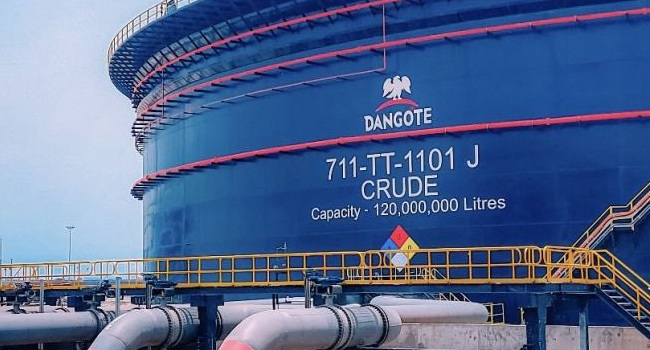
A new dispute has emerged in Nigeria’s downstream petroleum sector after Dangote Petroleum Refinery instituted legal action challenging the continued issuance of petrol import permits by the Nigerian Midstream and Downstream Petroleum Regulatory Authority to fuel marketers and the Nigerian National Petroleum Company Limited.
The refinery is seeking to nullify import licences issued or renewed by the regulator, arguing that the approvals violate an earlier court directive ordering parties to maintain the status quo pending determination of the matter.
The latest lawsuit marks a renewed escalation in tensions within Nigeria’s downstream oil market, nearly one year after Dangote Refinery withdrew an earlier suit challenging similar fuel import approvals granted to marketers and traders.
Reacting to the development, the Depot and Petroleum Products Marketers Association of Nigeria defended the continued issuance of import permits, insisting that the approvals remain necessary to safeguard national energy security and fuel supply stability.
In a statement issued following reports of the suit, DAPPMAN said the licences were backed by provisions of the Petroleum Industry Act and were not granted arbitrarily.
The association maintained that the NMDPRA possesses the statutory authority to determine when import licences are required in the national interest, particularly during periods of supply uncertainty or distribution gaps.
According to the marketers’ group, the regulator has consistently maintained that import approvals are intended primarily to protect supply security and should not be interpreted as actions targeted at any individual producer, regardless of market size.
DAPPMAN said its member companies had committed substantial investments to depot infrastructure, logistics networks and regulatory compliance systems based on the understanding that their operating licences were valid and enforceable under Nigerian law.
The association warned that any attempt to invalidate the licences retroactively could create significant uncertainty across the downstream petroleum sector and potentially disrupt fuel distribution nationwide.
Industry analysts said the dispute highlights ongoing tensions surrounding market competition, supply control and import dependency following the commencement of operations at the Dangote Refinery.
The refinery, which began phased fuel supply operations in 2024, has repeatedly argued that continued large-scale importation of petroleum products undermines domestic refining capacity and discourages investment in local production.
Marketers, however, maintain that importation remains necessary to ensure adequate product availability across the country, particularly in the face of distribution bottlenecks, logistics challenges and fluctuations in domestic supply output.
The legal challenge also comes amid broader reforms in Nigeria’s downstream oil sector following the implementation of the Petroleum Industry Act, which liberalised aspects of fuel pricing and strengthened the role of private sector participants in supply and distribution.
Neither the NMDPRA nor the Nigerian National Petroleum Company Limited had formally responded to the latest suit as of the time of reporting.
The case is expected to be closely monitored by investors, fuel marketers and industry operators because of its potential implications for fuel imports, competition dynamics and supply security within Africa’s largest oil-producing economy.
Discover more from Keeping Them Honest
Subscribe to get the latest posts sent to your email.