

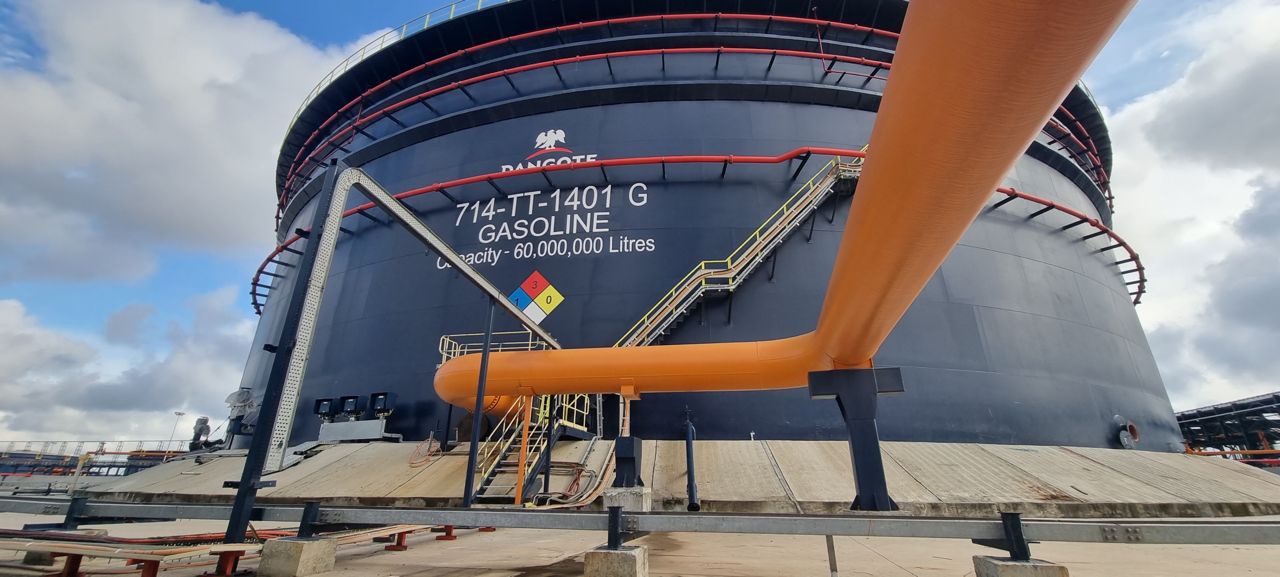
The African Export-Import Bank has underwritten $2.5 billion of a $4 billion senior syndicated term loan for the Dangote Petroleum Refinery & Petrochemicals, reinforcing its position as the lead financier of Africa’s largest industrial project.
The facility, announced by the Cairo-based lender on March 30, 2026, is structured as a five-year loan aimed at refinancing existing debt and rebalancing the refinery’s capital structure. Access Bank is acting as co-mandated lead arranger alongside Afreximbank.
The financing comes as the 650,000 barrels-per-day refinery, located near Lagos, seeks to stabilise its balance sheet and fund expansion, positioning itself as a cornerstone of Nigeria’s fuel supply and a potential exporter to regional markets.
Afreximbank President George Elombi said the bank’s outsized commitment reflects a strategic push to back African-owned industrial champions. The lender has deployed about $15 billion to the wider Dangote Group since 2015, underscoring a long-standing financing relationship.
“We take pride in being the single largest provider of financing to the Dangote Group,” Elombi said in the statement, adding that investments in domestic enterprises strengthen economic resilience, job creation and government revenues.
The loan syndication drew participation from a mix of African and international lenders, signalling sustained investor appetite for exposure to the refinery despite macroeconomic pressures and currency volatility in Nigeria.
The project, owned by billionaire industrialist Aliko Dangote, began refining operations in February 2024 after years of construction delays and cost overruns. It is designed to reduce Nigeria’s reliance on imported refined petroleum products and ease pressure on foreign exchange demand.
Dangote, President and Chief Executive of Dangote Industries Limited, said the refinancing would strengthen the project’s financial base and support its next growth phase. The group is targeting expanded output to serve domestic and export markets across Africa.
The latest facility builds on Afreximbank’s earlier $1 billion working capital support provided after operations commenced in 2024. The bank has also played an advisory role in Nigeria’s “naira-for-crude” framework, which allows domestic refiners to purchase crude oil in local currency, reducing dollar demand.
The refinancing is part of a broader effort to align the refinery’s debt profile with operational cash flows, a key step as it ramps up production and navigates early-stage utilisation challenges.
Expansion plans are already underway. In February 2026, the Dangote Group signed a $400 million agreement with XCMG Construction Machinery Co., Ltd. to support capacity growth and infrastructure development at the site.
The refinery is expected to scale output from 650,000 barrels per day to as much as 1.4 million barrels per day over time, a move that would position it among the largest refining complexes globally. Petrochemical capacity is also being expanded, with polypropylene output projected to rise from 900,000 metric tonnes annually to 2.4 million tonnes.
For Nigeria, the project is central to efforts to curb fuel imports, improve energy security and support industrialisation. The country has long relied on imported fuel despite being Africa’s top oil producer, a mismatch that has strained public finances and foreign reserves.
Afreximbank said the deal aligns with its mandate to deepen intra-African trade and support value-added industrial activity across the continent. By anchoring the syndication, the bank is also reinforcing its role as a key mobiliser of capital for large-scale infrastructure and energy projects.
The refinancing underscores growing confidence among lenders that the refinery can transition from a capital-intensive build phase to stable operations, even as execution risks remain tied to logistics, feedstock supply and market pricing.
As the project scales, its ability to generate consistent cash flow and displace imports will be closely watched by investors and policymakers alike.
Discover more from Keeping Them Honest
Subscribe to get the latest posts sent to your email.