

By Yinka Giwa
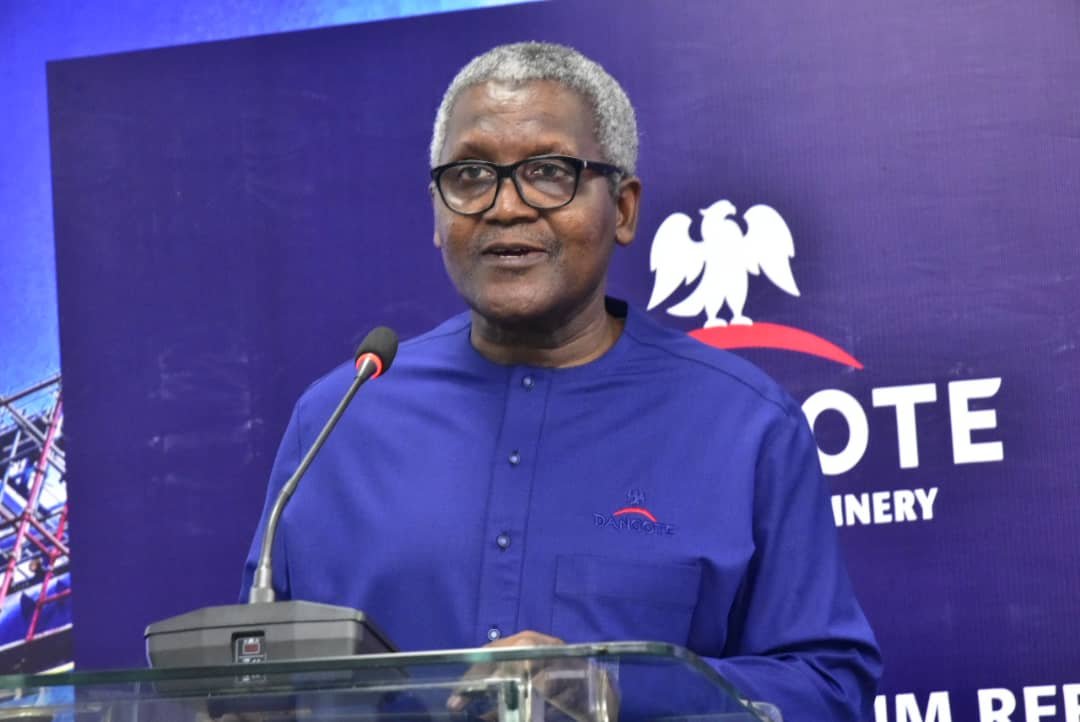
President of the Dangote Group, Aliko Dangote, has said that petrol price increases are driven by global oil market forces, not individual operators, warning that prolonged instability in the Middle East could worsen fuel costs and deepen economic hardship.
Dangote spoke after a courtesy visit and Eid-el-Fitr homage to President Bola Ahmed Tinubu in Lagos, where he highlighted the impact of global crude oil volatility on domestic energy pricing.
“We are part of a global village, and unfortunately, developments like this will affect us even if we are not directly involved,” he said.
He stressed that Nigeria, like other countries, remains exposed to international oil price fluctuations, particularly amid ongoing tensions in the Middle East, which continue to drive uncertainty in global energy markets.
Dangote warned that if the conflict persists, the consequences would include higher fuel prices, increased transportation costs, inflationary pressures, and broader economic strain.
“If the situation does not de-escalate, we will end up paying a heavy price, especially given existing economic challenges,” he said.
The billionaire industrialist noted that governments could also come under pressure, as unstable oil prices affect revenues and may lead to increased subsidy burdens in some economies.
According to him, Africa’s already fragile fiscal position could deteriorate further under prolonged global shocks.
“Africa is already grappling with debt, and additional shocks will only compound hardship for governments and the people,” he said.
Dangote emphasised that rising energy costs would have a ripple effect across multiple sectors, from small businesses to large-scale industrial operations.
“Energy affects everything. From small businesses like barbers to industries running generators, everyone will feel the impact if costs continue to rise,” he stated.
He added that some countries have begun adopting coping measures such as reduced workdays, energy rationing, and remote working arrangements in response to rising energy costs.
While such measures may provide temporary relief, Dangote warned they could also slow productivity and economic output, with significant implications for livelihoods.
“In Africa, in Nigeria, many people depend on daily earnings. If they don’t work, they don’t eat. So we must pray this situation comes down quickly,” he said.
Discover more from Keeping Them Honest
Subscribe to get the latest posts sent to your email.