

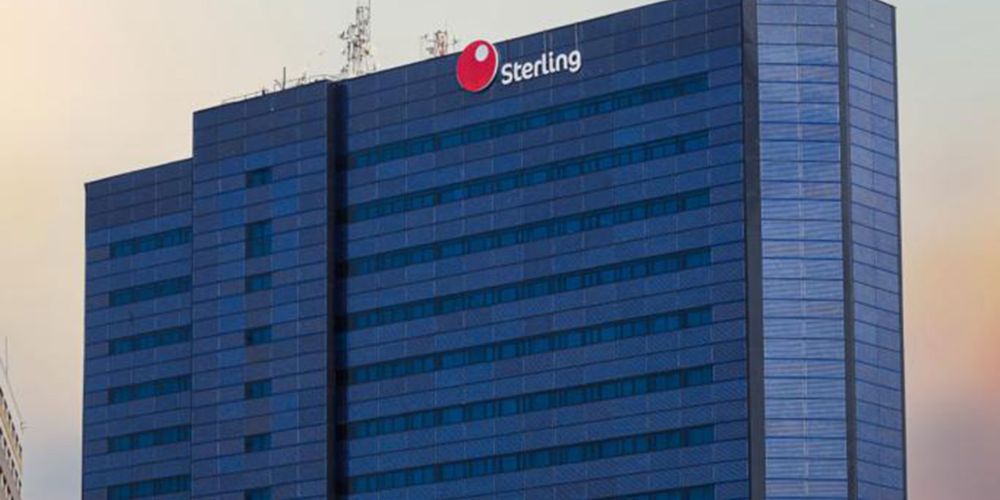
Sterling Financial Holdings Company said it has fully recapitalised its core subsidiaries, Sterling Bank and The Alternative Bank, in compliance with revised minimum capital requirements set by the Central Bank of Nigeria, after receiving final regulatory approvals in January 2026.
The group injected a combined N153bn into the two lenders, concluding a capital-raising programme that was largely executed between December 2024 and October 2025, well ahead of the industry’s 2026 compliance deadline.
Nigeria’s central bank last year raised minimum capital thresholds for commercial and non-interest banks as part of a broader effort to strengthen the resilience of the financial system, improve loss-absorbing buffers and support credit expansion in Africa’s largest economy.
Sterling HoldCo began its recapitalisation drive in December 2024 with a N75bn private placement that generated N73.86bn in net proceeds. Of that amount, N68.8bn was channelled into Sterling Bank, while N5bn was allocated to The Alternative Bank to reinforce its capital base.
The exercise was followed by a N28.79bn rights issue that was oversubscribed by N10.29bn, signalling strong investor appetite despite a challenging macroeconomic backdrop marked by currency volatility and elevated interest rates. After securing regulatory approvals in May 2025, the group allotted N26.639bn under the rights issue, while the oversubscribed portion was restructured into a private placement. That move enabled The Alternative Bank to meet the capital threshold for non-interest banks with national licences.
Sterling HoldCo further strengthened its balance sheet through an N88bn public offer in October 2025, which also recorded an oversubscription. The central bank subsequently approved N96.69bn for recognition as additional capital, while the Securities and Exchange Commission cleared the allotment of 13.81bn shares under the offer.
Yemi Odubiyi, group chief executive of Sterling Financial Holdings Company, said the recapitalisation positioned the group for disciplined growth. “This exercise goes beyond regulatory compliance. It strengthens our capacity to expand credit responsibly, accelerate innovation and continue supporting businesses and households, while maintaining balance-sheet discipline,” he said.
He added that fully capitalising both Sterling Bank and The Alternative Bank reinforces the group’s dual-bank model, which serves conventional and non-interest banking segments. The structure, he said, allows for efficient capital allocation across complementary markets and greater agility in responding to evolving customer demand.
The strengthened capital base also provides headroom for expansion into non-banking financial services. Sterling HoldCo said it plans to inject N10bn into SterlingFI Wealth Management Limited, its asset management subsidiary, in line with new minimum capital requirements for capital market operators issued by the Securities and Exchange Commission in January 2026. The additional funding will support the commencement of full operations and deepen the group’s revenue diversification strategy.
The recapitalisation comes alongside robust financial performance. In its full-year 2025 interim results, Sterling HoldCo reported a 99 per cent rise in profit before tax, while gross earnings increased 46 per cent year on year, supported by growth in both interest and non-interest income streams.
Total assets expanded to nearly N4tn, reflecting loan growth and higher investment activity. Customer deposits rose 18 per cent, while shareholders’ funds increased 39 per cent to N424bn, underscoring improved internal capital generation.
Operational efficiency also improved. The group’s cost-to-income ratio declined to 63 per cent from 72 per cent in 2024, aided by tighter expense controls and continued investment in digital platforms and process optimisation. Management said the efficiency gains have enhanced earnings resilience and strengthened its ability to handle higher transaction volumes without compromising risk management standards.
Analysts say early compliance with the central bank’s new capital regime could give mid-tier lenders such as Sterling a competitive advantage as weaker players scramble to meet the 2026 deadline. A stronger capital position may also support larger ticket lending, particularly to corporates and small and medium-sized enterprises seeking funding amid structural reforms in the Nigerian economy.
With regulatory approvals secured and fresh capital in place, Sterling HoldCo enters 2026 with expanded buffers and a broader strategic mandate, positioning the group to pursue measured expansion while navigating a still volatile operating environment.
Discover more from Keeping Them Honest
Subscribe to get the latest posts sent to your email.