

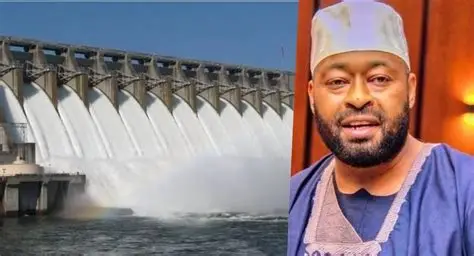
The Niger State Government has sued the Attorney-General of the Federation at the Supreme Court, demanding inclusion in the 13 per cent derivation revenue for states producing natural resources. The state seeks to be recognised as a “resource-producing state” due to the hydroelectric power generated from Kainji, Jebba, Shiroro, and Zungeru dams located within its territory.
In an originating summons filed at the apex court, Niger, through its legal counsel Mohammed Ndarani, SAN, is asking for the interpretation of relevant constitutional provisions to determine its entitlement to derivation benefits. The suit challenges the long-standing exclusion of the state from sharing proceeds of fiscal revenue generated from hydroelectric power, despite the strategic importance of the dams to Nigeria’s electricity grid.
Ndarani argued that the four dams, established since 1968, have contributed immensely to national electricity supply, with the Federal Government also exporting power to neighbouring countries such as Niger, Benin, and Togo. Yet, Niger State, which bears the brunt of environmental and socio-economic impacts of these facilities, has been left out of derivation benefits that other resource-producing states enjoy.
The state’s counsel decried the continuous exploitation and neglect of Niger’s communities, noting that farmlands have been submerged, livelihoods destroyed, and residents displaced by incessant flooding resulting from dam operations. He stressed that the vast expanse of land occupied by the dams has denied many inhabitants the opportunity to engage in farming, which is the primary source of livelihood in the state.
According to him, the Federal Government, through its agencies, has continuously reaped profits from these dams while Niger State suffers environmental degradation, poverty, and lack of infrastructure development. He lamented that neither the Federal Ministry of Environment nor the National Environmental Standards and Regulations Enforcement Agency (NESREA) has implemented any programmes to mitigate the adverse effects of the dams on host communities.
Ndarani also criticised the lack of transparency in revenue tracking, stating that until 2020, the National Bureau of Statistics (NBS) had no official data on the volume of electricity generated by these dams since inception. He presented figures from 2020 to 2023 showing total power generation of over 10 million megawatts from the four dams, yet none of the fiscal revenues from this output have been allocated to Niger State as derivation.
The suit emphasizes the federal government’s constitutional obligation to ensure equitable distribution of resources, adding that the Attorney-General of the Federation, as the chief legal adviser to the government, has failed to ensure fairness in resource allocation. Ndarani maintained that the continuous marginalization of Niger State in derivation funds, despite its central role in Nigeria’s power sector, constitutes a gross injustice.
He further argued that the dams, though federal assets, are situated on Niger State land, and their economic activities have altered the ecological balance of the region, leading to long-term environmental hazards. The state, therefore, seeks a judicial declaration to compel the federal government to begin paying 13 per cent derivation from hydroelectric power revenues to Niger.
Highlighting the plight of Niger’s residents, Ndarani described their living conditions as pitiable, with communities facing worsening floods, loss of farmlands, and health hazards due to polluted water bodies. He said the failure to compensate the state has left its people impoverished and disenfranchised, while the federal government continues to benefit from resources derived from the state’s territory.
The state government’s legal action marks a significant push for recognition of hydroelectricity as a derivable resource under Nigeria’s revenue allocation framework, akin to oil and gas. The outcome of the case at the Supreme Court could set a precedent for other states hosting major federal infrastructure that generates national revenue without direct compensation to local communities.
Discover more from Keeping Them Honest
Subscribe to get the latest posts sent to your email.