

By Emmanuel Olugua
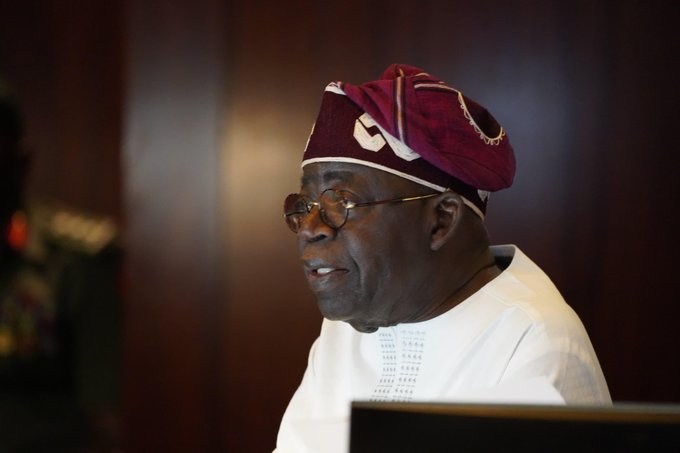
Youth leaders and stakeholders from the Niger Delta region have asked President Bola Ahmed Tinubu to decentralise pipeline and oil infrastructure surveillance contracts, warning that allowing one dominant non-state actor to control critical oil assets poses a serious threat to national security.
The demand was contained in an open letter addressed to the president and released to journalists on Thursday in Akure.
The letter was signed by the President of the Ijaw Youth Council Worldwide, Alaye Tari Theophilus, alongside nine other regional leaders and youth stakeholders.
The leaders also called for an investigation by anti-corruption agencies into the management and utilisation of funds under the Presidential Amnesty Programme.
According to them, the current structure of pipeline surveillance contracts unfairly sidelines several individuals and groups that supported the Federal Government during the 2015/2016 Niger Delta Avengers crisis, while allegedly empowering those who once threatened the country’s oil infrastructure.
“No single non-state actor should hold unchecked operational authority over Nigeria’s most critical economic infrastructure,” the leaders stated.
“A joint supervisory framework bringing together security agencies, state coordinators, and recognised community leadership must be put in place now.”
They urged the Federal Government to decentralise pipeline surveillance operations into a state-by-state structure coordinated by the Nigerian Armed Forces to ensure fairness, accountability, and regional stability.
The stakeholders recalled that during the Niger Delta Avengers attacks, which reportedly crashed Nigeria’s oil production from about 2.4 million barrels per day to roughly 900,000 barrels per day, several regional leaders stood with the government to prevent further destruction of national assets.
“We did not retreat into the creeks. We did not leverage the threat of instability for personal advantage. We stood on the side of the Nigerian state at a time when standing there was neither safe nor profitable,” the letter read.
The leaders named several figures they said played major roles in containing the crisis, including Bibopere Ajube, Ateke Tom, Dokubo Asari, and Victor Ben Ebikabowei.
According to them, those who defended Nigeria during the crisis are now being excluded from surveillance arrangements, while former agitators are allegedly being rewarded.
“The system being built rewards those who once threatened Nigeria and sidelines those who defended it. That is not an accident,” they said.
“It is a pattern — and it is the same pattern Nigeria ran in 2015 and paid for dearly in 2016.”
The leaders insisted that their intervention was not intended as a threat but as a warning aimed at preventing renewed instability in the oil-rich region.
“We held the line in 2016. We are asking you to hold it now,” they added.
Other signatories to the letter include Emmanuel Goteh Bieh of the Ogoni Federated Youth, Lord Mammoth Knight of the Ibom Youth Council, Henry Assor of the Ikwerre Youth Assembly, Joseph Etim Antai of the Oro-Obolo Youth Assembly, Usiwo Oghene Efezino of the Isoko Leadership Forums, Chika Obielumani of the Coalition of Ndokwa Youth Leaders, Kingsley Tenumah of the Warri Indigenous People’s Movement, Mathias Efe Olowu of the Odavwe R’Urhobo Group, and Asobi Oyemike of Ndokwa Advocacy for Development and Good Governance.
Discover more from Keeping Them Honest
Subscribe to get the latest posts sent to your email.