

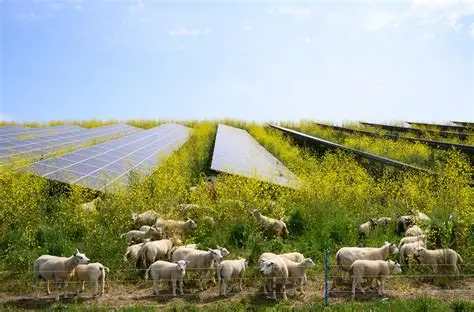
Minister of Innovation, Science and Technology, Chief Uche Nnaji, said the Federal Government remains committed to driving agrivoltaic farming to boost food and energy production in the country.
Nnaji said this in Abuja yesterday at the maiden International Agrivoltaics Workshop and Official Unveiling of the Book titled “Democratising the Sun: Agrivoltaics and the Future of Farming in Nigeria and Africa”
Agrivoltaic farming, also known as agrisolar is the practice of integrating solar panel systems into agricultural land use. It involves growing crops underneath or around solar panels, allowing for simultaneous food and energy production.
The event was organised by Lichipu for Food, Energy and Water Sustainability (LIFEWS) Foundation in collaboration with the University of Abuja, with the support of researchers from Oregon State University, USA.
The theme of the workshop titled “Agrivoltaics and Climate-Resilient Agriculture in Nigeria and Africa: Scaling Innovations for Food, Energy, Water Security, and the Common Good
The minister was represented by his Special Assistant on Project Delivery, Monitoring and Evaluation, Dr Ezebuiro Christ Peace.
He said the event embodies the kind of innovation-led climate smart and community-driven approach that is central to the ministry’s agenda for national transformation.
According to him, the Ministry of Innovation, Science and Technology is committed to driving Nigeria’s transition to a diversified knowledge-based economy through strategic innovation.
“We aim to harness indigenous capacity, promote green industrialisation and enable technologies that improve lives.
“Agrivoltaics, the combination of solar energy harvesting and agricultural productivity stands as a model solution that demonstrates how we can optimise land use, generate clean energy, ensure food security and build a resilient climate for everyone.
“Our country is blessed with ample sunlight and rich agricultural potential.
“Yet, energy access and food insecurity remain major challenges which we think agrivoltaics can help, especially in the area of expanding off-grid solar infrastructure in farming communities.”
The minister said it would also help in areas of improving crop performance through moderated microclimates, reducing evapotranspiration and improving water use efficiency.
According to him, this aligns with the Ministry’s strategic vision of deploying science, innovation and technology for national competitiveness, rural transformation and environmental sustainability.
“Today’s launch of the book, Democratising the Sun, is especially symbolic and the title itself speaks volumes. This is because sunlight, the most democratic of all energy sources, should not remain the privilege of a few.
“Knowledge like sunlight must be shared, localised and used for common good,” minister said.
He congratulated the authors and acknowledged the LIFEWS Foundation, the University of Abuja and Oregon State University for their collaborative work in bringing the new technology to the country.
“In moving forward, the Ministry is actively supporting research and demonstration projects in agrivoltaics and related fields.
“We have a couple of solar farms across the country where plants have already been incorporated into energy generation.
“Of course, the dimension that you have presented is presenting a new opportunity for entrepreneurship and for developing policies that will drive this.
“So, we are also collaborating with tertiary institutions for Science, Technology, Innovation-based community impacts around solar energy, food production and a whole lot of them, and developing enabling policy and regulated environments for innovation.”
Discover more from Keeping Them Honest
Subscribe to get the latest posts sent to your email.