

In Nigeria, few things draw public sympathy quite like a ban. Each time the National Broadcasting Commission, NBC, banned a song, it drove it underground to become a national hit. The politicians that General Ibrahim Babangida’s junta banned in the eighties and early nineties quickly became the conscience of the nation and eventually swept the military from power.
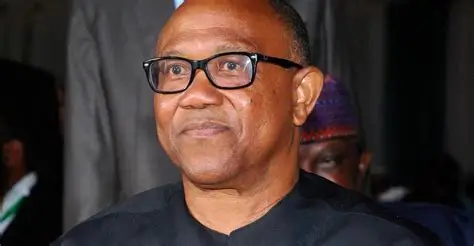
The case of former Labour Party presidential candidate Peter Obi is becoming quite intriguing. Every new restriction seems to be doing more to elevate his stature in the public eye than diminish it. Whether intended or not, recent efforts to sideline him are beginning to make him far more consequential to Nigeria’s political future than he might otherwise have been.
This week, the National Association of Polytechnic Students (NAPS) declared Obi persona non grata across all polytechnic campuses in the country. The student body took issue with Obi’s recent comments on an alleged violent student union election at Auchi Polytechnic, where he claimed students were shot at, with some reportedly killed or injured. NAPS insists the claims are false and unverified. They demanded an apology, received none, and have now barred him from coming within ten kilometres of any polytechnic institution in Nigeria.
That is an unusual move, especially from a student organisation. But it is not isolated. It joins a growing list of efforts aimed at shutting Obi out of public and political spaces.
Only days earlier, authorities in Kaduna State banned a peaceful rally organised by his supporters. The event, planned for Murtala Square, was blocked despite the organisers following proper procedures. State officials cited vague “security concerns.” And in Edo State, Governor Monday Okpebholo reportedly barred Obi from entering the state entirely unless he sought the permission of the state government on the grounds of public safety following violence that allegedly occurred after his previous visit.
While these actions may be justified differently by those involved, the pattern is unmistakable. A man once dismissed by the political elite as an underdog or outsider is now being treated as a figure whose presence must be carefully managed, or outright blocked, if need be. That alone speaks volumes.
Human rights lawyer Femi Falana has condemned the developments in strong terms. In a statement responding to the Edo governor’s action, Falana argued that the threat to Obi’s life was unconstitutional and unlawful. He said:
“The threat to the life of Mr. Peter Obi issued by the ‘new sheriff in town’ in Edo State constitutes a violation of Section 33 of the Constitution and Article 4 of the African Charter on Human and Peoples’ Rights. Governor Okpebholo should withdraw the threat, apologise publicly to Mr. Obi, and assure him of the safety of his life in Edo State.”
Falana also advised Obi to urgently seek legal redress to protect his fundamental rights, given Nigeria’s troubling record of mob violence and extrajudicial actions.
Obi’s critics say he brings some of this on himself. His statement about the Auchi Polytechnic election was, at best, poorly verified and, at worst, inflammatory. A public correction would have helped his credibility. But the response from institutions has been heavy-handed and arguably disproportionate. It also suggests that those in power see Obi as more than just another opposition figure. They now see him and his ‘Obi-dient’ movement as the real political force.
Take, for example, the uproar over his recent philanthropic activities. When Obi donated ₦15 million to a Catholic hospital in Edo, some were quick to point out a contradiction with his now-famous campaign slogan, “we no dey give shishi.” NAPS President Eshiofune Oghayan asked whether this was growth or hypocrisy. And when Obi personally served food to the poor at an Imo charity event the other day, some accused him strangely of “weaponizing poverty.”
But these events seem to be drawing more attention to his actions and drawing more Nigerians to his message. Whether seen as genuine or symbolic, Obi’s gestures resonate in a country where a large number of political leaders are out of touch with ordinary people.
There is also the reality of what these bans are doing to Obi’s image. Far from shrinking him, they are inflating his importance. Far from silencing him, they are giving him a louder voice. In the eyes of many Nigerians, he is no longer just the man who came third in the last presidential election. He is increasingly becoming the man the powers that be don’t want you to hear from.
Social media tells the story. Each time he is banned, blocked, or criticised, the response online is swift and powerful and trend across platforms. Videos of his modest lifestyle and grassroots engagements circulate widely. The more he is excluded, the more he is embraced by those who see in him a realistic alternative to governance in Nigeria.
Whether or not one supports Obi, the reality is that he is becoming a central figure in Nigerian politics. Not necessarily because of what he says, but because of how the system reacts to him. Slowly he is becoming a mirror through which many Nigerians view their expectations from leaders and measure the health of their democracy.
The political establishment would be wise to reconsider its approach. The more it tries to push Obi to the margins, the more it pushes him into the centre of national discourse. He is now more than a former governor or a losing candidate. He is quickly becoming a barometer for the nation’s tolerance of dissent, empathy, and accountability.
By trying to shut him out, the system may be making him indispensable.
Discover more from Keeping Them Honest
Subscribe to get the latest posts sent to your email.