

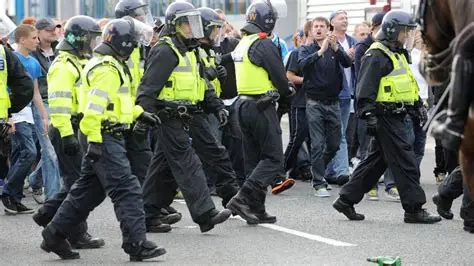
Football clubs should pay towards the £70 million cost of policing their matches in the UK, the head of the Metropolitan Police has told the BBC.
Commissioner Sir Mark Rowley, the country’s most senior police officer, asked why organisers of events that require policing to support their security do not pay for it, and said there should be “more of a polluter pays approach”.
Sir Mark’s comments came as he called for the creation of 12 to 15 bigger police forces as part of his plans for radical police reforms.
He told the BBC’s Sunday with Laura Kuenssberg programme the current model of 43 forces across England and Wales needed to be reduced to cope with increased demand and overstretched funding.
Chancellor Rachel Reeves announced a 2.3% annual funding increase for policing in England and Wales in last month’s Spending Review. Many forces have criticised the funds as falling “far short”.
Sir Mark said reforms would help police forces, including the Met, “make the best use of the money we’ve got”.
As part of funding concerns, the commissioner also cited the £70 million cost of policing football in the UK, most of which is spent on Premier League matches in England.
“Why isn’t the organiser paying for that, rather than local communities who lose their resources to go to football matches?” he said.
A move to make football clubs pay was previously suggested to the Times by the head of the UK’s football policing unit and later criticised by sports bodies who said it could threaten events and lead to increased ticket prices.
Writing in the Sunday Times, Sir Mark suggested the number of police forces needed to be reduced by two-thirds and said bigger forces would be better able to utilise modern technology.
He added the 43-force model designed in the 1960s had not been “fit for purpose” for at least two decades and hindered “the effective confrontation of today’s threats”.