

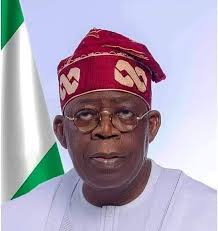
Foreign Affairs analysts have expressed the view that Nigeria’s foreign policy under President Bola Tinubu since his assumption of office on May 29, 2023, has been a mixed bag of the old and the new.
It has been a continuity of the nation’s traditional foreign policy principles since independence, and a fresh focus on what is dubbed the “4D Diplomacy Strategy” or “Tinubu Doctrine.”
Traditionally, Nigeria’s foreign policy principle since independence on Oct. 1, 1960, has been Afrocentric, that is, placing topmost priority on African affairs.
It has also been traditionally operated in three concentric circles of priority: West Africa, Africa, and the rest of the world, in that priority order.
This has been predicated on the backdrop of Nigeria’s status as the undisputed Giant of Africa, and a Big Brother nation-state.
Thus, Tinubu’s foreign policy thrust in the past two years is viewed as deliberately tailored to reinforce Nigeria’s traditional Afrocentric principle, spiced with some fresh ambitions.
The nation’s foreign policy approach has notably been prioritising West Africa, that is, the Economic Community of West African States (ECOWAS), as well as Africa or the African Union (AU).
President Tinubu’s foreign policy in the past two years has been deliberately proactive and ambitious, tailored to strengthen Nigeria’s global influence and reposition it as a continental superpower, and attract foreign investments.
In his inaugural speech, President Tinubu had clearly outlined his administration’s foreign policy objectives.
The President had underscored the priority of his administration’s diplomacy to focus on peace, stability, and collective prosperity within the West African sub-region and the African continent.
“Our primary foreign policy objective must be the peace and stability of the West African sub-region, and the African continent.
“We will retool our foreign policy to more actively lead the regional and continental quest for collective prosperity.
“We will work with ECOWAS, the African Union, and international partners to end extant conflicts, and to resolve new ones,” the President had said.
In a bold move that kept many foreign policy observers busy thinking, he announced the new administration’s foreign policy approach called the “4-D Diplomacy Strategy.”
The 4-D acronym stand for: Democracy, Development, Demography, and Diaspora. They are regarded as the President’s flagship foreign policy priorities.
Under Democracy, the foreign policy approach seeks to promote and encourage the practice of democracy in West Africa, Africa, and the rest of the world to consolidate democratic gains.
It also focuses on promoting and defending democratic principles within the West African sub-region, and across the African continent.
For instance, Tinubu’s initial strong stance against the military coup in Niger Republic shortly into his assumption of office as Chairman of the ECOWAS Authority of Heads of State and Government, underscores this.
While initially advocating military intervention, he later shifted to more diplomatic pressure and sanctions, which were later lifted, considering the delicate balance between national interest and regional stability.
Under Development, the foreign policy approach has focused on enhancing Africa’s development, halting dependency, and exploiting opportunities.
The approach seeks to leverage the dawn of the African Continental Free Trade Area (AfCFTA) to boost foreign trade and attract foreign direct investment to Nigeria.
It strategically focuses on Economic Diplomacy, emphasising the driving of economic development by fostering foreign trade, and creating economic opportunities for Nigerians.
This approach involves active engagement in bilateral and multilateral partnerships, seeking to leverage Nigeria’s resources and demographic potential for economic growth.
Under Demography, Tinubu’s foreign policy focus seeks to harness the potentials of Nigeria’s vibrant, large and youthful population.
The approach seeks to leverage Nigeria’s demographic advantage as a source of human capital, a consumer market for national development, and a strength in foreign relations.
This entails deliberately creating initiatives and opportunities for young Nigerians, as well as addressing their common challenges like unemployment that can have foreign policy implications.
The Diaspora approach recognises the significant role of the Nigerian diaspora community in the nation’s economic growth.
It factors in the crucial role of diaspora remittances in the country’s economy with a view to tapping them for national economic development.
This foreign policy thrust seeks to always deliberately engage with the Nigerian diaspora community worldwide for the nation’s overall economic growth.
The strategy aims to leverage their skills, resources and remittances for national development, enhance the nation’s global image and improve consular services for Nigerians abroad.
The Minister of Foreign Affairs, Amb. Yusuf Tuggar, while reinforcing the Tinubu administration’s 4-D foreign policy thrust, stressed that Nigeria’s current foreign policy has been consistently Afrocentric.
Tuggar explained that this was driven through a three concentric circle application, aimed at achieving economic growth, peace and security within West Africa, and Africa at large.
He said that the 4Ds doctrine was being deployed to build alliances through diplomatic engagements and partnerships with other nations, multilateral institutions and the diaspora community.
“The new foreign policy outlook heralds a new era of regional stability and collective prosperity for the subregion and, indeed, Nigeria.
“Through these efforts, Nigeria can assume a stronger leadership role in resolving conflicts and driving economic growth across Africa.
“Mr President emphasises the significance of engaging with regional organisations, such as the AU, ECOWAS and forging strong partnerships with international allies,” he said.
Delivering a keynote address as the Chairman of the Authority of ECOWAS Heads of State and Government at ECOWAS’ 50th Anniversary in Lagos on May 28, Tinubu reinforced his foreign policy focus on strengthening regional integration.
The President also reaffirmed Nigeria’s commitment to sustaining ECOWAS for the benefit of posterity.
“ECOWAS is a beacon of African unity. In overcoming colonial legacies, we brought together Anglophone, Francophone, and Lusophone nations under one vision, an achievement of global significance.
“The founding fathers of ECOWAS envisioned a more united, harmonious, and purpose-driven region. It is our duty to not only uphold that vision but also pass it on stronger and more enduring to future generations.
“The work of integration is never done. Each generation must carry the flame forward, lighting the path of unity and shared progress for those who come after,” he said.
Tinubu has been given a thumbs up for not just reinforcing Nigeria’s traditional Afrocentric foreign policy thrust but redefining it under the auspices of the 4D agenda.
His foreign policy focus is viewed as a success and being consistent with the nation’s traditional three concentric circles, which prioritises West Africa, Africa and rest of the world, and a non-aligned disposition.
Former Nigerian Head of State and founding father of ECOWAS, Gen. Yakubu Gowon (rtd), for instance, lauded Tinubu’s West African foreign policy focus, for uniting the bloc under his leadership.
Gowon said that, as ECOWAS Chairman, Tinubu had achieved a crucial foreign policy milestone by promptly taking measures to forestall the bloc’s disintegration.
By promptly rallying ECOWAS leaders together and deploying diplomacy, instead of use of force during the Niger coup, and lifting the sanctions earlier imposed on the Sahel states, he said, Tinubu succeeded in keeping ECOWAS together.
Speaking at the inauguration of the Academy of International Affairs, a foreign policy think-thank founded by former Nigerian foreign affairs minister, Prof. Bolaji Akinyemi, in Abuja, Gowon said:
“I must commend President Bola Tinubu for all the foreign policy initiatives he made, which have kept ECOWAS together in the face of recent challenges.
“I implore the President to continue to ensure that Nigeria’s voice remains audible, and its influence felt in international relations.”
Pioneer ECOWAS Commission President, Dr Mohamed Ibn Chambas, corroborated Gowon’s view on Tinubu’s ECOWAS and West African foreign policy approach.
According to him, Tinubu is imbued with antecedents of both democratic and diplomatic credentials, which help him to fight for democracy in West Africa, as Chairman of the ECOWAS Authority of Heads of State and Government.
“He is very strong in his opposition to military interventions because, having elected democratic governments over any other form of government, including military intervention, is the only accepted form of governance globally.
“We also know President Tinubu to be a practical person and politician, who has his ideals and principles and will do what is necessary to keep ECOWAS united.
“I’m aware that he is already working actively with the ECOWAS President, Dr Omar Touray, to ensure that every diplomatic step is taken to keep ECOWAS united,” Chambas said.
At the continental level, Tinubu took a bold step toward curbing the surging scourge of terrorism and violent conflicts sweeping across the Sahel region to the rest of Africa.
The President hosted a two-day African High-Level Counter-Terrorism Summit in Abuja, attended by African presidents, AU President, UN Deputy Secretary General, among others.
The Summit aimed at precipitating African-led and African-owned solutions against terrorism; strengthening regional response to terrorism threats.
The event also sought to enhance regional cooperation; produce a comprehensive approach and address conditions conducive to the spread of terrorism, among others.
This bold move clearly underscores the urgency and seriousness of Tinubu’s efforts to tackle Africa’s spiraling insecurity situation and existential threat.
The President called for the establishment and strengthening of a regional Standby Military Force to curb terrorism, violent conflicts and unconstitutional changes of government in Africa.
“Terrorism snaps at the very fabric of the prosperous and just society, which we seek to build for ourselves and our children.
“This violent threat seeks to frighten the farmer from his field, children from their schools, women from the marketplace and families from their very homes.
“We must, therefore, fight this threat together, combining determined national effort with well-tailored regional and international collaboration,” he said.
At the global level, the central pillar of Tinubu’s foreign policy has been economic diplomacy or the attraction of foreign investment for economic development, as earlier mentioned earlier under the 4Ds.
The President has consistently promoted Nigeria as “open for business” and embarked on numerous strategic diplomatic trips, which attracted multi-billion dollar foreign investment commitments.
The commitments include a 14 billion dollars deal from Indian firms during the G-20 Summit in Delhi; and another eight billion dollars expansion deal with Indorama for petrochemical and fertilizer plant expansion.
They also include 800 million dollars from Bharti Airtel for network expansion; 3 billion dollars from Jindal Steel; 3.5 billion dollars steel plant investment in Akwa Ibom.
Others are tripling the African Development Bank’s agricultural interventions in Nigeria from 500 million dollars to about 1.5 billion dollars; ExxonMobil’s 10 billion dollars in deepwater oil production; and TotalEnergies’ 550 million dollars for gas exploration.
These is also a 1.3 billion dollars Mining Sector Joint Ventures deal for domestic and international investors to partner with the Nigeria Solid Minerals Corporation and a 620 million dollars Digital and Creative Enterprises deal aimed at creating IT and technical jobs.
Another Tinubu foreign policy milestone is the 25 billion dollars Nigeria-Morocco Gas Pipeline project, which he inherited from his predecessor and bolstered.
The project aims to supply energy to approximately 400 million people across 13 countries, with an annual gas capacity ranging between 15 and 30 billion cubic metres.
It is expected to become the world’s longest offshore gas pipeline, spanning 5,660 km and boost regional integration, provide energy access, and create economic opportunities across the countries.
The UAE has pledged to support the project, alongside other funding partners like the European Investment Bank, the Islamic Development Bank, and the OPEC Fund.
Tinubu’s foreign policy has also sought to leverage Nigeria’s Demography and harness its Diaspora potential through the Diaspora Mortgage Scheme’s 10 billion dollars Fund to tap diaspora remittances for economic growth.
This foreign policy initiative also aims to tap into Nigeria’s demographic potential by creating opportunities for youth in various sectors like technology, agriculture, and the creative industries.
“Our young people and women, who form the majority, must be at the heart of ECOWAS development.
“We must invest deliberately in their education, entrepreneurship, healthcare, and leadership.
“Their success is the key to our future stability and prosperity,” the President also said in his keynote address at ECOWAS’ Golden Jubilee.
In line with his administration’s fresh foreign policy focus on Nigeria’s high visibility at the global level, the President announced on the second anniversary of his inauguration on May 29 that Nigeria would hold a Motherland Festival.
This landmark global event aims to invite the world to rediscover Nigeria as it will spotlight Nigeria’s rich heritage, dynamic creative industries, the people’s vibrant energy, and showcase Nigeria’s beauty through tourism, culture, and innovation.
Written by Mark Longyen, News Agency of Nigeria (NAN)
Discover more from Keeping Them Honest
Subscribe to get the latest posts sent to your email.