

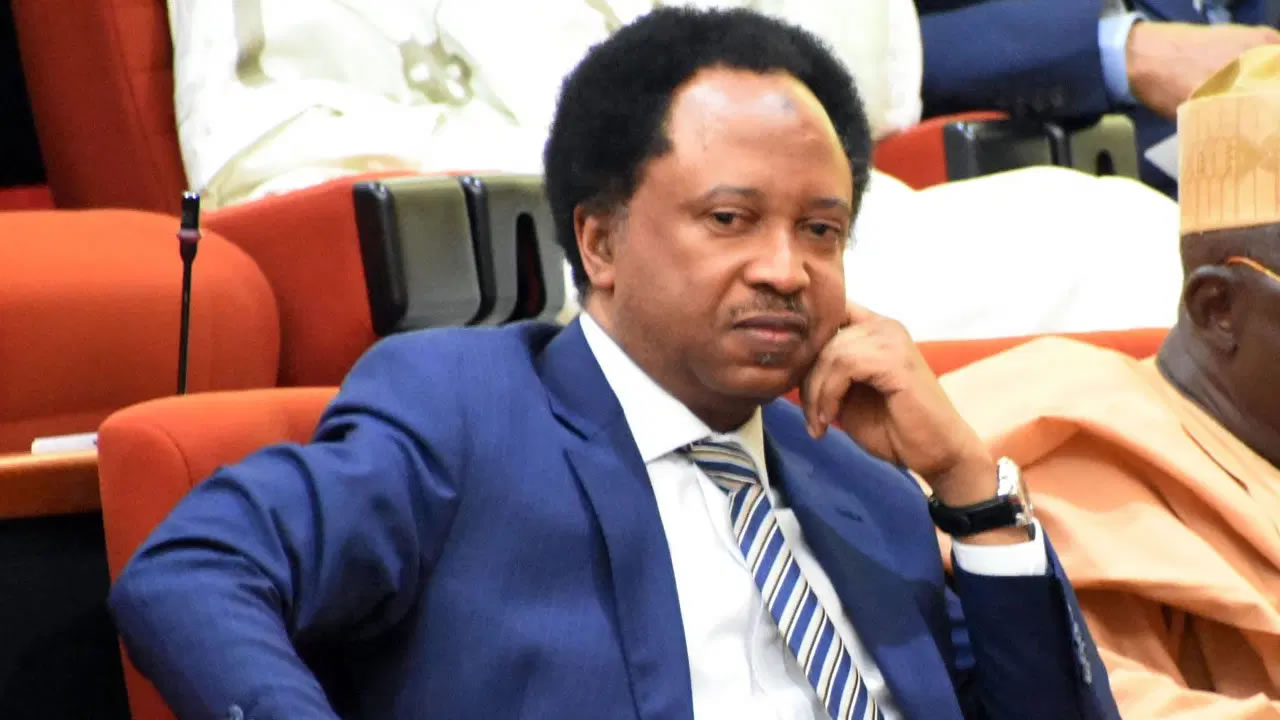
A former senator representing Kaduna Central, Shehu Sani, has called on the Federal Government to step up the fight against terrorists in different parts of the country rather than focusing on a security summit.
Speaking during an interview on Channels Television’s Politics Today yesterday, Sani said Nigeria has had enough talks about the spate of insecurity in the country and, therefore, needed an improvement in its approach to the war against the terrorists.
According to him, it is a known fact that the Nigerian state is faced with a war against banditry and terrorism, a war, which he said had been going on for over a decade.
The former Kaduna lawmaker said victory over terrorists and bandits was as important as the unity, peace, and survival of the Nigerian state.
Amid the rising level of insecurity in the country, especially in the northern part of the country where scores of lives have been lost, homes destroyed, and many displaced, the Senate had on Tuesday resolved to establish an ad hoc committee tasked with organising a two‑day national security summit in Abuja.
The summit is expected to include federal, state, and local governments, as well as traditional institutions, and stakeholders in the sector to develop viable solutions to the country’s persistent insecurity challenges.
Proponents had argued that fresh engagements that would bring together a wider cross‑section of stakeholders could yield new ideas, forge a unified national security framework, and equip the military with updated strategies.
FG signs $158m pact agriculture financing programme
The Federal Government on Wednesday signed a financing agreement for the Value Chain Programme in Northern Nigeria (VCN), as part of ongoing efforts to revolutionise the nation’s agriculture sector.
With the signing of the agreement, the implementation of the 158.15 million dollars VCN project begins immediately to support agriculture value chain development.
It will also support value addition for farmers in nine states of the northern part of the country.
The initiative is co-funded by the International Fund for Agricultural Development (IFAD), the French Development Agency (AFD) and the Government of Nigeria.
Speaking during the signing of the agreement for the VCN project at the Presidential Villa, Abuja, Vice-President Kashim Shettima described the initiative as a product of critical thinking about the economic reality of the northern region.
According to him, it is a fulfilment of the promise made by President Bola Tinubu’s administration to reduce poverty in Nigeria, restore dignity to the nation’s farmers, and ensure food security.
“It is a declaration of faith in the North—not as a region of deficits, but as a place of abundance.
“It also invites us to play our part in fulfilling the promise to reduce poverty, nourish our people, and restore dignity to farming families across Bauchi, Borno, Jigawa, Katsina, Kebbi, Sokoto, Kano, Yobe, and Zamfara.
“What has brought us together today is an investment of 158.15 million dollars, co-financed by the International Fund for Agricultural Development (IFAD), the Agence Française de Développement (AFD), the Federal Government of Nigeria, and other stakeholders.
“This reflects President Bola Ahmed Tinubu’s commitment to prioritising what matters most—people, productivity, and prosperity.”
Shettima recalled that Tinubu administration recently commenced foundation laying for the construction of Special Agro-Industrial Processing Zones (SAPZs) across Nigeria.
He said the VCN programme would feed into the SAPZs, serving as “a steady pipeline of raw materials and ensuring our processors no longer grope for quality inputs.
“This synergy will shift us from exporting raw produce to exporting value-added goods—creating jobs, wealth, and industrial stability,” he added.
Shettima said that the recent global trade disruptions and the resurgence of protectionism are loud warnings to Nigeria to begin to grow what its people eat and produce what they trade.
“The agricultural tariffs and retaliatory postures of global powers like the U.S. and China have rattled commodity chains.
“For a nation that has long relied on food imports, the message is clear: we must grow what we eat and produce what we trade. The VCN answers this call.
“By making wheat, maize, and animal feed viable for commercial cultivation, and by investing in irrigation, processing, and storage facilities in states like Kebbi and Jigawa.
”We are not just securing food—we are laying the groundwork for agricultural exports that can rival our oil. What makes this programme exceptional is that it targets the underserved: women, youth, persons with disabilities, and returnees.
“It recognises that peace and prosperity are twin goals—and that in communities scarred by conflict, agriculture is not just a livelihood; it is rehabilitation.”
He noted that the federal government will deploy digital tools to track every step from farmer registration to market access and input distribution to yield analysis.
Shettima assured that in regions where migration and insecurity are fuelled by joblessness, the VCN provides vehicles for enterprise, income, and dignity.
Earlier, former Senate President, Sen. Ahmed Lawan, commended IFAD, the federal government and other partners for the conception of the programme.
He described the programme as a well-thought-out initiative that will transform the lives and livelihoods of many in the target states and beyond.
He pledged the commitment and support of the National Assembly in the implementation of the various interventions contained in the programme.
Also, the Minister of Agriculture and Food Security, Sen. Abubakar Kyari, said the signing of the financing agreement represents a significant milestone in the efforts to transform the agricultural landscape in Nigeria.
He noted that the participation of the nine states and the presence of other critical stakeholders underscore the commitment of the sub-nationals and the federal government in fostering inclusivity in agricultural development.
The minister expressed confidence that the VCN will deliver programmes and projects that will improve agricultural productivity and the overall well-being of small-holder farmers, farmer groups, and women across the region.
Discover more from Keeping Them Honest
Subscribe to get the latest posts sent to your email.