

…Adesina Relives Buhari’s Presidency in a Poignant Review
…Tinubu Renames UNIMAID After Late President
By Jeremy Fregene
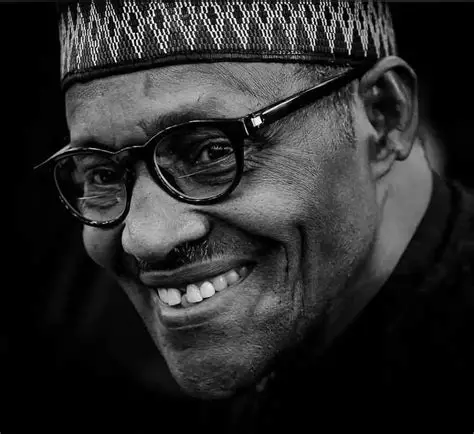
Nigeria bade farewell to one of its most consequential leaders this week, as former President Muhammadu Buhari, who died on Saturday, July 13, in London at the age of 82, was laid to rest in his hometown of Daura, Katsina State, on Tuesday, July 15. The solemn occasion was marked not only by public mourning but also by deep reflections on his life and legacy, including a decision by President Bola Ahmed Tinubu to rename the University of Maiduguri in his honour.
Buhari’s death followed a nearly four-month medical trip to the United Kingdom, which was initially described as routine. According to his former Special Adviser on Media and Publicity, Mr. Femi Adesina, the late President had long accepted the inevitability of death. In a now-resurfaced conversation from March 2023, Buhari told Adesina, “I’m looking forward to leaving. And from there, I go to my grave at the appointed time.”
The words, made public again in Adesina’s detailed tribute, have taken on fresh poignancy following Buhari’s burial. “So, Baba Buhari, my boss and senior friend, would be laid in this narrow cell?” Adesina wrote, echoing Thomas Gray’s famous elegy: “Each in his narrow cell forever laid.”
The tribute, published today by Keeping Them Honest Daily, chronicled moments of Buhari’s presidency and personal convictions. Adesina, who served as his spokesman from 2015 to 2023, recalled a visit to the former president in March 2025 at his renovated Kaduna residence. “I met him with almost all the newspapers in the land spread on the table before him. He said he was very well, since he was free from the troubles of Nigeria. We laughed,” he wrote.
Adesina’s memoir-like reflection highlighted Buhari’s straightforward leadership style and principled decision-making. On appointments, Buhari once said, “If I bypass the best person because of where he comes from, his language or religion, Allah will judge me for it.”
He also recounted the political crisis of June 2015 when Bukola Saraki and Yakubu Dogara emerged as National Assembly leaders against APC preferences. “I told the President we needed to congratulate them. He balked. But I stood my ground… At the end of the day, he reasoned with me, and the statement was written.”
The tribute countered perceptions that Buhari was detached from governance. “Some people claim he was never aware of anything. I laughed. His memory was amazing,” Adesina wrote, citing Buhari’s detailed responses to even personal matters brought before him.
On national security, particularly at the height of the insurgency, Buhari was quoted as saying during a meeting with service chiefs: “Wipe out these people. Kill them. They are haters of humanity. They don’t deserve to live.” Rejecting a proposal to hire mercenaries, Buhari reportedly insisted: “Our military fought in Burma, in Congo, and in Biafra. They proved themselves. Why then mercenaries?”
Buhari, who served as Nigeria’s military Head of State from 1983 to 1985 before returning as a democratically elected president in 2015, led the country for eight years until 2023. Known for his austere personal lifestyle, anti-corruption stance, and preference for frugality in public office, his legacy remains subject to national debate. Yet, many agree that he brought discipline and a personal standard of integrity to Nigerian public life.
He is survived by his wife, Aisha Buhari, and several children.
As the nation continues to reflect on Buhari’s legacy, President Bola Tinubu on Thursday presided over a special session of the Federal Executive Council in Abuja to honour the late president. The highlight of the session was Tinubu’s announcement that the University of Maiduguri would henceforth be known as Muhammadu Buhari University, Maiduguri.
Delivering a solemn tribute, Tinubu described Buhari as “a good, decent, and honourable man,” whose life was marked by discipline, moral fortitude, and unwavering patriotism.
“He stood always ramrod, unmoved by the temptation of power, unseduced by applause, and unafraid of the loneliness that sometimes comes to those who do what is right rather than popular,” Tinubu said.
He acknowledged that Buhari’s record, like all legacies, would invite debate, but insisted that “the incorruptible standard he represented will not be forgotten.”
Tinubu also recalled their shared political journey, which led to the historic 2015 democratic transition when the APC unseated an incumbent ruling party for the first time. “Buhari bore the burdens of office without complaint,” the President said.
The chamber, filled with ministers, aides, and senior officials, observed a moment of silence after Tinubu’s remarks. Across the country, tributes continued to pour in—from political leaders and civil society groups to ordinary citizens—each reflecting on the life of a man who shaped the country’s modern political trajectory.
The renaming of the University of Maiduguri is seen as both a symbolic and strategic gesture, tying Buhari’s legacy to a region long affected by insurgency, and where his administration directed significant military and reconstruction efforts.
As Adesina noted in his reflection, Buhari once said after the passing of his Chief of Staff, Abba Kyari, in 2020: “We shall all go one day. Only that we don’t know the time.” Now, that time has come: for a man who prepared for it with clarity, and left, as he said he would, “at the appointed time.”
Discover more from Keeping Them Honest
Subscribe to get the latest posts sent to your email.