

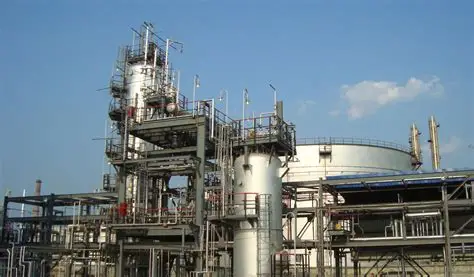
Before we put the final nail in the coffin of Nigeria’s troubled refineries, the country deserves clear answers: particularly from Tecnimont SpA, the Italian contractor engaged to rehabilitate the Port Harcourt Refinery. After all, this is a project that was loudly celebrated as a success less than a year ago, only to be declared dead-on-arrival by a new leadership team barely months later. Did the contractor deliver a shoddy job? Was the project sabotaged after the exit of Mele Kyari, the former Group Chief Executive Officer of the Nigerian National Petroleum Company Limited (NNPCL)? Or was the entire effort just another chapter in the endless cycle of deception, corruption, and incompetence that has plagued Nigeria’s oil sector for decades?
These questions are not rhetorical. Nigerians deserve answers, and accountability. But in the absence of both, one thing is certain: the era of fantasy-driven refinery rehabilitation must end. The Port Harcourt, Warri, and Kaduna refineries should be sold: outright and immediately.
In recent days, the tone has shifted dramatically. Speaking in Vienna, Austria, at the OPEC International Seminar, new NNPCL GCEO Bayo Ojulari broke ranks with his predecessors. For the first time in a long time, a Nigerian oil executive told the truth: “Sale is not out of the question,” Ojulari said, revealing that a strategic review of the refineries is underway and expected to conclude by year’s end. He made it clear that the billions already invested in turnaround maintenance have yielded no tangible outcome.
Then came Aliko Dangote, Africa’s richest man and owner of the new 650,000 barrels-per-day Dangote Refinery in Lagos, who openly expressed doubt that Nigeria’s state-run refineries will ever function again. According to him, $18 billion has been spent on these facilities over the years with absolutely nothing to show for it. He compared the government’s rehabilitation effort to trying to modernize a 40-year-old car using new technology that the chassis can no longer support.
Nigerians are understandably wary of Dangote in this matter, and rightly so. In 2007, the billionaire businessman and his partners acquired the Port Harcourt and Warri refineries during the last days of President Obasanjo’s tenure. But a wave of national protests led by the Nigerian Labour Congress (NLC) forced President Yar’Adua to revoke the sale shortly after assuming office. That experience left scars. It is not lost on Nigerians that the same Dangote now owns the country’s largest private refinery, and that these NNPCL facilities, if they were ever truly rehabilitated, could become direct competitors to his business empire.
But while you can question Dangote’s motives, his facts are unassailable. And the facts are damning. The NNPC refineries are not just obsolete, they have become financial sinkholes. Across several administrations, efforts to bring them back online have consumed billions of dollars in public funds, yet yielded zero output, zero value, and zero accountability. The Port Harcourt refinery was ceremoniously declared “functional” in late 2024. Less than a year later, it was back in the news; for all the wrong reasons.
And this brings us back to Tecnimont SpA. What exactly did the contractor deliver? What did Nigeria pay for? And why, if the refinery was functional under Kyari’s leadership, is it now being deemed a likely candidate for sale or scrap under Ojulari’s tenure?
Why has no one summoned Tecnimont SpA to explain the technical status of the facility? If the contractor did its job, what changed after handover? If it didn’t, why is there no investigation? This silence on the contractor’s performance is as baffling as it is unacceptable.
But whether or not the contractor and the previous leadership had the best of intentions, the current situation is proof that state ownership of refineries in Nigeria is a failed experiment. From endless pipeline vandalism to procurement rackets and bloated overheads, every aspect of public sector refining has been captured by entrenched interests who have no incentive to change.
The path forward is clear: the refineries must be sold, not as concessioned liabilities or politically connected handovers, but as full divestments in open, transparent, and performance-guaranteed transactions. Government must set clear conditions for the sale: job preservation, output guarantees, price control mechanisms, and walk away from day-to-day operations.
Opponents of privatization, such as former Senator Shehu Sani, have warned that the sale could mirror the disastrous outcomes of Nigeria’s power sector reforms. Their caution is valid. But what’s the alternative? Spend another $7 billion on “rehabilitation” contracts, only to stand before the nation five years from now, repeating the same tired excuses?
The refineries are old. The technology is obsolete. The business model is broken. And public trust has been exhausted. The time for sentiment is over. The time for truth, and action, is now.
But before we sell, let Nigerians hear directly from Tecnimont. Let them tell us what exactly went wrong. Only then can we draw the curtain on this long, expensive tragedy with dignity, and ensure it never happens again.
Sell the refineries. Yes. But first, tell us the truth.
Discover more from Keeping Them Honest
Subscribe to get the latest posts sent to your email.