

• Nigeria Mourns, Reflects On His Tenure And Legacy
By John Paul
Former Nigerian President and military Head of State, Muhammadu Buhari, is dead. He died in the early hours of Sunday in London, United Kingdom, where he had been receiving undisclosed medical care. The Presidency confirmed his passing in a statement issued by Presidential spokesperson Bayo Onanuga, who noted that funeral arrangements would be announced in due course after consultations with the family.
Born on December 17, 1942, in Daura, Katsina State, Buhari rose from humble beginnings to the top of Nigeria’s military and political hierarchy. A career soldier, he joined the Nigerian Army in 1961 and received military training in Kaduna, Aldershot (UK), India, and the United States. He served with distinction during the Nigerian Civil War and was appointed military governor of the now-defunct North-Eastern State in 1975, and later Federal Commissioner (Minister) for Petroleum Resources.
Buhari first seized national power on December 31, 1983, as a Major General, toppling the democratically elected government of President Shehu Shagari. His 20-month military regime was known for its austere economic measures, rigid discipline enforcement, and mass arrests of politicians. While many praised his anti-corruption drive, critics decried the suspension of civil liberties, arbitrary detentions, and a general atmosphere of repression. He was ousted in a palace coup led by General Ibrahim Babangida in August 1985.
Following years of political hibernation, Buhari reemerged in 2003 as a civilian politician, running unsuccessfully for president three times before finally winning in 2015 under the All Progressives Congress (APC). His election was widely hailed as a turning point in Nigeria’s democratic journey, as he became the first opposition candidate to unseat an incumbent president through the ballot box.
However, Buhari’s presidency, spanning two terms from 2015 to 2023, would ultimately be defined by widespread economic stagnation, deepening insecurity, and increasing authoritarianism. Under his watch, Nigeria slipped into two recessions within five years. His administration’s handling of the economy was marked by inconsistent policies, a rigid foreign exchange regime that distorted markets, and a failure to diversify the economy despite campaign promises to move Nigeria away from oil dependence.
Unemployment soared under Buhari’s watch, reaching historic highs among young Nigerians, while inflation remained stubbornly elevated. Many critics accused his government of lacking both the urgency and innovation to deal with the country’s mounting fiscal and economic crises. Despite launching several intervention schemes and development initiatives, including the Anchor Borrowers’ Programme and the Economic Sustainability Plan, the results were mixed at best, and corruption scandals continued to dog various ministries and agencies.
Politically, Buhari was accused of overseeing one of the most divisive administrations in Nigeria’s modern history. Appointments heavily skewed in favour of his native North alienated much of the South, and his perceived indifference during moments of national crisis, such as the #EndSARS protests of 2020, drew widespread condemnation. Human rights groups frequently criticized his administration’s intolerance for dissent, the harassment of journalists, and the militarization of civilian protests.
Security, which had been a major campaign issue in 2015, only deteriorated under Buhari. While early gains were made against Boko Haram in the Northeast, new and more complex threats emerged under his watch. Banditry, mass kidnappings, and farmer-herder conflicts turned vast swaths of the North and Middle Belt into ungovernable zones, with little visible strategy from the centre to stem the tide. His government often dismissed warnings from analysts and civil society groups, creating an impression of detachment and denial.
Though Buhari signed key reforms, such as the long-awaited Petroleum Industry Act and invested in infrastructure, especially roads, bridges, and rail, critics argued that these achievements were overshadowed by a lack of transparency and an absence of a coherent economic vision. His tenure ended in 2023 amid rising debt, record fuel subsidies, and a currency crisis that crippled both business confidence and foreign investment.
After leaving office, Buhari retired to Daura but spent significant periods abroad, particularly in the United Kingdom, where he had a long history of medical visits even during his presidency. His extended absences while in office fueled rumors, raised governance concerns, and deepened public frustration over the opacity of his health status.
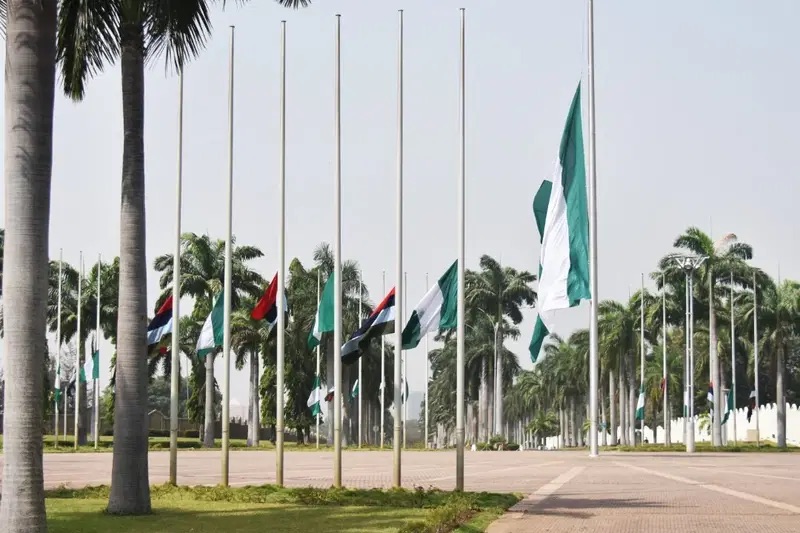
President Bola Ahmed Tinubu, in a message released yesterday, expressed condolences to the Buhari family and praised the late president for his “years of dedicated service to the nation.” He also ordered Nigerian flags flown at half mast worldwide. Reactions across the country have been mixed, with tributes pouring in alongside renewed debates about the legacy of a man who once promised change—but left many Nigerians asking whether it ever truly came.
…Buhari’s Legacy: The Achievements Nigerians Will Remember
As tributes pour in across the country and beyond, many reflect on the legacy of the man who ruled Nigeria both as a military leader and a two-term civilian president.
While his time in office was marked by controversy, economic stagnation, and worsening insecurity, Buhari also leaves behind a number of achievements that will shape how history remembers him. From infrastructure development to anti-corruption efforts, Buhari’s leadership left a mixed but notable imprint on Nigeria’s political and developmental landscape.
Perhaps the most defining moment of his political career came in 2015, when Buhari defeated then-incumbent President Goodluck Jonathan to become the first opposition candidate to win a presidential election in Nigeria’s history. That peaceful transfer of power, credited to Ex-President Jonathan, was widely celebrated as a milestone in Nigeria’s democratic evolution.
Buhari also built a public image of personal discipline and modesty. His austere lifestyle bolstered his anti-corruption image, and under his leadership, institutions such as the Economic and Financial Crimes Commission (EFCC) pursued several high-profile corruption cases. While critics argue that the anti-graft war was selective and largely shambolic, his administration maintained a strong public stance against corruption.
Infrastructure development became one of the main pillars of Buhari’s presidency. His administration invested heavily in road and rail projects, including the Lagos-Ibadan standard gauge railway, the Abuja-Kaduna rail line, and the long-awaited Second Niger Bridge, which was substantially completed during his tenure. Several highways and airport terminals across the country also received significant upgrades under his watch.
In agriculture, Buhari launched the Anchor Borrowers’ Programme through the Central Bank of Nigeria to support smallholder farmers. The policy was designed to boost local production, reduce reliance on food imports, and create jobs. It led to a noticeable rise in domestic rice and maize production, although challenges in post-harvest infrastructure and inflation blunted some of the gains.
One of Buhari’s major legislative achievements was signing the Petroleum Industry Act (PIA) into law in 2021 after nearly two decades of delay. The PIA aimed to overhaul the oil and gas sector by introducing new regulatory frameworks, increasing transparency, and improving the fiscal environment for investors. The law was hailed as a step forward, even though implementation has been slow.
His administration also pushed through significant electoral reforms. In 2022, Buhari signed the Electoral Act Amendment Bill into law, which introduced legal backing for electronic transmission of results and set clearer timelines for party primaries. These reforms contributed to improvements in transparency and credibility during the 2023 general elections.
In the digital economy sector, Buhari’s government made progress in building a national identity system and enhancing regulatory frameworks. Millions of Nigerians were enrolled into the National Identity Number (NIN) system, which was linked to mobile SIM cards in an effort to strengthen digital security. His administration also passed the Nigeria Startup Act to encourage innovation and support the tech industry.
On security, Buhari’s administration increased military spending and invested in local arms production through the Defence Industries Corporation of Nigeria (DICON). His government procured a significant amount of military hardware and expanded training, although these efforts struggled to keep pace with the growing insecurity from banditry, terrorism, and kidnapping across the country.
Internationally, Buhari was active in West African diplomacy, working closely with the Economic Community of West African States (ECOWAS) and regional partners on peacekeeping and counterterrorism. He took firm stances against military coups in the region and played a leading role in regional coalitions against insurgent groups.
As Nigerians reflect on Buhari’s legacy, many are drawing a clear distinction between his intentions and outcomes. While his tenure was far from transformative, and many of his reforms lacked effective implementation, his efforts in infrastructure, governance reform, and anti-corruption messaging remain part of the enduring conversation about his place in Nigerian history.
Discover more from Keeping Them Honest
Subscribe to get the latest posts sent to your email.