

By Festus Ahon
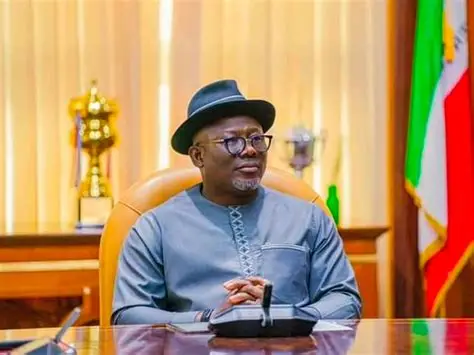
Since his inauguration on May 29, 2023, Governor Sheriff Oborevwori of Delta State has led with a clear vision under his M.O.R.E Agenda — Meaningful Development, Opportunities for All, Realistic Reforms, and Enhanced Peace and Security. Now two years into his tenure, the results of his leadership are evident in fiscal reforms, infrastructure, human capital development, and improved governance.
Fiscal Discipline and Revenue Growth
One of the most notable achievements of the administration is a nearly 90% increase in Internally Generated Revenue (IGR) — from ₦83 billion in 2023 to ₦158 billion in 2024, with a 2025 projection of ₦165 billion. This was achieved without increasing personal income taxes. Instead, better tax compliance was fostered through visible service improvements and internal reforms in revenue services.
Debt management has also seen success. Delta’s debt profile dropped by 46%, from ₦465.3 billion to ₦249.2 billion by the end of 2024. These achievements reflect prudent economic management and a shift toward financial sustainability.
Improved Worker Welfare and Civil Service Reform
Delta now pays a minimum wage of ₦77,500, significantly higher than the national standard. This has increased the monthly wage bill to ₦15.3 billion. Over 8,000 civil servants, including 450 senior managers, have undergone training to improve public service delivery. Additionally, 3,000+ new staff have been recruited into primary education across local governments, enhancing the state’s human resource base.
Infrastructure Development Across the State
Oborevwori’s administration has launched an unprecedented infrastructure drive. Over 1,500 km of roads and 950 km of drainage systems are under construction, with many already completed. Key projects include:
•Ughelli–Asaba dual carriageway (99% complete)
•Okpanam–Ibusa bypass (completed)
•Emevor–Orogun road (Phase I) (completed; Phase II underway)
•Olomoro–Igbide road, Isheagu–Ewulu road (including a new bridge)
•Beneku bridge and access road, ready for commissioning
•Numerous internal roads in Asaba, Warri, Ibusa, Boji-Boji Agbor, and other areas
•Trans-Warri roads and bridges, Ayakoromo and Orere bridges (ongoing)
These projects are reshaping both urban and rural areas, easing traffic, stimulating local economies, and bridging the rural-urban divide.
Urban Renewal and PPPs
Urban regeneration is underway, particularly through Public-Private Partnerships (PPPs). The Asaba International Market (with Delta holding 20% equity) and the Asaba Waterfront City project are two flagship initiatives. A six-lane access road to the Waterfront City is under construction, expected to significantly alter Asaba’s landscape.
Three agencies — DSCTDA, WUEDA, and DESOPADEC — are driving development across the state’s urban and oil-producing communities, working under an integrated and decentralized governance framework.
Human Capital Development and Social Welfare
The M.O.R.E Grant Scheme, launched in 2024, has empowered over 5,400 petty traders and artisans, particularly women. Additionally, the D-CARES programme has impacted over 250,000 people, providing economic support and resilience in post-COVID recovery.
Water access has improved with the completion of 80+ solar-powered boreholes in rural communities and the rehabilitation of urban water schemes under the SURWASH programme.
Agriculture and Economic Empowerment
Agricultural development has also taken center stage. Through the D-CARES FADAMA initiative, 6,000+ farmers have received support. Upcoming partnerships with AUDA-NEPAD are expected to benefit an additional 2,000 livestock and aquaculture producers.
A significant partnership with the African Development Bank (AfDB) for Special Agricultural Economic Zones has generated over 50,000 jobs, boosted food security, and stimulated rural economies.
Healthcare and Health Infrastructure
Over ₦3 billion has been spent on procuring CT scanners, incubators, radiotherapy equipment, and other diagnostic tools. More than 250 primary healthcare centers have been renovated. Forty house officers have been recruited, and over 2 million people are now enrolled in the Delta State Contributory Health Scheme.
A further ₦1.6 billion has been injected into participating hospitals, while the Colleges of Health Technology in Ovrode and Ozoro have become fully operational, addressing medical workforce training needs.
Education Sector Investments
All nine state-owned tertiary institutions remain fully operational with timely salary payments. Over 37,000 students have been admitted in recent intakes, reducing the need for academic migration. Bursaries worth ₦674 million have been disbursed to over 30,000 students, and counterpart funding has been paid to sustain the Universal Basic Education programme.
More than 150 primary and secondary schools have undergone infrastructure upgrades. Land has also been allocated for FUPRE’s Resource Centre in Isiokolo and the Federal University of Medical Sciences in Kwale.
Housing and Judicial Reforms
Housing developments are ongoing in Ozoro, Kwale, and Owa-Oyibu, including 50 housing units of various configurations. Eight new duplexes have been completed at the Commissioners’ Quarters in Asaba.
Judicial reforms have advanced with the construction of a six-storey High Court complex, equipped with e-filing and tech-enabled legal services. Judges were provided with 20 Prado SUVs, and Judges’ Quarters have been constructed to support judicial independence.
Peace and Security
Security has improved with the launch of Operation Delta Sweep, supported by the donation of 66 vehicles to security agencies. Street lighting has been expanded across cities. The State Advisory Peace-Building Council and successful mediation in land disputes (e.g., Aladja–Ogbe-Ijoh) have helped enhance Delta’s reputation as one of Nigeria’s safest states.
Sports and Youth Development
Delta retained top honors in the National Youth Games and National Sports Festival, and also excelled in the Niger Delta Sports Festival. The reconstruction of Warri Township Stadium is ongoing, and youth engagement continues through events like the Headmasters’ and Principals’ Cup competitions.
Strategic Financial Planning and SDGs
The state’s average monthly IGR remittance jumped from ₦7.5 billion in 2023 to ₦13.1 billion in 2024, reflecting strong fiscal management. A ₦630 billion capital budget has been approved for 2025 to drive infrastructure and social investment.
Delta State’s commitment to the Sustainable Development Goals (SDGs) remains solid. In 2024, ₦600 million was released as counterpart funding for health, gender equality, and clean energy programs. Nearly 80% of SDG-aligned projects under Goals 3, 5, and 7 are nearing completion.
Widows’ Welfare and National Recognition
A special welfare initiative for widows currently supports 10,000 beneficiaries with monthly ₦15,000 stipends and free healthcare. These social interventions have garnered national acclaim. Governor Oborevwori was named Governor of the Year 2024 by ThisDay/Arise, New Telegraph, and Vanguard, and awarded an honorary doctorate by Novena University.
Conclusion
Governor Sheriff Oborevwori’s first two years in office have been marked by tangible progress. Through prudent economic reforms, inclusive governance, and results-driven development, he has redefined leadership in Delta State. With transparent policies, human-centered planning, and a no-debt financing principle, he has positioned Delta for long-term growth and sustainability. His approach has blended vision with action, delivering a government that is accountable, people-focused, and genuinely transformative.
Discover more from Keeping Them Honest
Subscribe to get the latest posts sent to your email.