

Nigeria is sitting on a goldmine and begging for bread. That is the tragedy of our nation.
We have over 200 million people. Africa has over 1.4 billion people. The world has over 8 billion people. Yet we are poor, unemployed, and insecure. Why? Because population without productivity is a liability, not an asset. A large population that only consumes what others produce is not a market power; it is a poverty factory.
China has 1.4 billion people and is wealthy because 1.4 billion people are productive. Nigeria has 200 million people and is poor because 200 million people are largely consumers. The difference is not population. The difference is productivity.
The solution is not in Abuja. The solution is in the 36 States.
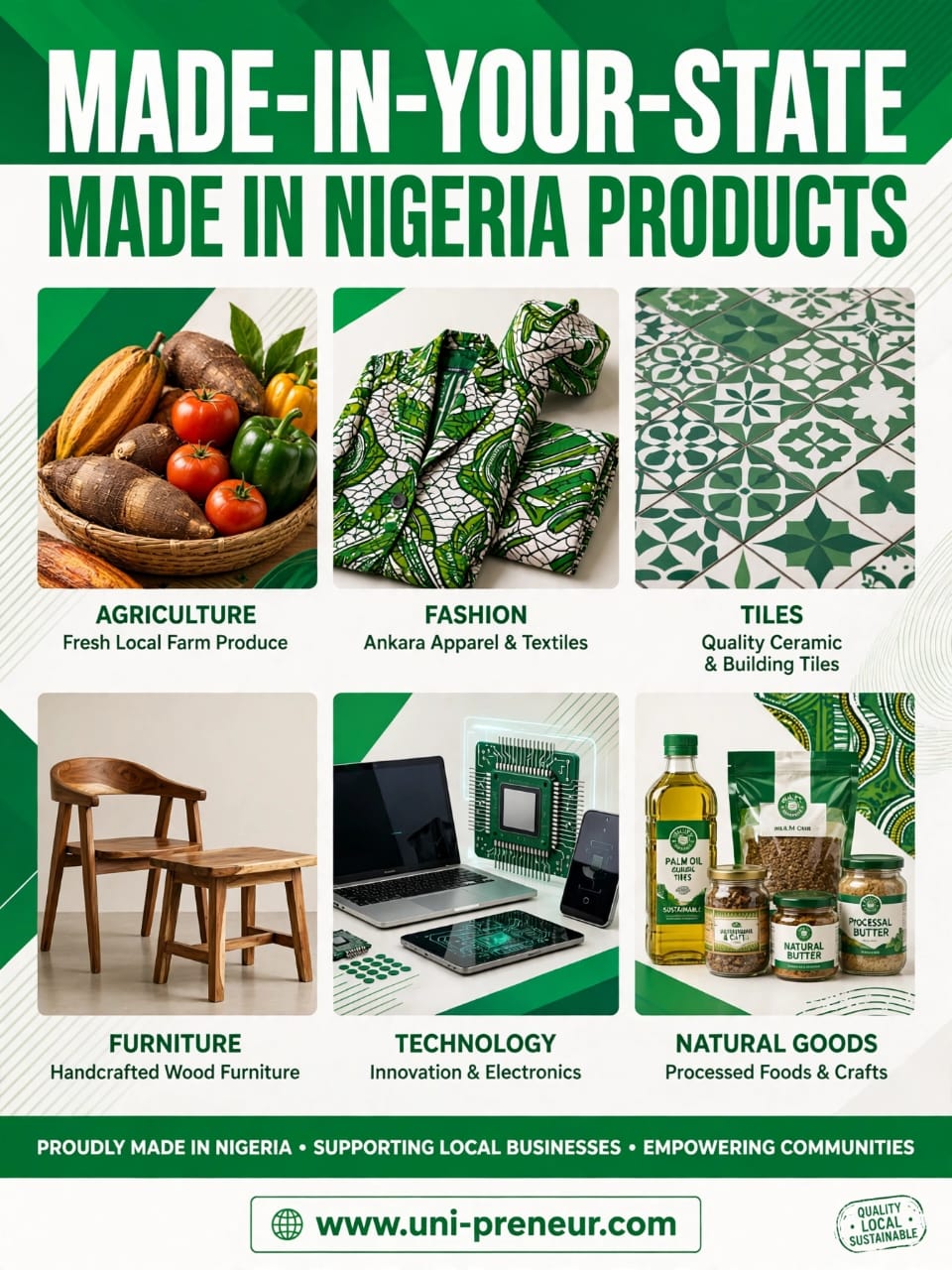
Every one of the 36 States must have MADE-IN-YOUR-STATE products for local and international markets, using its raw materials, natural resources, and human capital to action. That is how to create wealth and massive job opportunities. That is the only sustainable path.
This is not theory. This is how every developed nation grew, from the United States to Germany, from China to India.
THE FAILURE OF THE ABUJA MODEL
For 65 years we have run a feeding-bottle economy. States go to Abuja every month to share oil money from the Federation Account Allocation Committee (FAAC). They wait, they collect, they pay salaries, they build a few roads, and they go back next month. No production. No value addition. No wealth creation. This model has failed completely.
Oil employs less than 5% of Nigerians but provides over 80% of our foreign exchange and 60% of government revenue. When oil price falls, Nigeria collapses. When oil price rises, we celebrate but remain poor. That is not an economy; that is gambling.
Meanwhile, we import everything that we should be producing: toothpicks from China, pencils from Indonesia, rice from Thailand, palm oil from Malaysia, tomato paste from Italy, textiles from India, roofing sheets from China, even fuel despite being the 6th largest oil producer in the world. We export crude oil worth 60 dollars per barrel and import refined petrol worth 120 dollars per barrel. We export raw cocoa at 2,500 dollars per ton and import chocolate at 40,000 dollars per ton. We export raw gold and import jewelry. This is economic foolishness of the highest order.
We cannot continue like this. No nation has ever become wealthy by exporting raw materials and importing finished goods.
WHAT MADE-IN-STATE MEANS
Made-in-State does not mean every state must produce everything. It means each state must identify its comparative advantage and industrialize around it. It means asking one honest question: What does my state have that my state can turn into what Nigeria and the world need?
Let us break it down:
1. The North: Agriculture to Industry
Sokoto, Kebbi, Zamfara, Katsina, Kano, Jigawa, Bauchi, Borno, Yobe, Adamawa, Taraba, Benue, Nasarawa, Kogi, Niger, Kwara, Plateau, Kaduna, Gombe.
Your raw material is land, sun, and hardworking people. Your wealth is agriculture. But you must stop selling raw produce in baskets at the roadside.
Benue is called the Food Basket of the Nation and produces yam, but where is Made-in-Benue Yam Flour, Instant Pounded Yam, Yam Chips, and Ethanol for international market?
Kano produces groundnut and hides and skin in large quantity, but where is Made-in-Kano Groundnut Oil, Peanut Butter, and Leather Shoes, Bags and Belts for 1.4 billion Africans?
Plateau has Irish potato in abundance, but where is Made-in-Plateau French Fries, Potato Starch, and Chips for Shoprite and international fast-food chains?
Sokoto has limestone and livestock, but where is Made-in-Sokoto Cement, Milk, Yoghurt and Meat processing?
Kebbi produces rice, but where is Made-in-Kebbi Branded Parboiled Rice that competes with Thailand?
Benue alone can feed Nigeria and export to Africa if it moves from farm to factory. Agriculture without industry is poverty.
2. The South-West: Human Capital to Innovation
Lagos, Ogun, Oyo, Osun, Ondo, Ekiti.
Your resource is human capital, knowledge, and ports. You are the gateway to the world.
Ekiti has kaolin, granite and clay in commercial quantity. Where is Made-in-Ekiti Tiles, Ceramics, Paints, and Cosmetics?
Ondo has the largest bitumen deposit in Africa, second largest in the world. Where is Made-in-Ondo Bitumen for roads across Africa? Why are we importing bitumen when we have it?
Ogun has limestone and is close to Lagos port. Where are the Made-in-Ogun Building Materials factories producing for the whole of West Africa?
Lagos has over 20 million people. That is bigger than many African countries. Where is Made-in-Lagos Technology, Fashion, Film, Music, and Financial Services for Africa and the world?
Oyo and Osun have vast cashew and cocoa. Where are the processing factories?
3. The South-South and South-East: Oil, Gas, Palm, and Enterprise
Rivers, Bayelsa, Delta, Edo, Akwa Ibom, Cross River, Imo, Abia, Anambra, Enugu, Ebonyi.
Your resources are oil, gas, palm, and unmatched entrepreneurial spirit.
Akwa Ibom has oil, gas and sea. Where is Made-in-Akwa Ibom Petrochemicals, Fertilizer, and Plastics?
Cross River has cocoa and timber. Where is Made-in-Cross River Chocolate and World-Class Furniture?
Abia has human capital for enterprise. Aba can clothe Africa. Where is the Made-in-Aba Garment Factory that employs 500,000 youths with modern machines and power?
Imo has palm in abundance. Where is Made-in-Imo Vegetable Oil, Soap and Cream that replaces imported oil?
Enugu has coal and gas. Where is Made-in-Enugu Industrial Power and Steel?
Anambra has commerce. Where is Made-in-Anambra Auto Spare Parts and Electricals for Africa?
Every state has something. No state is poor. Only leadership and vision have been poor.
HOW IT CREATES WEALTH AND JOBS – THE VALUE CHAIN SECRET
This is the simple mathematics of wealth that we have refused to learn:
If you sell 1 ton of raw cocoa, you get 2,500 dollars. If you process it into cocoa butter and powder, you get 15,000 dollars. If you brand it and package it as chocolate for international market, you get 40,000 dollars.
Same cocoa. Different value. The difference is processing, human capital, and branding.
If you sell raw hides and skin, you get peanuts. If you turn it into finished leather shoes in Kano, you employ tanners, designers, shoemakers, and marketers.
That is what Made-in-State does. It moves us from raw material to finished product.
One factory creates a complete chain: Farmers, Transporters, Factory Workers, Packagers, Marketers, Exporters, Bankers, ICT Support, Artisans.
One Made-in-Kano Leather Factory can create 10,000 direct jobs and 50,000 indirect jobs. One Made-in-Benue Yam Processing Plant can lift 20,000 farmers out of poverty and keep our girls from migrating to Lagos to do house help. One Made-in-Aba Fashion Cluster can generate 2 billion dollars in export.
Multiply that by 36 States, each with 10 flagship products. That is 360 factories and industrial clusters. That is over 10 million direct jobs and 30 million indirect jobs within 5 years. That is how you maximize a population of 200 million and turn it into an asset.
Discover more from Keeping Them Honest
Subscribe to get the latest posts sent to your email.