

…New Rules-Based Regime Repositions Nigeria as Africa’s Premier Deepwater Investment Destination
By Emmanuel Olugua—KTH Daily Business Lead
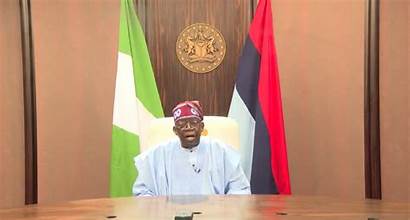
President Bola Ahmed Tinubu has approved a sweeping reform of Nigeria’s deep offshore oil and gas investment regime, unveiling a transparent, rules-based framework designed to attract up to US$50 billion in fresh global investment, accelerate stalled deepwater projects, and reinforce Nigeria’s position as one of the world’s most attractive destinations for long-term energy capital.
The landmark policy, announced on Tuesday by the Presidency, replaces the long-standing system of project-by-project negotiations with a predictable investment architecture intended to provide certainty for international investors while safeguarding Nigeria’s long-term economic interests.
The new framework is expected to revive several capital-intensive offshore developments that have remained dormant for years, beginning with the estimated US$10 billion Bonga South West Project, and create a pipeline for multiple qualifying deep offshore developments.
The reform follows President Tinubu’s engagement with the Chief Executive Officer of Shell plc, Wael Sawan, during which the President directed officials to develop measures capable of unlocking Nigeria’s deep offshore investment potential. Rather than adopting project-specific arrangements, the Federal Government has established a comprehensive framework that will apply across eligible offshore developments.
The framework is backed by the Deep Offshore Oil and Gas Projects Incentives (Tax Remission) Order, 2026, which introduces transparent eligibility criteria, clearly defined implementation procedures, and a durable investment structure aimed at enhancing investor confidence, reducing uncertainty, and strengthening Nigeria’s competitiveness in the global race for capital.
The approval also authorises the Nigerian National Petroleum Company (NNPC) Limited, as the Federal Government’s nominated counterparty under existing Production Sharing Contracts, to commence the contractual amendments required for eligible projects to benefit from the new investment regime.
Beyond attracting foreign capital, the Tinubu administration said the framework is designed to stimulate domestic industrial growth by ensuring that qualifying projects maximise execution within Nigeria wherever commercially and technically feasible.
According to the President’s Special Adviser on Energy, Olu Arowolo-Verheijen, the policy is expected to deepen local content, strengthen indigenous capacity, and create thousands of skilled jobs across the oil and gas value chain.
He said qualifying projects would expand opportunities for Nigerian engineering firms, fabrication yards, marine logistics operators, technical service providers, and project management companies, thereby strengthening domestic supply chains and positioning Nigeria as Africa’s regional hub for deep offshore project execution.
“The objective is not only to increase investment and production, but also to create skilled jobs, deepen local supply chains and position Nigeria as Africa’s regional hub for deep offshore project execution,” he said.
The Presidency disclosed that the framework emerged from an extensive inter-agency collaboration involving the Presidency, the Federal Ministries of Justice, Finance and Petroleum Resources, the Nigeria Revenue Service, NNPC Limited, the Nigerian Upstream Petroleum Regulatory Commission (NUPRC), the Nigerian Content Development and Monitoring Board (NCDMB), investing partners and other industry stakeholders.
President Tinubu commended the institutions involved for their technical expertise and collaborative efforts in developing what he described as a durable investment architecture capable of supporting Nigeria’s next phase of offshore energy development.
According to the President, countries that succeed in attracting sustained investment are those that provide certainty through clear rules and strong institutions rather than relying solely on abundant natural resources.
“The countries that attract long-term investment are not necessarily those with the greatest natural resources. They are the ones that provide the greatest certainty,” Tinubu said.
“This reform reflects our determination to build an investment environment defined by clear rules, strong institutions and enduring partnerships. We are creating the conditions for capital to flow, for Nigerian businesses to grow, for our people to prosper and for our natural resources to deliver lasting national value.”
The new framework is expected to enhance investor confidence in Nigeria’s energy sector, accelerate final investment decisions on major offshore projects and strengthen the country’s standing as a preferred destination for global energy investment at a time when competition for international capital is intensifying.
Discover more from Keeping Them Honest
Subscribe to get the latest posts sent to your email.