

…As Gambari, Jega, Bugaje, Others Demand Urgent Security, Democratic Reforms
By Abu Adamu
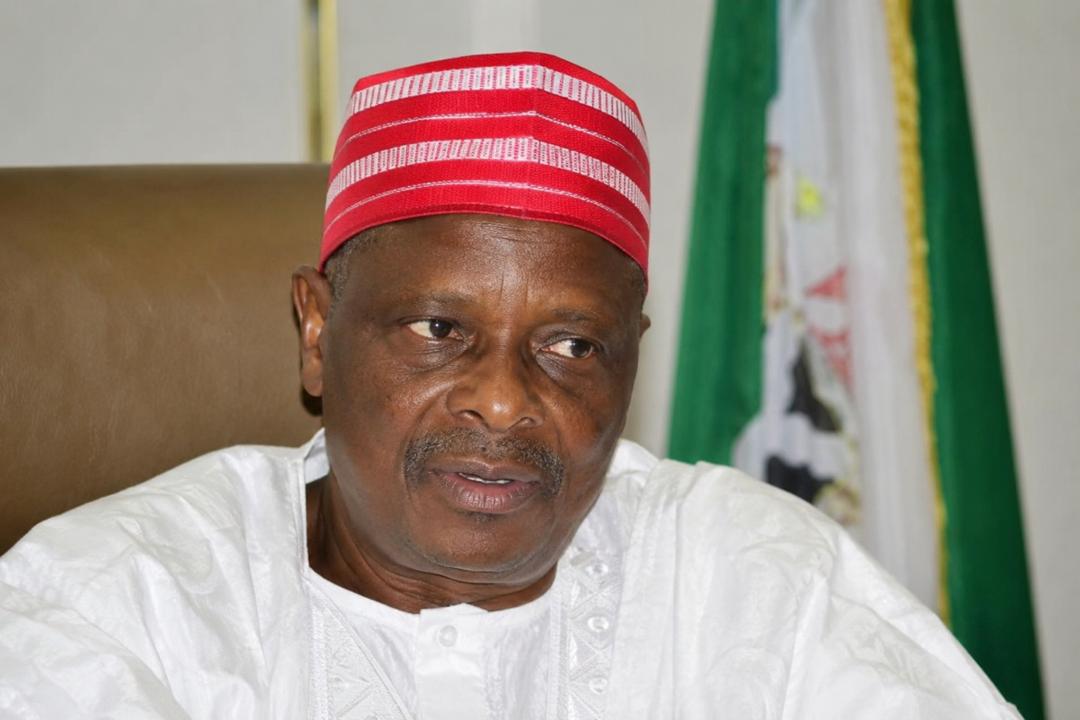
Former Kano State Governor and major leader of the opposition National Democratic Congress, NDC, Rabiu Musa Kwankwaso, has warned that Nigeria is “bleeding profusely” under the weight of escalating insecurity, saying the country urgently needs a comprehensive overhaul of its security architecture to avert a deeper national crisis.
Kwankwaso’s warning came as a group of prominent elder statesmen, academics, diplomats and civil society leaders, including Ibrahim Gambari, Attahiru Jega and Usman Bugaje, raised the alarm over what they described as a deepening crisis driven by insecurity, electoral manipulation and the erosion of democratic institutions.
In a statement on Tuesday, Kwankwaso lamented the growing wave of violence across the country, saying citizens in many states could no longer sleep peacefully due to persistent attacks by bandits, terrorists, kidnappers and other criminal elements.
“I have noted with grave concern the escalating wave of insecurity that has engulfed our beloved nation. Once again, Nigeria is bleeding profusely,” he said.
According to the former Defence Minister, states including Zamfara, Borno, Sokoto, Katsina, Kwara and Oyo have witnessed disturbing levels of violence, while criminal groups have become increasingly emboldened.
He expressed particular concern over reports that some criminal gangs now openly use social media platforms to taunt security agencies and terrorise the public.
“What is most alarming is the audacity of these criminals, who now brazenly hold live sessions on social media to taunt the authorities and terrorise the public. This is totally unacceptable and not befitting of a sovereign nation like ours,” he stated.
Drawing from his experience as governor and former Minister of Defence, Kwankwaso argued that Nigeria possesses the resources needed to defeat insecurity but lacks the political will to do so.
“What we lack today is not resources, but the requisite political will and sincerity to confront this menace head-on,” he said, adding that the current strategy had failed despite huge allocations to the security sector.
His concerns echoed those expressed by Gambari, Jega, Bugaje and other northern leaders in a statement mailed to KTH Daily on Monday, in which they warned that Nigeria was standing at a dangerous crossroads.
The group said insecurity, weakening democratic institutions and growing public distrust in government were converging into a national crisis that threatened the country’s stability and survival.
According to the signatories, the constitutional principle of separation of powers had come under severe strain, with the legislature allegedly subjected to near-total executive control while the judiciary appeared to be losing its independence and integrity.
They argued that the erosion of institutional checks and balances had fuelled political exclusion, impunity, violent extremism, organised crime and communal conflicts across the country.
The elders also linked Nigeria’s worsening security situation to instability across the Sahel region, citing terrorism, arms trafficking, porous borders and unconstitutional changes of government in Mali, Burkina Faso and Niger.
They warned that the collapse of democratic governance and regional cooperation in parts of the Sahel was emboldening armed groups and weakening civilian protection across West Africa and the Lake Chad Basin.
To address the challenge, the group called on the Federal Government to urgently recommit to democratic accountability, judicial independence and institutional reforms capable of restoring public confidence in governance.
They also urged Abuja to rebuild relations between the Alliance of Sahel States (AES) and the Economic Community of West African States (ECOWAS), while appointing a high-level Special Envoy for the Sahel to strengthen regional security cooperation.
Like the elder statesmen, Kwankwaso stressed that military responses alone would not solve the problem, urging government to tackle the root causes of insecurity, including poverty, unemployment and poor governance.
He advocated greater investment in education, healthcare, infrastructure, electricity and agriculture, while calling for improved welfare for security personnel, stronger intelligence gathering and enhanced community policing.
The statement by the elder statesmen was signed by Dr. Husseini Abdu, Ambassador Fatima Balla, Dr. Usman Bugaje, Prof. Ibrahim Gambari, Dr. Yahaya Hashim, Prof. Jibrin Ibrahim, Prof. Attahiru Jega, Prof. Mohammed Kuna, Abubakar Balarabe Mahmoud (SAN) and Malam Kabiru Yusuf.
They also urged civil society organisations, professional bodies, traditional rulers and religious leaders to intensify efforts toward promoting accountability, interfaith dialogue, peaceful coexistence and national unity, warning that Nigeria’s current trajectory could further deepen insecurity and social instability if urgent corrective measures are not taken.
Discover more from Keeping Them Honest
Subscribe to get the latest posts sent to your email.