

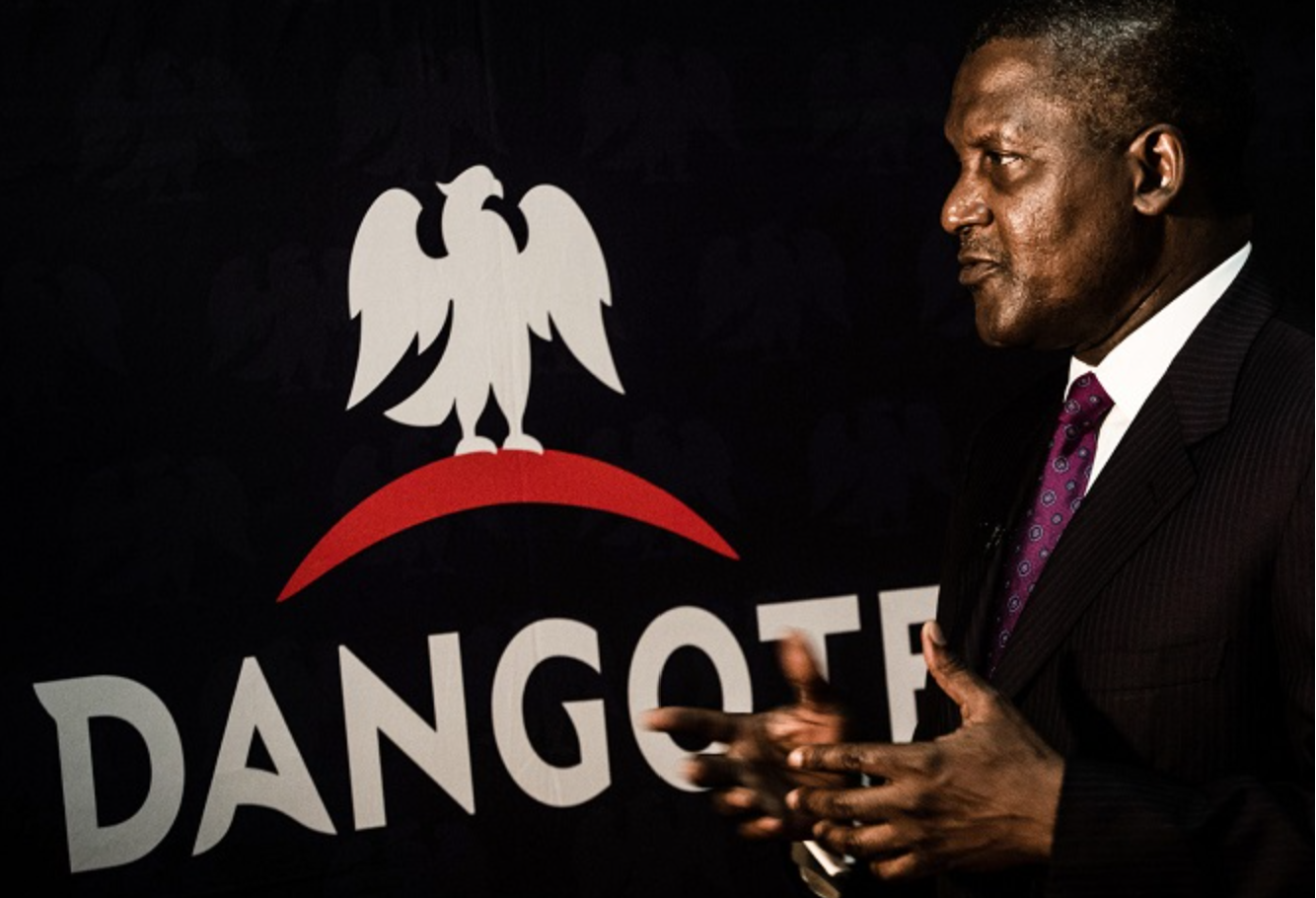
When Aliko Dangote built the world’s largest single-train refinery, the assumption was that he had reached the outer limits of private industrial ambition in Nigeria. The proposed 10,000-hectare deep seaport at the Olokola Free Trade Zone suggests otherwise.
What is emerging in Ogun State is not merely another port project. It is the outline of a privately controlled industrial corridor that could alter the balance of trade infrastructure, logistics power and export economics in Nigeria.
At the centre of the plan is a strategic calculation: whoever controls logistics controls industrial competitiveness.
The proposed port, stretching through Ogun Waterside toward parts of Ondo State’s Atlantic coastline, is expected to support exports of refined petroleum products, fertilisers and petrochemicals from the Dangote industrial ecosystem. In practical terms, this means reduced dependence on congested public port infrastructure, lower shipping costs, faster export turnaround and tighter supply-chain control for one of Africa’s largest conglomerates.
That matters because Nigeria’s biggest industrial weakness is no longer production alone. It is logistics.
Manufacturers routinely complain about port congestion, poor transport infrastructure, customs delays and prohibitive shipping costs that undermine competitiveness. Dangote’s response appears to be vertical integration on a national scale: own the refinery, own the fertiliser plants, own the power, and now potentially own the export gateway.
The economic implications are substantial.
If completed at scale, the Olokola project could deepen Nigeria’s transition from a crude-export economy toward a value-added export model built around refined products, petrochemicals and industrial manufacturing. It could also intensify competition within the maritime sector, particularly as private capital increasingly fills infrastructure gaps traditionally dominated by government.
For Ogun and Ondo states, the project signals the possibility of a new industrial belt capable of attracting manufacturing clusters, warehousing, marine services and logistics investments along the Atlantic corridor. Host communities are already being engaged as surveys and enumeration begin.
But the significance extends beyond regional development.
Dangote’s port strategy is effectively a vote of limited confidence in the state’s ability to independently deliver globally competitive infrastructure within the timeframe large-scale industry requires. Like the refinery before it, the project reflects a growing reality in Nigeria’s political economy: private conglomerates are increasingly building parallel infrastructure systems because public systems are too slow, congested or unreliable for industrial-scale ambition.
That creates both opportunity and risk.
Opportunity because Nigeria desperately needs infrastructure investment. Risk because economic power becomes increasingly concentrated in a handful of vertically integrated corporate giants with influence across energy, logistics, manufacturing and trade.
Still, the calculation behind the Olokola project is unmistakable. Dangote is no longer simply building factories.
He is attempting to redesign the architecture through which Nigeria’s industry operates, exports, and competes.
Discover more from Keeping Them Honest
Subscribe to get the latest posts sent to your email.