

…Foreign Lobbyists Raise Alarm Over INEC, 2027 Elections
By Jeremy Fregene
Nigeria’s opposition landscape witnessed a rapid realignment yesterday as a faction of the Peoples Democratic Party (PDP) led by Tanimu Turaki held a solidarity meeting with the African Democratic Congress (ADC), even as top political figures staged a mass protest against the Independent National Electoral Commission (INEC) over alleged bias and interference.
The PDP delegation, which included Seyi Makinde, met with ADC leaders led by David Mark at his Abuja residence in what was described as a solidarity visit amid rising political consultations ahead of the 2027 elections.
The closed-door meeting, attended by key opposition figures such as Atiku Abubakar, Peter Obi, Rabiu Kwankwaso, and Rotimi Amaechi, focused on strengthening democratic institutions, electoral transparency, and possible alliances.
Makinde said the visit underscored the PDP’s commitment to working with like-minded actors to preserve democratic values.
“We came here to visit the leadership of ADC. We are on a solidarity visit,” he said, noting that collaboration across party lines was essential to maintaining a credible democratic space.
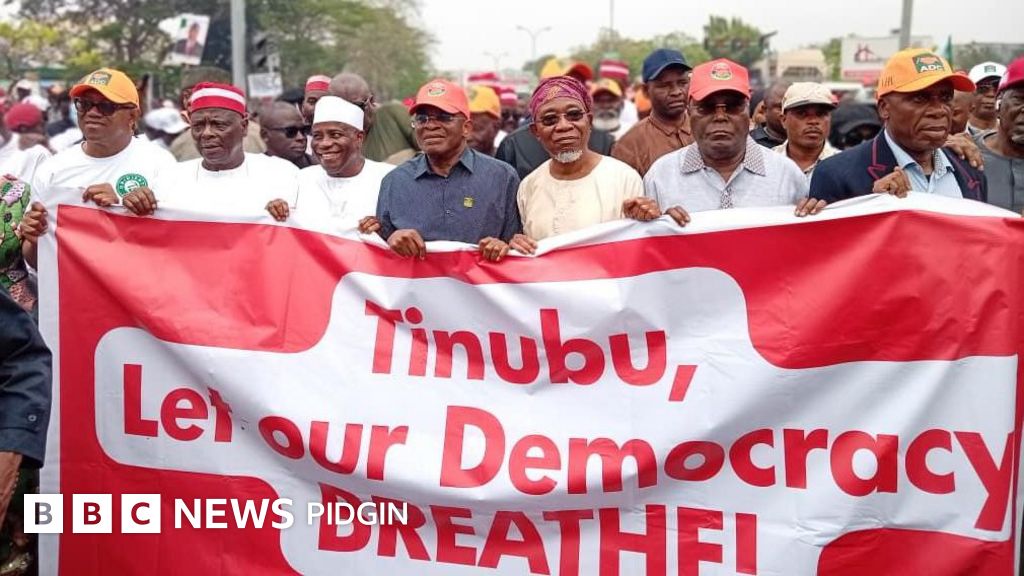
However, the political engagement quickly spilled into the streets, as many of the same opposition leaders led a “mammoth” protest to INEC headquarters in Abuja, demanding sweeping reforms within the electoral body.
Defying steady rain, protesters marched from David Mark’s residence, where they had earlier gathered for activities marking his 78th birthday, to the commission’s headquarters, calling for the resignation of INEC Chairman, Joseph Amupitan.
The protest, spearheaded by Atiku, Obi, and ADC National Secretary Rauf Aregbesola, accused the INEC leadership of partisanship and actions capable of undermining Nigeria’s multi-party democracy.
In a strongly worded statement, the ADC leadership alleged that the INEC chairman had overstepped his constitutional boundaries by publicly interpreting court rulings and engaging in matters it said should be left strictly to the judiciary.
“The interpretation of court judgments is the exclusive preserve of the judiciary… this amounts to a serious constitutional breach,” the party stated.
The ADC further accused INEC of issuing “offensive correspondence” and interfering in its internal affairs, warning that such actions could tilt the electoral playing field and weaken democratic pluralism.
The party demanded the immediate resignation or removal of the INEC chairman, withdrawal of the disputed correspondence, a formal apology, and a commitment by the Commission to refrain from meddling in party matters.
It also claimed that INEC had previously recognised its current leadership structure under David Mark, following National Executive Committee meetings conducted in 2025, and had even affirmed the process in court filings—raising questions about what it described as a sudden reversal.
“We are aware of efforts being made to recant earlier positions… this is unconscionable,” the party said, warning that it would pursue legal and constitutional measures if its demands are ignored.
The unfolding political realignments come against the backdrop of rising international scrutiny of Nigeria’s electoral process.
A Washington-based lobbying firm, Von Batten-Montague-York, L.C., has announced plans to urge the administration of Donald Trump and members of the U.S. Congress to impose sanctions on Nigerian officials over the Independent National Electoral Commission (INEC)’s derecognition of ADC leadership factions.
The firm criticised INEC’s handling of internal disputes within the ADC, warning that the move could undermine the opposition’s ability to effectively organise ahead of the next election cycle.
It argued that while INEC has the technical capacity to conduct credible elections, it has shown “serious weaknesses” when confronted with political interference, citing both the 2023 elections and emerging developments.
The lobbying group disclosed that it is already engaging U.S. policymakers and plans to recommend sanctions under the Global Magnitsky framework, targeting any Nigerian official found to be involved in electoral manipulation. Proposed measures include asset freezes, travel bans, and restrictions on access to the global financial system.
The push is linked to a $1.2 million contract reportedly signed by Atiku Abubakar in March 2026 to bolster international advocacy and policy engagement.
Discover more from Keeping Them Honest
Subscribe to get the latest posts sent to your email.