

Two of Nigeria’s most prominent listed companies, Seplat Energy Plc and Lafarge Africa Plc, reported strong full-year financial results on Thursday, highlighting significant growth in revenue and profits across the country’s energy and industrial sectors.
Seplat Energy, listed on both the Nigerian and London Stock Exchanges, recorded a pre-tax profit of $497.8 million for the year ended December 31, 2025, up 86.7 percent from $266.7 million in 2024. Revenue surged 144 percent to $2.726 billion, driven by the full-year contribution from newly consolidated offshore assets. The results, published in Lagos and London, reflect one of Seplat’s strongest operational years following strategic expansion into offshore oil and gas production.
The company’s gross profit rose 156 percent to $904.5 million, while adjusted EBITDA increased to $1.275 billion from $539 million in the previous year. Cash generated from operations reached $1.165 billion, a 276 percent jump, while net debt fell 25 percent to $673.3 million, reducing the net debt-to-EBITDA ratio to 0.53x.
Speaking on the results, Seplat CEO Roger Brown said the company had “clearly illustrated our ability to operate at scale” in 2025, noting the successful execution of key offshore projects alongside strong onshore performance. He highlighted progress on gas infrastructure and production projects, including the first gas at the ANOH Gas Plant in January 2026.
Seplat increased shareholder returns, declaring a fourth-quarter dividend of 8.3 US cents per share, up 11 percent quarter-on-quarter and 20 percent year-on-year. Total dividends for the year amounted to 25 US cents per share, equivalent to $150 million. Production guidance for 2026 targets 135,000 to 155,000 barrels of oil equivalent per day, with plans to drill 17 new wells, including offshore operations. The company also aims to double gas sales at the Oso BRT joint venture to 240 million standard cubic feet per day in the second half of 2026.
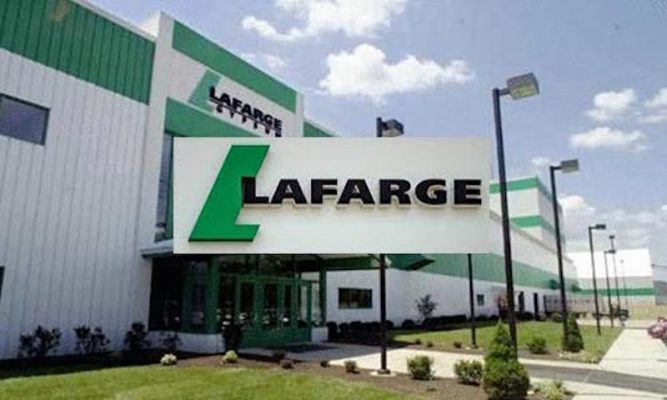
In the industrial sector, Lafarge Africa Plc reported robust results in Lagos on Thursday, with net sales climbing 53 percent to N1.066 trillion, up from N696.8 billion in 2024. Profit after tax more than doubled, rising 173 percent to N273 billion, underpinned by volume-led revenue growth, improved plant reliability, cost optimisation, and more efficient distribution. Operating profit jumped to N392 billion from N193 billion the previous year.
CEO Lolu Alade-Akinyemi, speaking in Lagos, described the results as “a testament to the effectiveness of our strategic focus on operational efficiency and value creation.” He noted that reaching N1 trillion in net sales marks a historic turning point for the company and attributed profit growth to enhanced plant reliability, operational discipline, and shareholder-focused strategies.
Alade-Akinyemi highlighted expansion projects at the Ashaka Cement Plant in Gombe State and the Sagamu Plant in Ogun State, which are expected to increase total production capacity to 14 million metric tonnes per annum once completed. He added that sustainability, capacity utilisation, and health and safety performance will remain central priorities in 2026.
Analysts said the earnings demonstrate the resilience of well-managed Nigerian corporates and the importance of strategic investments in driving growth. “Energy and industrial materials remain fundamental drivers of value creation in Nigeria,” said an equities strategist at a Lagos investment firm.
Investors responded positively to the results, with Seplat’s dividend increase and Lafarge’s capacity expansion plans reinforcing confidence in future growth and returns. The performance of both companies underscores Nigeria’s potential as a regional hub for energy and industrial production, reflecting strong domestic demand, export opportunities, and improved market conditions in 2026.
With robust balance sheets, operational expansion, and clear strategic roadmaps, Seplat Energy and Lafarge Africa are well-positioned to capitalise on Nigeria’s industrial and energy growth, offering a model of corporate resilience amid macroeconomic pressures and sustaining investor interest in the country’s corporate earnings landscape.
Discover more from Keeping Them Honest
Subscribe to get the latest posts sent to your email.