

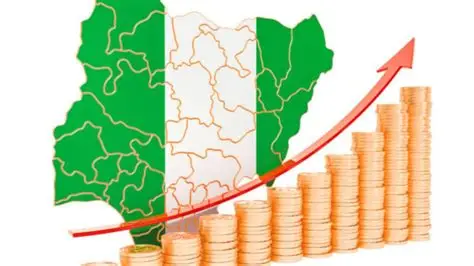
Nigeria’s federal government reiterated its commitment to President Bola Ahmed Tinubu’s plan to transform the nation into a $1 trillion economy by 2030, with officials emphasizing that sustained reforms and private sector participation will be critical to achieving the milestone.
The assurance came at the Annual General Meeting of the Finance Correspondents Association of Nigeria (FICAN) in Abuja on Wednesday, where the Minister of State for Finance, Dr Doris Uzoka Anite, outlined the government’s strategy for accelerating growth. The meeting, themed “Realising Tinubu’s One Trillion Dollars Economic Agenda”, was attended by senior economic policymakers and financial journalists.
Uzoka Anite, represented by the ministry’s Assistant Director of Media and Public Relations, Mrs Uloma Amadi, said Nigeria’s gross domestic product is currently estimated at $375 billion. She added that the country would need sustained annual growth of 10 to 12 percent over the next decade to reach the $1 trillion target, describing the goal as a “specific, measurable destination, not a slogan.”
She highlighted that the administration inherited an economy burdened by structural distortions, including a fuel subsidy regime consuming over N5 trillion annually and a multiple exchange rate system that undermined investor confidence. The minister emphasized that reforms such as the removal of the fuel subsidy and the unification of foreign exchange markets were necessary to restore market integrity.
“These reforms imposed short-term pain, but they are being vindicated by data,” Uzoka Anite said. She pointed to S&P Global Ratings’ January 2026 upgrade of Nigeria’s outlook to positive, citing measurable improvements in fiscal, external, and monetary positions.
The minister also outlined a revised budget framework prioritizing investment in infrastructure and growth-enhancing projects. “We are now asking not just how much we are spending, but what we are building with what we spend,” she said, stressing that strategic allocation of resources will be central to the economic transformation.
A key component of the reform agenda is the Disinflation and Growth Acceleration Strategy (DGAS), which aims to unlock productive capacity and deliver non-inflationary growth of over 7 percent by 2027. The strategy, developed with the Central Bank of Nigeria, rests on nine pillars, including capital mobilisation through development finance instruments, accelerated sectoral growth in agriculture, energy, technology, and manufacturing, nationwide energy expansion, digital infrastructure development, human capital training, and expanded consumer credit access.
Uzoka Anite stressed the need for greater domestic value addition, noting that approximately 70 percent of raw materials used in industrial production are imported. She cited the Dangote Refinery as a model for domestic processing that strengthens local industry and reduces reliance on imports.
Other officials highlighted complementary initiatives to support the $1 trillion goal. Abubakar Bello, Managing Director of the Nigerian Export-Import Bank (NEXIM), outlined efforts to empower exporters, leverage regional trade under the African Continental Free Trade Area (AfCFTA), and remove logistical bottlenecks. In 2025, the bank reportedly disbursed $108 billion to exporters, aimed at bolstering the non-oil sector.
Ayodeji Gbeleyi, Director-General of the Bureau of Public Enterprises (BPE), emphasized ongoing public-private partnerships in energy, transport, agriculture, housing, ICT, and environmental services. He stressed that achieving the $1 trillion goal requires fiscal discipline, institutional strengthening, and a vibrant private sector.
Abraham Durosawo of the Nigeria Infrastructure Fund (NSIA) noted that bridging Nigeria’s infrastructure deficit will require annual investment of $100 billion to $150 billion, with the Presidential Infrastructure Development Fund (PIDF) serving as a key mechanism to attract capital and ensure international standards in project execution.
Uzoka Anite concluded that the government’s economic agenda rests on measurable reforms, transparency, and strategic capital deployment. She called on journalists and stakeholders to continue monitoring and supporting the reforms, which, if sustained, could reshape Nigeria’s economic prospects and enhance investor confidence in Africa’s largest economy.
Discover more from Keeping Them Honest
Subscribe to get the latest posts sent to your email.