

…Says Era of “Ambiguous Nomenclature” Is Over
…Expert: Only Courts Can Lawfully Designate Terror Groups
By John Paul
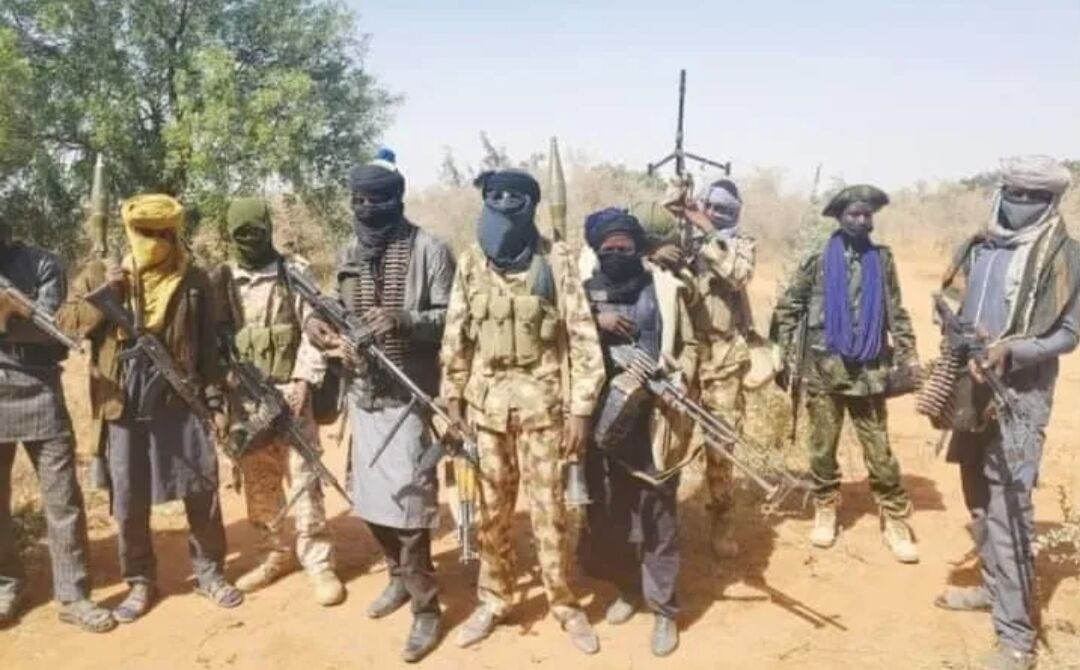
The Federal Government has announced that kidnappers and violent armed groups operating across Nigeria will henceforth be treated as terrorists, signalling a major escalation in the state’s response to mass abductions, attacks on farmers, and violence against rural communities.
The declaration was made yesterday in Abuja by the Minister of Information, Mohammed Idris, during the Federal Government’s end-of-year press briefing.
However, the announcement has triggered a legal debate, with security expert Kabiru Adamu insisting that under Nigerian law, only the courts, not the president or the executive arm of government, have the authority to designate any group as a terrorist organisation.
The new government posture represents a sharp departure from the long-standing practice of treating mass kidnappings and rural banditry largely as criminal acts, as such offences are now being framed within the context of counterterrorism operations.
“Henceforth, any armed group or individual that kidnaps our children, attacks our farmers, and terrorises our communities is officially classified and will be dealt with as a terrorist organisation. This is the declaration that Mr President has made,” Idris said.
“Now, the era of ambiguous nomenclature is over. If you terrorise our people, whether you are a group or you are an individual, you are a terrorist and will be classified as such. There is no name hiding under this again,” the minister added.
According to him, the policy shift will strengthen intelligence sharing and operational coordination among security agencies, allowing for faster and more decisive action against violent groups.
He said enhanced collaboration among security agencies was already producing results, pointing to the arrest of two internationally wanted criminals in 2025 through joint operations.
As part of measures to secure vulnerable rural communities, Idris disclosed that trained and properly equipped forest guards are being deployed to forests and remote areas commonly used as hideouts by criminal elements. The strategy, he said, combines surveillance, local intelligence gathering, and rapid-response operations.
The forest guard initiative, the minister explained, is designed to disrupt criminal supply chains, dismantle camps, and provide reassurance to farming communities affected by insecurity.
Highlighting recent successes, Idris said inter-agency cooperation had led to the capture of some of the most dangerous terror figures operating in the country.
“The most internationally wanted criminals, the ISWAP head residing in Nigeria, has been captured through the coordination of all the security agencies and those also in the intelligence community,” he said.
“Don’t forget that Abu Barra was captured a few months ago, and he was also presented to the public by the National Security Advisor and other security chiefs.
“This is one of the most wanted terrorists on the African continent, and he was captured through the coordination of our security forces.
“Remember also, this was someone who had a large sum of money put on his head by even the Americans to capture him and bring him to justice.
“As we speak today, this gentleman, together with his chief of staff, is undergoing and having their day in court, and he is going to get justice that befits them,” Idris stated.
But reacting on Channels Television’s Politics Today, Kabiru Adamu, a Security Expert and Managing Director of Beacon Consulting Ltd, cautioned that the government’s declaration may not align with existing legal provisions.
“The law that determines who a terrorist is in Nigeria is the Terrorism (Prohibition and Prevention) Act, as amended in 2022. It defines what constitutes terrorism and also provides procedures for determining who or what qualifies as a terrorist group, or who is supporting and financing terrorism,” Adamu said.
“That law assigns the responsibility for such determinations to a competent court of jurisdiction and places the duty of petitioning for these determinations on the Attorney General of the Federation.
“So, even the president does not have the power to determine whether a group is a terrorist organization, nor does any member of the executive arm. That authority resides with the judiciary, through a competent court of jurisdiction,” he added.
Adamu further warned that vesting such powers in the executive could open the door to abuse and politicisation, especially in an election season.
“It would lead to politicization,” he said. “Anyone within the executive arm could, for instance, wake up one day and declare any group a terrorist organization, and the danger lies in the consequences that would follow.
“We are in a political season; the campaigns have already begun. So, if that power rests with the executive, I believe it would be harmful to our democracy.”
Discover more from Keeping Them Honest
Subscribe to get the latest posts sent to your email.