

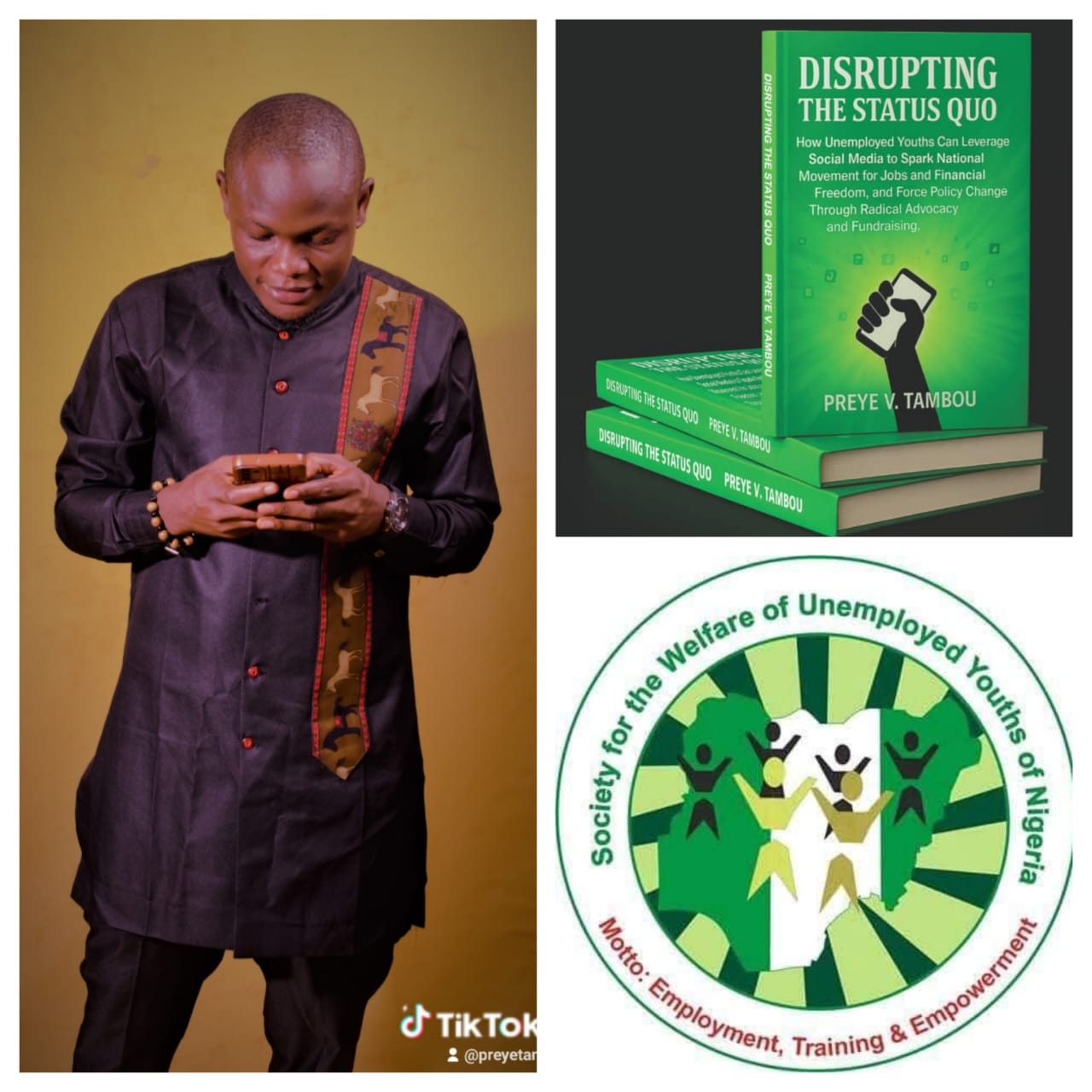
By Comr. Preye V. Tambou, National President, Society for the Welfare of Unemployed Youths of Nigeria (SWUYN)
10th December, 2025
“The revolution will not be televised. It will be tweeted, streamed, and posted live.” ~ Preye V. Tambou
The street is no longer the only site of resistance. Power has shifted to the palm of every young person holding a phone. Hashtags replace banners. Livestreams replace newspapers. Viral posts travel faster than government propaganda.
In the past, regimes survived by controlling radio, TV, and print. Today, information is too slippery to be contained. You ban one platform, another emerges. You jail one activist, millions repost their words. You fire live bullets, but videos of the blood reach the world before the smoke clears.
Digital space is no longer just social but political. It is the new frontline. It is the new battlefield.
The Power of a Hashtag
A hashtag looks simple, just words with a # before them but it is more than a symbol but rallying point that collapses geography, unites strangers, and creates identity.
#ArabSpring (2011): A wave of uprisings across North Africa and the Middle East gained momentum because youths broadcasted their defiance online.
#BlackLivesMatter (2013–present): Born out of anger in the U.S., it has now become a global moral force against systemic racism.
#EndSARS (2020): Nigerian youths turned Twitter into a parliament, Instagram into a billboard, and WhatsApp into logistics. For weeks, the Nigerian State was rattled not by bombs, but trending hashtags.
#NepalRevolution (2025): When Nepal’s government banned social media, the ban itself became the spark. Within five days, hashtags underground broke open into the streets. Prime Minister Sharma Oli resigned. What began online became a revolution offline.
In the digital age, hashtags are not trends – they are thunderclaps.
Digital Weapons of the Youth
1. Smartphones as Evidence.
Every protester is now a journalist. Every shooting, abuse, lie or atrocities can be captured, shared, and archived. The truth no longer depends on State-owned media.
2. Livestreaming as Defense.
Governments once killed in silence. Now, killings are streamed live to the world. The more brutal the crackdown, the more global the sympathy.
3. Memes as Ammunition.
Satire spreads faster than speeches. A meme mocking a corrupt official can do more damage than a 200-page report. Mockery is resistance.
4. Digital Crowdfunding.
Bank accounts frozen? Cryptocurrencies, PayPal, and crowdfunding platforms bypass State control. In #EndSARS, medical bills, legal defense, and food supplies were coordinated digitally.
5. Encrypted Messaging.
WhatsApp, Signal, and Telegram are today’s underground tunnels. Logistics move unseen. Leaders coordinate without trace.
The smartphone is the AK-47 of the 21st century.
The Fear of the State
Why do governments fear the internet more than guns? Digital uprisings expose their nakedness. Guns can kill bodies, but hashtags kill legitimacy.
When Nigerian youths tweeted #EndSARS, the world saw what politicians tried to hide for years: torture chambers, extortion, and State violence. When Nepali youths bypassed the ban, the world watched their parliament burn.
Authoritarian leaders understand: if the youth ever discover their collective power online, no regime will be safe. That is why they ban platforms, make laws to restrict social media, threathen social media admins, arrest bloggers, buy digital surveillance tools, and flood timelines with propaganda bots but censorship always fails. The internet is hydra-headed: cut one platform, two more rise.
Vignette: The Night of Lekki
On October 20, 2020, at Lekki Toll Gate in Lagos, Nigerian youths gathered with flags and sang the national anthem. Then the lights went out. Gunfire followed but unlike in the 1990s, when massacres could be buried, this one was livestreamed. The world watched as youths bled on camera.
The government denied. Officials gaslit. State-owned media, party’s sympathisers and political aides tried to downplay it as rumours. Propaganda spread but the videos remained. Digital memory became a weapon against forgetting.
Lekki was not just an event but a warning. The State still has guns but the youth now have eyes, and those eyes never close.
Digital Communities as Nations
In the digital age, identity is no longer just tribe or religion. Youths form “digital nations”:
# Gamers and coders.
# Poets and meme-makers.
# Activists and vloggers.
Bound not by ethnicity, but shared purpose. When these communities converge on injustice, they move as one.
For instance, during #EndSARS, diaspora Nigerians amplified tweets, journalists built threads, designers created graphics, medics volunteered, lawyers offered pro bono defense. Strangers became brothers and sisters in a nation larger than Nigeria – the Digital Nation of Resistance.
When Hashtags Cross Borders
#EndSARS was not only Nigerian. Ghanaians, Kenyans, and South Africans joined online. #BlackLivesMatter was not only American – youths in Lagos, Accra, and Johannesburg marched too. #NepalRevolution trended globally within hours.
The internet makes every struggle international. A police bullet in Abuja can spark outrage in New York. A social media ban in Kathmandu can inspire resistance in Nairobi.
This is what regimes fear most: local oppression turning into global embarrassment.
The Double-Edged Sword
Digital power has its traps. For every viral protest, there are distractions: gossip trends, celebrity scandals, fake news, and government-paid influencers. Hashtags rise and fade. Outrage burns and cools.
The challenge is not just to trend but transform. To convert hashtags into policies, tweets into laws, and viral energy into structural change.
A revolution that remains only online is just a storm in the cloud.
The Coming Storm
Imagine 10 million unemployed Nigerian youths uniting behind one digital campaign. Imagine trending hashtags translating into a boycott, strike, or digital shutdown. Imagine youths refusing to be divided by tribe or religion, but finding unity in hashtags.
The State may hold the guns, but the youth now hold the networks and in the 21st century, networks outlast bullets.
This is the age of digital uprisings. Hashtags are hammers. Memes are bullets. Livestreams are shields. Smartphones are bombs that explode not in silence, but in sound broadcast to billions.
The ruling class fears not the crowd in the street, but the crowd online that cannot be tear-gassed, shot, or be silenced.
The youth of Nigeria must embrace this digital power, not for noise, but nation-building. Not for fleeting trends, but permanent change.
The next revolution will not wait for radio. It will not beg for TV. It will not ask for newspapers. It will erupt on the screen you hold in your hand.
Discover more from Keeping Them Honest
Subscribe to get the latest posts sent to your email.