

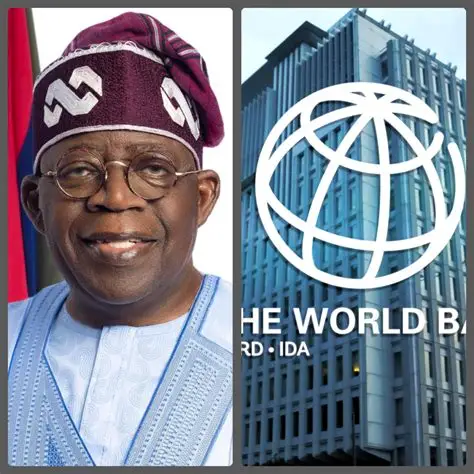
…But Says 139m Nigerians in Poverty
By Peter Salami & Yinka Giwa
In a striking contradiction, the World Bank, which on Wednesday declared that 139 million Nigerians are living in poverty, has praised President Bola Ahmed Tinubu’s economic reforms and wants the government to raise taxes even further, maintain naira flexibility, and deepen subsidy removal to sustain macroeconomic stability.
The twin messages: stating how Nigerians are getting poorer while recommending harsher fiscal and monetary tightening, have sparked debate among policymakers and economists over whether the global lender’s prescriptions may worsen the very hardship it claims to highlight.
In its latest Nigeria Development Update (NDU) report released in Abuja, the Bank commended Nigeria’s “substantial stabilisation progress” following fuel subsidy removal and foreign exchange (FX) unification but warned that the gains could be reversed without “stronger policy coordination, fiscal restraint, and transparency.”
It called on the Central Bank of Nigeria (CBN) to sustain positive real interest rates, refrain from monetising fiscal deficits, and maintain naira flexibility as a shock absorber. The World Bank also urged the apex bank to publish monthly statements of assets and liabilities, define a transparent FX intervention framework, and reduce market segmentation between Open Market Operations (OMOs) and Treasury Bills.
On the fiscal side, the Bank advised the Federal Government to increase health taxes, gradually raise the Value Added Tax (VAT) in line with ECOWAS standards, and implement modern property tax frameworks at the subnational level. It also urged tighter spending controls, forensic audits of the Nigerian National Petroleum Company (NNPC) Limited, and the clearing of outstanding federal audits for 2022–2024.
“Nigeria has taken bold steps to stabilise its economy, but it must not relent,” the report said. “To consolidate gains, the government must continue with fiscal consolidation, improve revenue collection, and maintain naira flexibility.”
In the same breath, however, the World Bank’s Country Director for Nigeria, Mathew Verghis, stated that the nation’s living conditions remain dire, with 139 million people still trapped below the global poverty line of $2.15 per day. He acknowledged that reforms have stabilised the macroeconomic environment but argued that the benefits were yet to reach ordinary citizens.
The report’s release coincided with remarks by Finance Minister and Coordinating Minister of the Economy, Wale Edun, who said the government was already working to refinance Nigeria’s expensive debt portfolio and consolidate all public funds under the CBN to enhance transparency. Edun said the aim was to “track every naira, ensure visibility and accountability in spending, and strengthen the fiscal foundation for sustainable growth.”
But the World Bank’s poverty announcement drew a swift and sharp response from the Presidency, which dismissed the figures as “unrealistic” and disconnected from Nigeria’s actual economic conditions.
Presidential spokesman Sunday Dare argued that the 139 million figure, derived from the global poverty line of $2.15 per day (2017 Purchasing Power Parity), “must be properly contextualised.” He said that when converted to naira, the poverty line amounts to nearly ₦100,000 per month — “well above Nigeria’s new minimum wage of ₦70,000,” making it an abstract model rather than an empirical headcount.
“While Nigeria values its partnership with the World Bank, the figure quoted is unrealistic. It does not reflect local realities,” Dare said. “The estimate is based on outdated consumption data and fails to account for the vast informal and subsistence economies sustaining millions of Nigerians.”
He added that what truly matters is not the static poverty figure but the direction of change, insisting that “Nigeria’s trajectory is now one of recovery and inclusive reform.”
Dare listed several ongoing interventions under President Tinubu’s Renewed Hope Agenda, including conditional cash transfers to 15 million households, ₦297 billion disbursed since 2023, and the Renewed Hope Ward Development Programme reaching all 8,809 electoral wards. Other initiatives include expanded N-Power and TraderMoni schemes, food security drives, grain distribution, and the Renewed Hope Infrastructure Fund to finance power, roads, and housing.
According to him, these measures demonstrate the administration’s commitment to addressing structural poverty through productivity and empowerment rather than dependency. “Reforms such as fuel subsidy removal, exchange rate unification, and fiscal redirection toward productive sectors are tough but necessary to fix the root causes of poverty,” he said.
Analysts note that while the World Bank commended Nigeria’s policy direction, its twin calls urging higher taxes and sustained naira devaluation, while warning about worsening poverty, expose the traps between orthodox economic prescriptions and the social pain of adjustment.
“For the Tinubu administration, the challenge now lies in balancing both imperatives,” one observer told KTH Daily yesterday, noting that “maintaining macroeconomic credibility to attract investment, while ensuring that the millions still trapped in poverty begin to feel the promised dividends of reform, is the true conundrum the administration faces.”
Discover more from Keeping Them Honest
Subscribe to get the latest posts sent to your email.