

• NNPC sacrifices profit, sells petrol at cost for 30 days
• FG targets ₦1,350 landing-cost ceiling, accelerates CNG rollout
• Unveils strategic fuel reserve, more cash transfers, credit support
• Atiku, NDC kick, dismiss measures as election-year tokenism
By Our Reporters
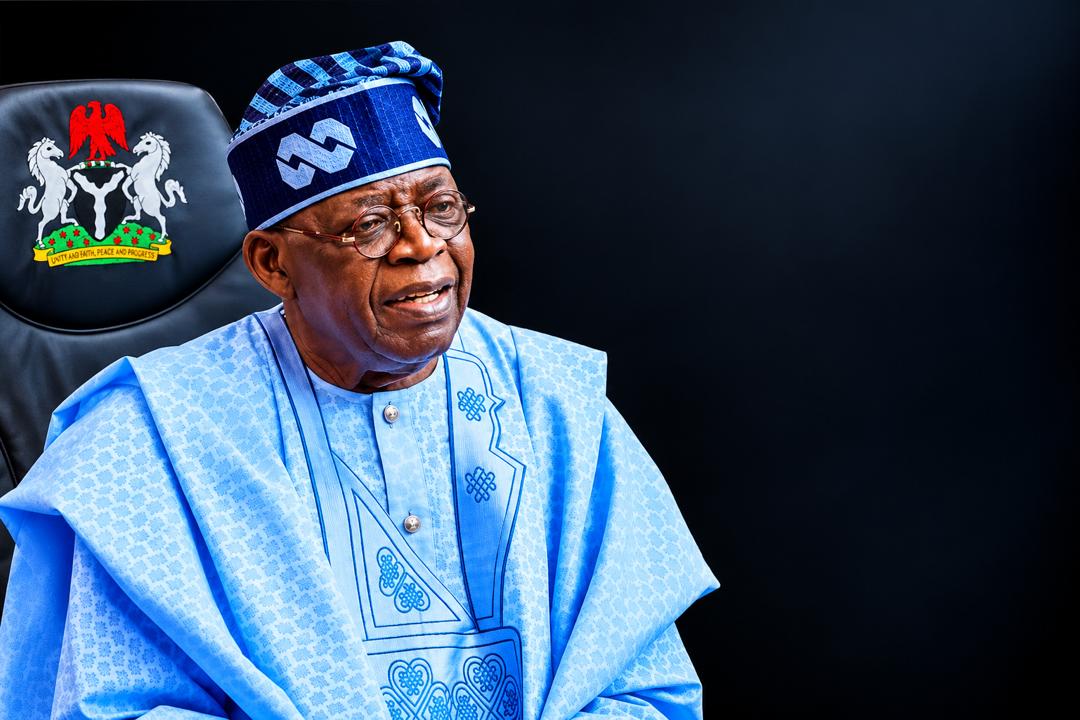
President Bola Ahmed Tinubu yesterday rolled out a broad package of measures aimed at cushioning Nigerian households and businesses from the global surge in fuel prices, with the Nigerian National Petroleum Company Limited (NNPCL) agreeing to sacrifice its retail profit margin and sell petrol at cost for an initial 30 days.
Under the intervention, public transport operators will receive priority at NNPC retail stations, while the Federal Government is negotiating a ₦1,350-per-litre ceiling on the ex-gantry or landing cost of petrol as part of a price-modulation mechanism designed to prevent violent swings in pump prices.
The government is also moving to expand cash transfers and subsidised credit, accelerate the rollout of cheaper Compressed Natural Gas (CNG), rein in road taxes and levies that increase transport costs, establish a National Strategic Fuel Reserve and consider an excess-profit tax against operators found to be exploiting consumers.
Announcing the measures, Minister of Finance and Coordinating Minister of the Economy, Taiwo Oyedele, said the interventions were designed to protect Nigerians from an extraordinary global energy shock without returning the country to the blanket petrol subsidy abolished in May 2023.
Under the NNPC arrangement, the national oil company will forgo its retail margin and pass the savings directly to consumers.
The Presidency explained that if NNPC’s landing cost, for instance, stood at ₦1,300 per litre, the company would sell at the same ₦1,300, rather than adding its normal retail profit margin.
The measure will initially run for 30 days, with commercial transport operators given priority in an attempt to transmit the benefit to commuters through lower transport costs.
Oyedele said the government hoped other petroleum marketers would follow NNPC’s example, arguing that the current sharp rise in crude oil and refined petroleum prices was the product of a global supply disruption rather than domestic policy.
The minister said Brent crude had risen above $100 per barrel, nearly 50 per cent above its pre-war level, while disruption to Middle Eastern energy supplies had sharply reduced shipping through the Strait of Hormuz.
According to him, Nigeria had nevertheless avoided the queues and prolonged scarcity historically associated with fuel crises, with products remaining available across the country.
“Availability is the first form of affordability,” Oyedele said.
Beyond the NNPC discount, the government is introducing what it calls price modulation to reduce the immediate impact of fluctuations in international crude prices and the exchange rate.
Under the proposed arrangement, the government is negotiating a ceiling of ₦1,350 per litre on the ex-gantry or landing cost of petrol.
Where costs temporarily rise above that threshold, refiners and importers would absorb the difference and recover it subsequently when crude prices or the exchange rate become more favourable.
Oyedele insisted that the arrangement was neither a subsidy nor a price control because the government would not permanently suppress the market price or pay the difference from the public treasury.
“This is neither a subsidy nor a price control: it is designed to smooth prices over time rather than suppressing them,” he said.
The ceiling would be reviewed monthly and adjusted where necessary, with the figures published for transparency.
The government is also planning forward sales of crude oil to domestic refineries as Nigerian production increases and crude tied to previous commitments becomes available.
The Presidency said the mechanism should provide domestic refiners with greater supply certainty and partially insulate locally produced petroleum products from international volatility.
Another major component of the package is an accelerated CNG programme.
The government said more than 120,000 vehicles had already been converted to CNG, supported by over 400 conversion centres, 96 refuelling stations, and 18 Liquefied-to-Compressed Natural Gas stations.
More than 550 CNG buses have also been deployed, with the government claiming that transport fares on routes where they operate have fallen by between 30 and 50 per cent.
CNG, according to the government, is currently between 60 and 70 per cent cheaper than petrol.
Tinubu’s administration is now working with state governments to expand deployment, while urging commercial transport operators benefiting from the cheaper fuel to pass the savings to passengers.
The package also includes increased funding for cash transfers to vulnerable households and subsidised credit for consumers and small businesses.
Under the 2025 tax reform laws, the Federal Government said it would work with states and security agencies to curtail multiple road taxes and levies which contribute to transport and logistics costs.
It is also considering an excess-profit tax on operators found to have taken undue advantage of consumers along the energy value chain.
Revenue from such a tax would, according to the government, be dedicated to transport support or vouchers for vulnerable urban minimum-wage earners.
The administration will additionally work with the National Assembly on possible enhanced tax relief for low-income earners in the 2027 Finance Bill.
Perhaps the most significant long-term measure announced is the proposed National Strategic Fuel Reserve.
Under the plan, the government would maintain strategic stocks of refined petroleum products that could be released under published rules whenever international supply disruptions, domestic hoarding, or other shocks threaten supply and price stability.
The Presidency said the reserve would help deter artificial scarcity and market manipulation while reducing Nigeria’s vulnerability to future global energy disruptions.
Oyedele argued that returning to blanket subsidy would instead expose the country to an enormous fiscal burden.
According to government estimates, restoring petrol to its pre-reform price under current market conditions could cost more than ₦20 trillion annually, while reducing petrol to ₦500 per litre could require more than ₦16 trillion yearly.
With estimated national petrol consumption of about 50 million litres daily, the government maintained that such expenditure would severely constrain funding for salaries, pensions, healthcare, education, infrastructure, and security.
The minister said subsidy removal had released about ₦15.8 trillion to the Federation Account between June 2023 and December 2025, of which approximately ₦10.4 trillion went to states and local governments.
He also pointed to foreign reserves of about $55 billion and the narrowing of the gap between official and parallel foreign-exchange rates as evidence that the government should avoid policies it believes could again destabilise the currency.
The Presidency acknowledged, however, that Nigerians were experiencing genuine hardship from higher petrol, transport, and logistics costs.
“Removing the fuel subsidy came at a price. But the alternative has been tried,” it said.
“Nigeria has already lived through that cycle: scarcity, smuggling, a collapsing currency, and a fiscal crisis. We cannot afford to live through it again, least of all in response to a temporary disruption, and at the very moment the results of reform are gathering pace.”
The government said its objective was not to reverse the 2023 subsidy reform but to ensure its gains reached Nigerians faster and more directly.
It also disclosed that work was underway on a wider fiscal package aimed at bringing inflation sustainably into single digits.
But the opposition immediately attacked the intervention, turning the latest measures into another major campaign issue ahead of the 2027 elections.
Former Vice President and ADC presidential candidate Atiku Abubakar described the 30-day NNPC discount as “too little, too selective, too political,” arguing that the government’s latest intervention vindicated his call for what he termed a production-based subsidy.
Atiku questioned whether the NNPC retail network was extensive enough to deliver meaningful nationwide relief and demanded details of the price-modulation arrangement, its financial implications, and participating outlets.
He also challenged the government’s insistence that the proposed ₦1,350 ceiling and deferred recovery mechanism did not amount to subsidy.
Atiku argued that Nigerians required enduring reductions in energy costs rather than temporary relief, and said the administration’s consideration of forward crude sales to domestic refineries strengthened his argument for production-side intervention.
The NDC similarly attacked the initiative, describing the 30-day discount as “tokenism” and questioning whether enough NNPC outlets existed to accommodate consumers without creating queues and congestion.
In a statement by its National Publicity Secretary, Osa Director, the party disputed the government’s description of the measure as distinct from a subsidy and linked its timing to the approaching general elections.
The opposition party also used its response to campaign for its presidential candidate, Peter Obi, and other NDC candidates.
The Federal Government, however, maintained that the distinction between its intervention and the old subsidy regime was fundamental: NNPC is voluntarily surrendering its retail margin for the temporary discount, while the proposed price-modulation system is intended to spread short-term market volatility over time rather than permanently transferring petrol costs to taxpayers.
The Presidency said the administration would continue providing targeted relief while protecting the fiscal and monetary gains of the reforms.
“Government is not out to reverse a necessary reform designed to set our country on the path towards sustained prosperity,” the Presidency said. “It is to ensure its gains reach more Nigerians, faster and in more tangible ways.”
Discover more from Keeping Them Honest
Subscribe to get the latest posts sent to your email.