

• Says economic stability, rising investment, divided opposition, incumbency give President strong pathway to second term
By Jeremy Fregene
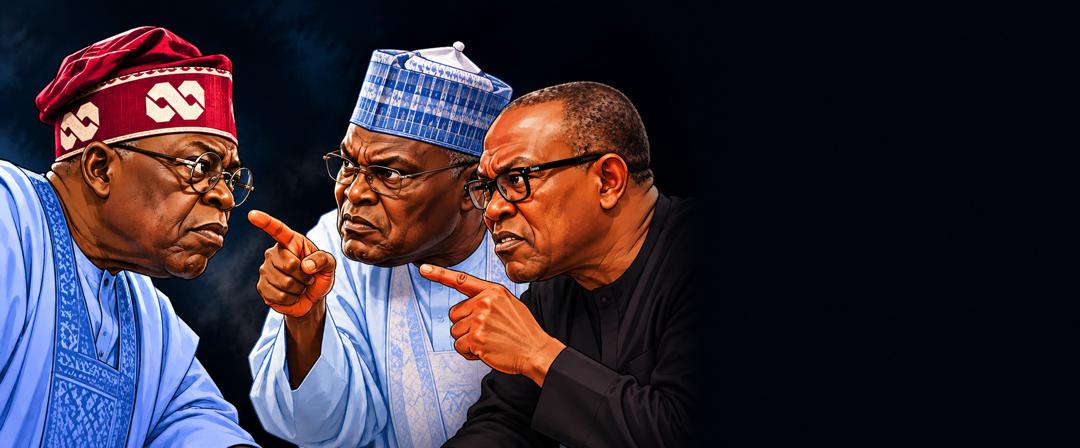
President Bola Tinubu is positioned to secure a second term despite the political costs of his tough economic reforms, lingering hardship and security challenges, influential British publication The Economist has said, even as his two major challengers, Atiku Abubakar and Peter Obi, intensified attacks on his record and promised Nigerians an alternative in 2027.
In a major assessment of Nigeria’s presidential contest published on October 1, The Economist said Tinubu appeared remarkably confident about his re-election prospects with the January election approaching, arguing that Nigeria’s complex electoral dynamics continue to work significantly in the incumbent’s favour.
Its assessment came as African Democratic Congress presidential candidate Atiku and Nigeria Democratic Congress flagbearer Obi used separate Independence Day messages on Thursday to challenge Tinubu’s account of an economy moving “from reform to prosperity.”
Atiku accused the APC administration of driving Nigerians “deeper into poverty,” while Obi promised that Nigerians would begin to see “tangible impact” from what he described as purposeful leadership within his first year if elected.
But The Economist, while acknowledging the hardship confronting many Nigerians, said Tinubu’s difficult economic reforms had begun producing important macroeconomic gains.
“Inflation has fallen, government revenue is rising, and investment is picking up,” the magazine noted, identifying increasing economic stability among the gains from reforms that have attracted investor approval even as households continue to grapple with their immediate consequences.
Tinubu has made those reforms the centrepiece of his re-election argument, insisting in his Independence Day address that Nigeria has endured the most painful phase of the adjustment and is now moving from an “age of reform” into an “age of prosperity.”
The President has defended the removal of the costly petrol subsidy, foreign-exchange reforms, and other fiscal measures as unavoidable decisions required to pull the country away from an unsustainable economic trajectory.
The Economist acknowledged those emerging gains but questioned how quickly they were translating into improved living conditions, particularly in parts of northern Nigeria grappling with poverty, food insecurity, and violence.
The magazine focused extensively on Borno State, where insurgency and economic deprivation continue to weigh heavily on communities.
Yet its political conclusion was striking: public dissatisfaction with economic hardship and insecurity may still not be sufficient to remove Tinubu from office.
At the centre of that calculation, the publication said, is a fragmented opposition.
Atiku and Obi, who together commanded a substantial share of the vote against Tinubu in 2023, are again running on separate platforms, leaving the opposition vote divided.
“Because it’s not a united ticket, that anti-APC vote is not coalesced into a single vote,” Joachim MacEbong of Control Risks was quoted as saying.
The magazine suggested that the split could prove decisive, allowing Tinubu to prevail even in areas where hardship and insecurity have created dissatisfaction with the ruling APC.
It also identified the APC’s formidable nationwide organisation, extensive political networks, and the traditional advantages enjoyed by an incumbent administration as factors working in Tinubu’s favour.
The APC currently enters the election with control of the Federal Government and an extensive network of governors, lawmakers, and political structures across the country.
The Economist nevertheless noted potential vulnerabilities in the North, where it said hardship and insecurity could affect Tinubu’s support.
It cited polling by SBM Intelligence suggesting that Obi and Atiku had made inroads in Borno, where Tinubu won 54 per cent of the presidential vote in 2023.
But the magazine identified factors that could blunt the impact of such discontent, including the religious and political configuration of the APC ticket and potentially low voter turnout in areas badly affected by insecurity.
It argued that Tinubu’s Muslim-Muslim ticket could retain appeal among sections of the predominantly Muslim North.
Turnout could also be crucial. The publication recalled that fewer than one in five eligible voters turned out in Borno in 2023, below an already low national turnout.
In the South, The Economist suggested Tinubu could continue drawing considerable support from his traditional political base, particularly in Lagos and the South-West, notwithstanding the economic pressures facing households.
Atiku, however, presented a sharply different assessment of the administration on Thursday.
Addressing Nigerians from the ADC secretariat in Abuja, the former vice president accused the Tinubu government of worsening poverty and insecurity and argued that official claims of economic stability were disconnected from the experiences of ordinary citizens.
He urged Nigerians not to despair, saying the 2027 election offered voters an opportunity to change the country’s direction.
Atiku also warned voters against what he described as propaganda suggesting the result of the 2027 election had already been decided, urging Nigerians to turn out in large numbers and protect their votes.
Obi similarly sought to draw a sharp contrast with Tinubu, promising to make governance measurable and focused on security, education, healthcare and productive enterprise.
“My message today is not one of despair. It is a message of hope, determination and responsibility. I dare to proclaim with full assurance that a new Nigeria is possible,” Obi said.
The former Anambra governor promised decisive action against insecurity, saying farmers should be able to return to their farms, children to their schools and businesses to operate without fear.
He also pledged to move Nigeria away from what he described as a consumption-driven economy towards production, with emphasis on agriculture, manufacturing, human capital and job creation.
Obi took an apparent swipe at Tinubu’s recent European working vacation, pledging that if elected, he would spend his holidays in Nigeria, including visits to Zamfara, Borno, Kwara, Ebonyi, Edo and Ekiti states.
Tinubu returned to Nigeria on September 29 after a four-week stay in Europe during which the Presidency said he combined his working vacation with official and investment-related engagements. While in France, he met French President Emmanuel Macron and business leaders, and witnessed an Ogun State-DP World agreement for a deep seaport and special economic zone.
The President has meanwhile maintained that the economic hardship being experienced by Nigerians represents the difficult consequences of correcting longstanding structural distortions rather than evidence that the reforms have failed.
In his Independence Day address, Tinubu defended his administration’s economic direction and presented the next phase of his programme as one in which the gains from stabilisation would increasingly reach households and businesses.
That argument finds partial acknowledgement in The Economist’s assessment, which projects economic growth of about 4.1 per cent this year and recognises improving investment, revenue and inflation indicators, while maintaining that converting macroeconomic recovery into improved living standards remains a major challenge.
But with Atiku and Obi separately attempting to harness public dissatisfaction against the President, the British publication sees their failure to unite behind one presidential ticket as potentially one of Tinubu’s greatest political advantages.
According to The Economist, the combination of improving economic indicators, APC organisational strength, incumbency, opposition fragmentation, regional voting patterns and potentially low turnout in insecure areas gives Tinubu a strong pathway to a second term despite the political pain generated by his reforms.
Discover more from Keeping Them Honest
Subscribe to get the latest posts sent to your email.