

• As the Iran war drives petrol prices higher, FG pushes CNG, EV alternatives , warns subsidy would wreck economy, reverse gains
By Franklin Adole
The battle over petrol subsidy is moving to the centre of the 2027 presidential campaign, with opposition candidates revisiting a policy some previously supported removing, even as the Federal Government maintains that Nigeria’s more sustainable path is deregulation, alternative fuels and cheaper mass transportation rather than a return to costly petrol subsidies.
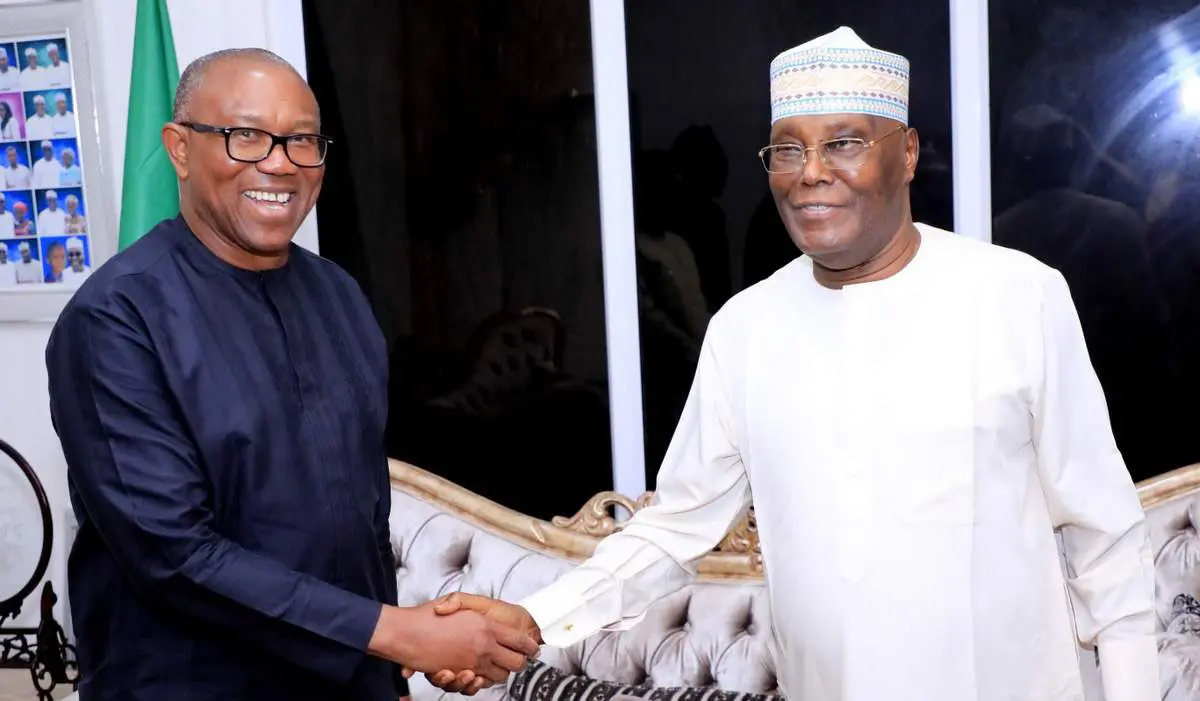
Nigeria Democratic Congress (NDC) presidential candidate, Peter Obi, on Monday promised to restore subsidy if elected after eliminating corruption from the system, marking a change from his previous support for its removal.
His declaration follows a proposal by African Democratic Congress (ADC) candidate, Atiku Abubakar, for a “production subsidy” for locally refined petroleum products, while Oyo State Governor and Allied Peoples Movement (APM) presidential candidate, Seyi Makinde, has blamed the manner of the 2023 subsidy removal for some of the country’s economic difficulties.
The renewed opposition focus comes at a politically sensitive moment, as the Iran war and wider Middle East crisis drive international crude prices higher, transmitting fresh costs to Nigeria’s deregulated petroleum market and putting additional pressure on households.
But while cheaper petrol is increasingly becoming a campaign issue, the competing proposals have also reopened the harder questions that led Nigeria away from subsidy in the first place: who pays, how much it costs, how the benefit reaches consumers and how government prevents smuggling, arbitrage and fraudulent claims.
Speaking at an Obi/Kwankwaso town hall meeting in Sokoto, Obi argued that corruption, rather than subsidy itself, was the fundamental problem with the former regime.
“People are talking about subsidies, but what is all about it is corruption. By removing the corruption, I assure you that we will bring back subsidies,” he said.
“The problem of Nigeria is corruption; as such, if elected, we will stop all forms of corruption in every sector of the country.”
Obi’s new position contrasts with his stance following subsidy removal in 2023, when he said he had consistently supported eliminating the policy and described the previous system as “organised crime,” although he faulted the manner of its removal and argued for adequate cushioning measures.
His Sokoto declaration did not specify the proposed subsidy rate, annual expenditure, funding source, or the pump price his proposed intervention would seek to achieve.
Neither did the remarks explain in detail how a restored subsidy would be insulated from the corruption Obi himself identified as the central weakness of the old arrangement.
Atiku has taken a different route to the same broad objective of government intervention, proposing a production subsidy for locally refined petrol.
The former Vice President had also previously advocated removing Nigeria’s old petrol subsidy, leaving his current proposal facing questions about how the new model would avoid the fiscal and operational problems associated with the previous system.
Those questions were laid out by the APC Presidential Campaign Council more than a week ago, when it responded to Atiku’s proposal.
The intervention provides the clearest background to the government’s side of the emerging 2027 subsidy debate.
The campaign council estimated that Atiku’s proposed production subsidy could cost between ₦17 trillion and ₦21 trillion annually, depending on the discount granted to refiners, quantities covered, and whether government support applied to the entire barrel supplied or only petrol ultimately sold domestically.
The council raised broader questions that would apply to any proposed return to government-funded petrol subsidy.
It asked proponents to state the subsidy rate, annual expenditure ceiling, volumes covered, funding source, mechanism guaranteeing lower pump prices and safeguards against diversion, smuggling and fraudulent claims.
It also raised questions about how such intervention would operate under the Petroleum Industry Act 2021 and its market-pricing framework.
If government subsidised private refineries, the council asked, would those companies be legally compelled to sell at government-prescribed prices?
And if refiners remained free to determine their selling prices, what mechanism would ensure billions or trillions of naira in government support actually translated into cheaper petrol for motorists?
The Tinubu administration has instead chosen to maintain downstream deregulation while focusing on reducing Nigeria’s heavy dependence on petrol itself.
A major plank of that strategy is compressed natural gas and electric transportation.
Government figures indicate that more than 120,000 vehicles have already been converted to CNG, alongside expansion of conversion centres and refuelling infrastructure.
The administration has also been pushing CNG and electric mass-transit schemes, arguing that reducing the cost of transportation through cheaper alternative energy offers a more sustainable route than using public revenues to suppress petrol prices across the economy.
The Iran war has driven crude prices sharply higher, and Nigeria’s deregulated downstream market means movements in international oil prices and other cost components can feed into domestic pump prices.
The resulting increase has intensified pressure on transportation and household expenses and returned petrol pricing to the forefront of political debate.
Makinde seized on the wider economic pressures during an APM North-Central town hall meeting in Lafia, Nasarawa State.
He said his administration had reduced Oyo State’s dependence on federal allocation from more than 80 per cent in 2019 to about 65 per cent in 2022, but claimed subsidy removal subsequently pushed the figure back towards 80 per cent.
Makinde acknowledged that states were receiving more money from the Federation Account but questioned whether the additional revenues had sufficiently improved Nigerians’ living conditions.
The Oyo governor did not propose restoring the old subsidy arrangement. Instead, he promised a four-year “reset” covering the economy, security, education and Nigeria’s socio-political environment.
“When the tide is high, all the boats will rise. When we reset Nigeria, reset our economy, the impact will be felt by everybody,” Makinde said.
He promised a transitional government of national unity from May 29, 2027, saying his administration would rebuild the economy using “data, science and logic.”
Discover more from Keeping Them Honest
Subscribe to get the latest posts sent to your email.