

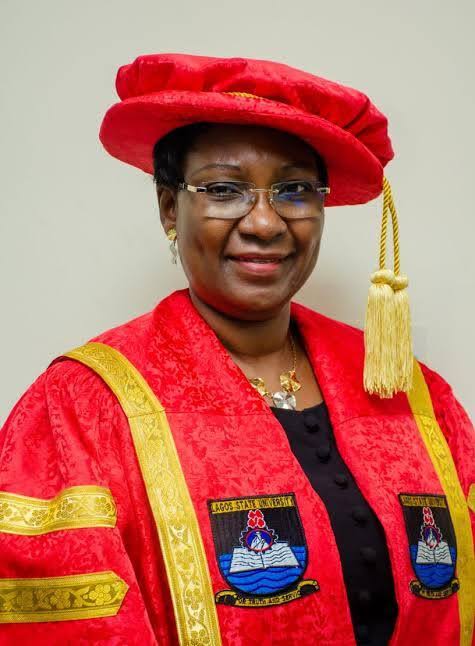
The immediate past Vice Chancellor of Lagos State University, Ibiyemi Olatunji Bello, has called for higher tuition fees in Nigeria’s public universities, arguing that institutions may need to charge at least ₦1 million per student to achieve financial sustainability.
Olatunji Bello made the remarks in a recent interview while reflecting on her five-year tenure at LASU, which ended on Saturday.
The former Vice Chancellor explained that despite efforts to increase the university’s internally generated revenue, the institution still faces significant financial pressure, particularly from its monthly payroll.
According to her, LASU currently spends more than ₦1 billion every month on salaries, while its annual internally generated revenue of about ₦13 billion is insufficient to cover its wage bill.
“Universities can achieve financial self-sustainability. If they can innovate and ensure improvements in the institution, money will come in,” she said.
“But then, if the money comes in, how do you spend it? Right now, LASU does not have financial self sustainability. We may have increased our dedicated revenue, but we cannot survive. Our payroll right now is over ₦1 billion per month. All the ₦13 billion IGR does not cover our salaries.”
Olatunji Bello argued that public universities seeking greater financial independence would have to reconsider their current tuition structures.
“So, universities that want to attain self sustainability will have to increase school fees into millions,” she said.
She specifically proposed that public universities should charge no less than ₦1 million per student, citing the rising cost of education and the financial demands facing tertiary institutions.
“So, any public university that wants to sustain financial independence will have to charge school fees of not less than ₦1 million per student,” she said.
The former LASU Vice Chancellor also compared university fees with the cost of secondary education, noting that some private secondary schools already charge more than ₦1 million per term, while some public universities charge around ₦100,000 annually.
Olatunji Bello maintained that quality education requires significant financial investment and urged parents to place greater priority on funding their children’s education.
“Good quality education needs money,” she said.
Her comments come amid a wider debate over the financial sustainability of Nigeria’s public universities and the extent to which institutions should rely on government funding.
The Minister of Education, Tunji Alausa, had also recently urged public universities to explore alternative sources of funding, arguing that government resources alone cannot sustain tertiary institutions.
The proposed ₦1 million minimum tuition, however, is Olatunji Bello’s position and would represent a significant increase for students currently attending many public universities across the country.
Discover more from KTH Daily
Subscribe to get the latest posts sent to your email.