

By Jeremy Fregene
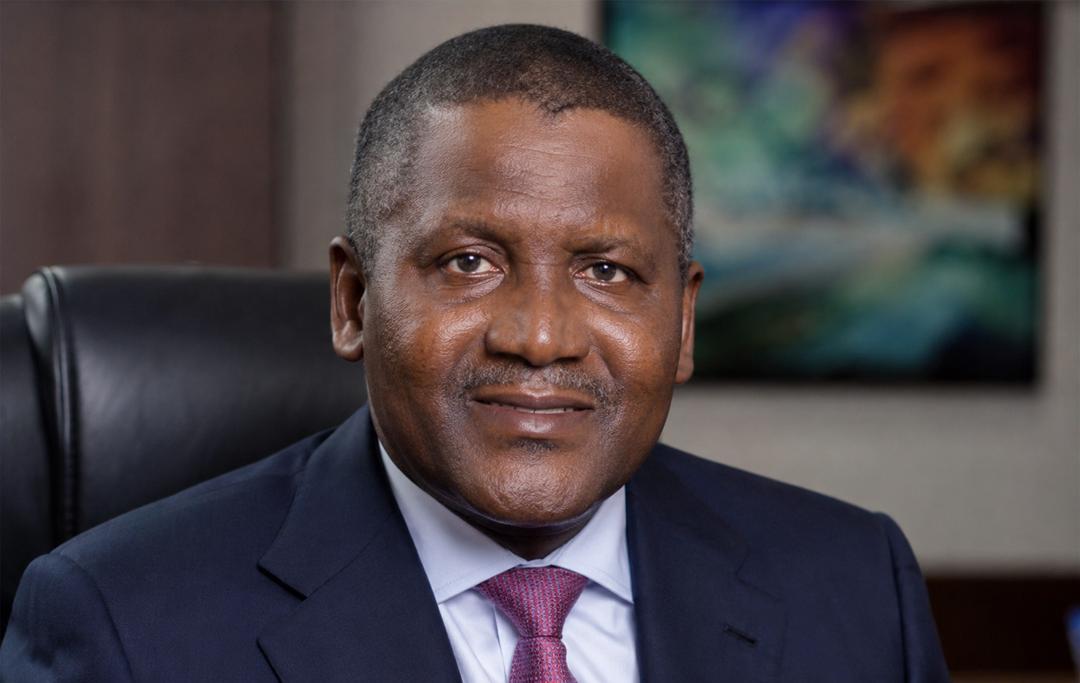
Africa’s richest man, Aliko Dangote, has crossed the $50 billion wealth mark for the first time, as the soaring valuation of his petroleum refinery dramatically lifts his personal fortune and underscores the transformation of Nigeria’s downstream oil industry following the removal of petrol subsidy and deregulation of the market.
Forbes’ Real-Time Billionaires tracker valued Dangote’s fortune at about $51.3 billion as of September 15, a massive increase from the $28.5 billion at which his wealth was assessed in March 2026.
The nearly $23 billion swing has catapulted the Nigerian industrialist to 36th position among the world’s richest people and further widened his lead as Africa’s wealthiest businessman.
At the heart of the surge is the Dangote Petroleum Refinery and Petrochemicals complex, whose valuation has risen sharply following a $2.5 billion private placement and the opening this week of its landmark Initial Public Offering, IPO.
Forbes estimates that the refinery now accounts for the majority of Dangote’s personal fortune, overtaking the combined contribution of his long-established cement, fertiliser and sugar businesses.
The development also comes against the backdrop of Nigeria’s deregulated petroleum market, which has allowed refiners to operate in an increasingly market-driven environment rather than under the old regime of government-controlled petrol prices and subsidy payments.
Dangote himself strongly endorsed that policy direction at the opening of the refinery’s IPO on Monday, arguing that deregulation and the removal of petrol subsidy had created the conditions for investment in domestic refining.
He praised President Bola Tinubu’s subsidy removal and foreign exchange reforms, maintaining that deregulation was necessary if Nigeria was to build a commercially sustainable refining industry and attract large-scale private capital.
The refinery, which began production in 2024, currently has crude-processing capacity of about 700,000 barrels per day and has significantly altered Nigeria’s petroleum supply structure, reducing dependence on imported refined products while opening new export markets.
Its owners are now pursuing an ambitious expansion that would double capacity to 1.4 million barrels per day, potentially placing the Lagos facility among the biggest refineries in the world.
The refinery has also become highly profitable. It reported net profit of about $1.82 billion on revenues exceeding $13 billion in the first half of 2026, reversing a loss recorded in 2025.
That turnaround, together with the refinery’s growing domestic and international market reach, has helped drive the substantially higher valuation now being placed on the asset.
The IPO opened on September 14 with 4.1 billion shares offered to the public at N525 per share, potentially raising about N2.15 trillion.
The minimum subscription is just 10 shares, or N5,250, in what Dangote has described as a “people’s IPO” intended to broaden Nigerian ownership of the refinery.
The offer is scheduled to close on October 13.
The transaction follows an earlier $2.5 billion private placement that was oversubscribed and attracted institutional investors. That deal proved particularly significant for the valuation of Dangote’s controlling interest in the refinery.
Despite selling part of the business to outside investors, Dangote remains overwhelmingly its largest shareholder.
The refinery’s new valuation has consequently produced the unusual outcome in which the dilution of his percentage ownership is being more than compensated for by the sharply increased market value being attached to his remaining stake.
There is, however, a substantial difference between the estimates of the world’s two major billionaire wealth trackers.
While Forbes puts Dangote’s fortune at about $51.3 billion, Bloomberg’s Billionaires Index has recently carried a considerably lower estimate. The divergence largely reflects differences in methodology, particularly in valuing privately held or newly priced assets such as the refinery.
The Forbes revaluation nevertheless represents a remarkable change in the composition of Dangote’s wealth.
For decades, his fortune rested principally on Dangote Cement, Africa’s largest cement producer, in which he maintains a dominant interest. His industrial empire subsequently expanded into fertiliser, sugar and other manufacturing operations.
Petroleum refining has now emerged as the biggest driver of his wealth.
The timing is significant. The refinery was conceived and largely built when Nigeria still operated an extensive petrol subsidy regime, but commercial operations have taken off in an environment fundamentally altered by the Tinubu administration’s decision to remove the subsidy and allow market forces greater influence over petroleum pricing.
Dangote has argued that returning to the old subsidy arrangement would discourage investment and undermine the development of domestic refining capacity.
Discover more from Keeping Them Honest
Subscribe to get the latest posts sent to your email.