

…Campaign spokesman rallies Nigerians to re-elect President as charismatic bishops declare: “We stand with Tinubu”
By Franklin Adole
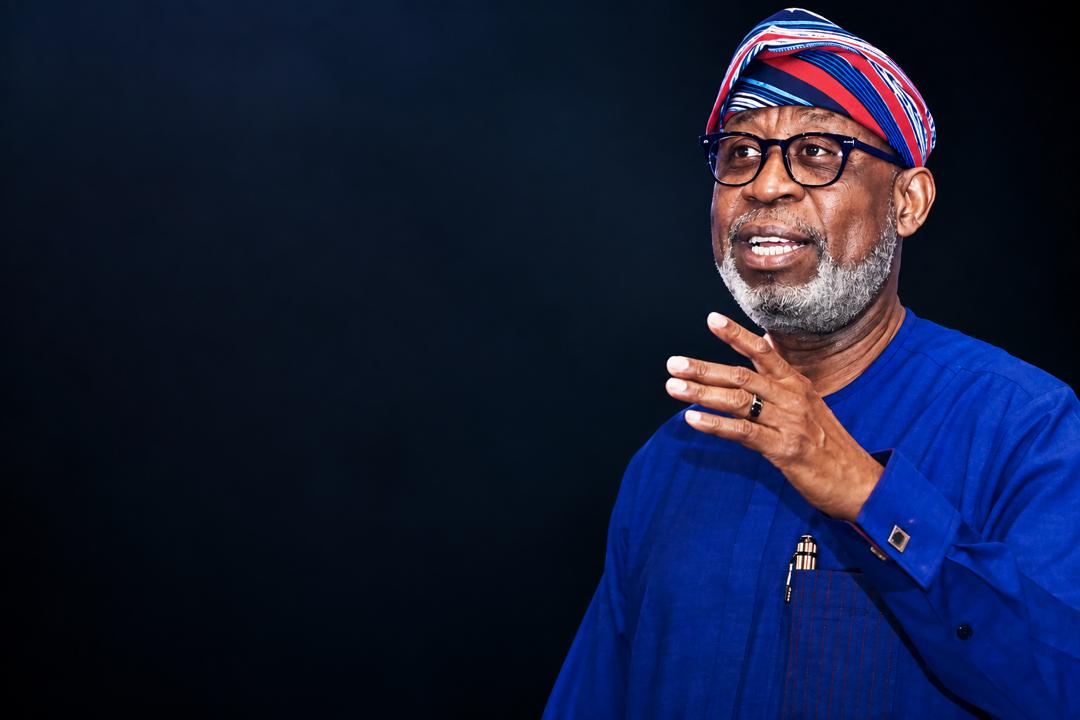
President Bola Ahmed Tinubu deliberately put his political future on the line by taking tough economic decisions that successive administrations knew were necessary but were too afraid to implement because of the fear of losing elections, his 2027 campaign spokesman, Dele Alake, declared on Wednesday.
Alake, Minister of Solid Minerals Development and recently named Director of Strategic Communications for President Tinubu’s 2027 All Progressives Congress Presidential Campaign, said the President effectively chose to “take the bullets” for Nigeria rather than preserve his political comfort while the economy continued to sink under longstanding structural distortions.
His defence of the administration’s economic reforms came as the Charismatic Bishops Conference of Nigeria (CBCN) formally endorsed Tinubu for another term, declaring that its members would stand with the President “even beyond 2027.”
The endorsements and political mobilisation gathered further momentum in the South-East, where First Lady Senator Oluremi Tinubu appealed to voters to re-elect the President, while Imo State Governor Hope Uzodimma pledged that his state would stand firmly behind Tinubu in 2027.
Speaking during an interactive session with members of the APC Press Corps in Abuja, Alake said Tinubu’s removal of the petrol subsidy and other fundamental economic reforms represented decisions that previous governments had recognised as necessary but repeatedly postponed because of their potential electoral consequences.
According to him, Nigeria had reached a point where postponing painful reforms merely meant digging the economic hole deeper.
“There is no shortcut to genuine reforms,” Alake said, arguing that the distortions confronting the Nigerian economy before Tinubu assumed office in 2023 were neither new nor unknown to previous administrations.
“The only thing lacking was the courage to take those decisions,” he said.
Alake recalled previous attempts to remove the petrol subsidy and the protests that followed, saying governments had repeatedly retreated when confronted with public resistance and approaching elections.
But Tinubu, he argued, decided that the national interest had to take precedence over personal political calculations.
“Somebody came and decided to swallow the bitter pill, to take the bullets on behalf of Nigerians,” Alake said.
“If a man, who is a politician himself, who should be very sensitive to elections, decided to take the bullets, regardless of the consequences on his own political career, on behalf of the nation, because the nation had to be reset, I think it’s just very, very important for us to appreciate that.”
President Tinubu announced the removal of the petrol subsidy during his inauguration on May 29, 2023, setting off sweeping changes across the economy. His administration subsequently unified the foreign exchange market and introduced other fiscal and monetary reforms aimed at correcting longstanding distortions.
The measures initially triggered sharp increases in transportation, food, and other living costs, generating widespread criticism and political pressure on the government.
Alake maintained, however, that the alternative was to preserve an economic structure that had become increasingly difficult to finance.
He said the subsidy system disproportionately enriched fuel cartels and better-off Nigerians while draining resources that could otherwise have been deployed to infrastructure and productive sectors.
According to him, subsidised petroleum products were routinely taken across Nigeria’s borders and sold for enormous profits, creating powerful interests that would naturally resist reforms threatening their businesses.
“The beneficiaries of the fuel subsidy were the oil cartels,” he said. “They would buy the fuel at a lower price, cross the border, and immediately make humongous profits.”
Alake recalled that under the old fiscal arrangement, several states struggled to meet salary obligations while the Federal Government itself faced severe revenue pressures.
He argued that money locked into the subsidy regime could not be deployed adequately to infrastructure and other sectors capable of generating economic activity, jobs, and sustainable growth.
The campaign spokesman said the approaching 2027 election therefore presented Nigerians with a fundamental choice between policy continuity and a return to arrangements the administration believes helped create the economic problems Tinubu inherited.
He urged Nigerians not to abandon the reforms midway, saying structural economic changes require planning, investment, implementation, and time before their full benefits become visible.
Alake also cautioned against opposition promises to restore petrol subsidy, insisting that such a reversal could revive the cross-border arbitrage and fuel-smuggling networks that previously profited from the system and undermine the macroeconomic progress recorded under the current reforms.
Former Vice President Atiku Abubakar has pledged to restore petrol subsidy if elected in 2027, arguing that Nigerians require relief from the cost-of-living pressures associated with its removal.
Peter Obi, presidential candidate of the Nigeria Democratic Congress, and Allied Peoples Movement candidate and Oyo State Governor Seyi Makinde have, however, indicated that they would retain subsidy removal while pursuing measures to make petroleum products more affordable.
Alake said the 2027 campaign should consequently move beyond political quarrels and personality contests and become a contest of policies, manifestos, and verifiable records.
He argued that voters should ask what each candidate intends to do with the reforms already undertaken and whether Nigeria can afford another wholesale economic reset after absorbing the initial costs of the present restructuring.
As Alake rallied support for continuity, the Tinubu re-election campaign received a significant endorsement from the Charismatic Bishops Conference of Nigeria.
President-General of the CBCN, Archbishop Leonard Bature Kawas, announced the bishops’ endorsement during the organisation’s 2026 synod on Wednesday.
Kawas said the conference had assessed Tinubu’s administration and decided to stand behind the President, citing what it regarded as his administration’s accommodation of Christians and its programmes for national development.
“We are here today to reassure him of our solid support; we are standing with him in prayers and advocacy for the good programmes he has brought forth for the liberation of Nigeria,” Kawas declared.
“We stand with the President today, and as long as he’s willing to be our President and even come in 2027, we will still be standing with him.
“On this, this house has endorsed him for the 2027 presidency.”
The bishops’ declaration could carry additional political significance against the lingering debate over the Muslim-Muslim presidential ticket on which Tinubu and Vice President Kashim Shettima came to power in 2023.
Kawas argued that Tinubu’s record in office had not demonstrated the religious exclusion some critics feared, saying the President had worked with Christians and Muslims in government.
The CBCN leader said the bishops would continue supporting the administration through prayers and advocacy while urging the government to give qualified religious leaders greater consideration in public appointments.
Secretary to the Government of the Federation, George Akume, and Minister of Information and National Orientation, Mohammed Idris, were among dignitaries at the synod.
Meanwhile, the campaign for Tinubu’s re-election also moved deeper into the South-East on Wednesday as First Lady Oluremi Tinubu appealed directly to voters in the region to give her husband another mandate.
Speaking in Owerri during an empowerment programme for women, Mrs Tinubu said the administration was working towards building a better country and urged the people to support the President.
“Make una vote for Mr President, we go work for una and Nigeria go better,” she told the gathering.
“I want to enjoy Nigeria at old age, so I will work for Nigeria, for my old age.”
The First Lady said the empowerment initiative, implemented through the Office of the Senior Special Assistant to the President on Sustainable Development Goals, would eventually reach 18,500 women nationwide.
Five hundred women in each of the five South-East states are to receive business-support equipment, including generators, industrial grinding machines, gas cylinders and ovens.
Governor Uzodimma provided additional empowerment materials for 2,000 Imo women, taking the number of beneficiaries in the state to 2,500.
Responding to the governor’s intervention, Mrs Tinubu announced an additional N100,000 cash support for each beneficiary.
She described the programme as consistent with the administration’s emphasis on economic growth and sustainable development, particularly the economic empowerment of women and families.
Uzodimma, in turn, said Imo people had taken note of the Federal Government’s infrastructure and development interventions and would reciprocate by supporting Tinubu.
“Let him know that Imo people are happy with him, that we are happy with his performance,” the governor said.
“Let him know that he is doing very well, that we stand with him and that we deeply appreciate his resolute commitment to a stronger, more prosperous, safer and more united Nigeria.”
He pledged that the state would stand firmly behind the President when Nigerians return to the polls in 2027.
The First Lady was also conferred with the traditional chieftaincy title of Osodieme during the visit.
Discover more from Keeping Them Honest
Subscribe to get the latest posts sent to your email.