

…Govt: Alia Was Never Briefed; Police Commissioner Says Command Knew, Deployed Security
By Jeremy Fregene
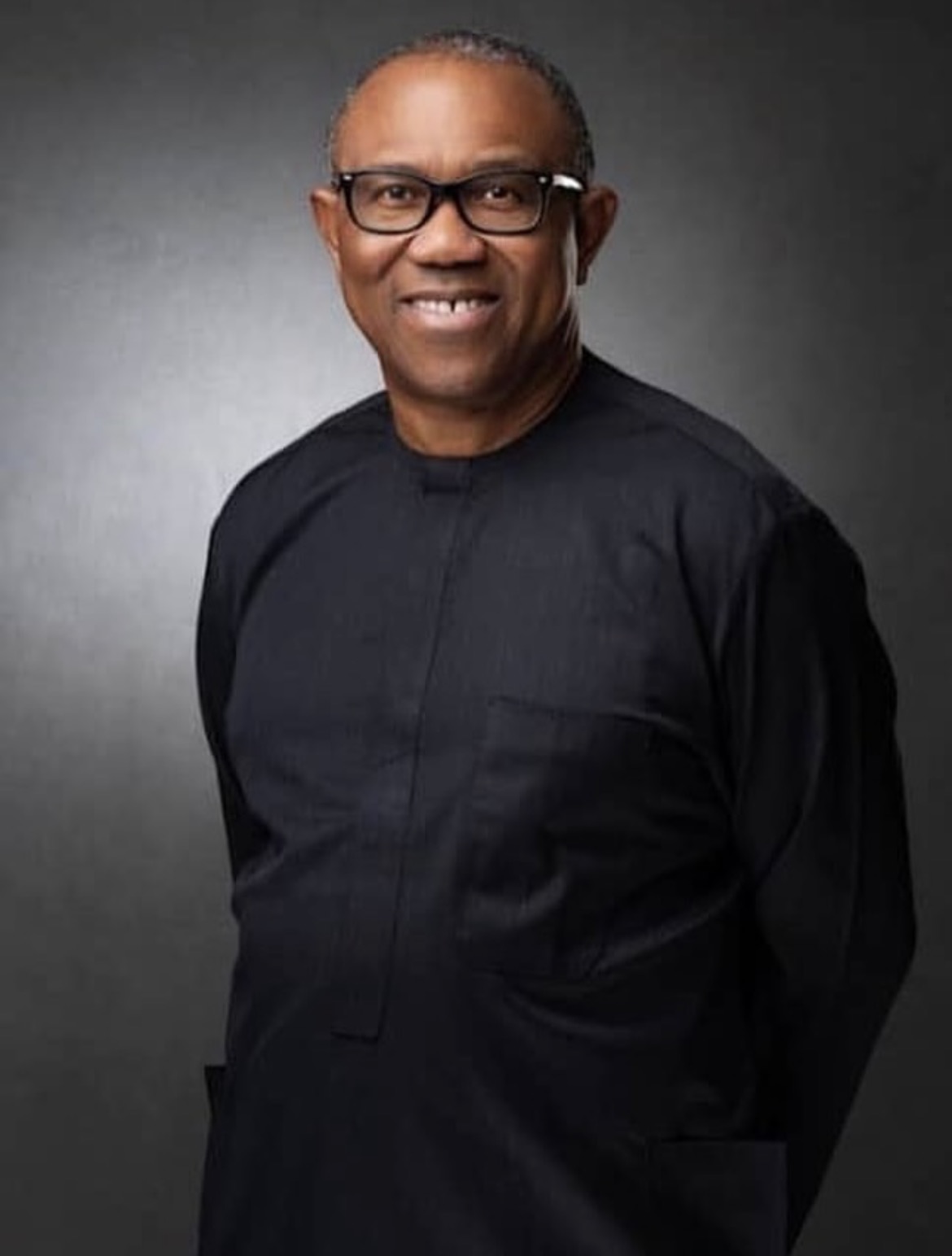
Nigeria Democratic Congress (NDC) presidential candidate Peter Obi’s aborted visit to Yelwata in Benue State on Tuesday has opened a fresh political and security controversy, with questions mounting over why the former Anambra State governor waited about 15 months after the community’s horrific June 2025 massacre to undertake what he described as a purely “humanitarian” visit just as the 2027 election season gathers momentum.
The controversy deepened after conflicting accounts emerged from the Benue State Government and Commissioner of Police Cletus Nwadiogbu over the protocol surrounding the visit and, crucially, whether Governor Hyacinth Alia, as the state’s chief executive and chairman of the State Security Council, was informed that a presidential candidate was travelling to one of Benue’s most security-sensitive communities.
While Nwadiogbu confirmed that the Police Command had prior knowledge of Obi’s trip and deployed personnel for his protection, Governor Alia’s Chief Press Secretary, Kula Tersoo, said neither the governor nor the state government was informed.
That apparent disconnect has raised an important question: if the Police Commissioner knew beforehand that a presidential candidate was arriving in Benue and intended to travel to Yelwata, did he discuss the security implications of the visit with the governor and other members of the state’s security architecture?
The Police Commissioner did not indicate in his account whether such consultations took place.
The state government’s position is that a personality of Obi’s stature — a former two-term governor and current presidential candidate — could hardly be expected to travel into an area with Yelwata’s security history without proper coordination among the state government, police, Department of State Services, Nigeria Security and Civil Defence Corps, and other relevant agencies.
Tersoo said the government was completely unaware of Obi’s visit and rejected allegations that Governor Alia or his administration had mobilised youths to obstruct him.
“Peter Obi is a presidential candidate of a political party and a former two-term governor. He is not a small man in this country. He is supposed to be prepared for and given adequate security,” Tersoo said.
“If you are visiting a state, the security apparatus of the state is supposed to know. The Commissioner of Police, Director of DSS, Civil Defence, and others are supposed to be aware so that they can provide adequate security for you.”
The governor’s spokesman said the fact that youths were apparently able to stop the convoy itself raised questions about the level of coordination and security planning surrounding the trip.
“If those people are aware, they are supposed to make adequate security for him such that the youths cannot even stop him. For the youths to have stopped him, it means there was no adequate security, that is, if at all he came. There is something wrong somewhere,” he said.
Tersoo was emphatic that Governor Alia would have had no reason to mobilise thugs against Obi.
“Governor Alia does not promote thuggery in Benue State. If Obi is a threat to him, or maybe he felt that Obi’s coming would cause a problem for him, the right thing to do is to get legitimate security operatives to do the needful and not to gather youths or send them to go and block him,” he said.
According to him, no security agency briefed the governor beforehand.
“But the governor is not aware. So you will even doubt if he came to this state at all,” Tersoo said.
Nwadiogbu, however, confirmed both Obi’s presence in Benue and the blockade, saying the Police Command had been informed about the proposed visit the previous night.
According to the commissioner, the police were told that Obi was not coming for a political campaign but intended to visit Yelwata and commiserate with people affected by the June 2025 massacre.
“Everybody has freedom of movement in Nigeria, so I provided security. I also directed the Assistant Commissioner of Police in charge of Operations to personally lead the men,” Nwadiogbu said.
He said that after Obi arrived, the command learnt that youths had blocked the road and declared that they did not want him to proceed.
“Unfortunately, upon his arrival, we heard that the youths blocked the road and said they did not want to see him,” he said.
Nwadiogbu has ordered an investigation.
“We must get to the bottom of it and know why the youths said somebody cannot move freely,” the commissioner said.
But his confirmation that the police knew of the visit appears to have shifted part of the controversy from whether security agencies were informed to the extent of coordination among them.
It remained unclear Tuesday night whether the police notification was shared with the governor, the DSS, and other relevant security authorities, and whether the proposed movement into Yelwata was subjected to a coordinated security assessment.
Those questions assume added significance given the history of Yelwata.
The community was the scene of a devastating attack on June 13 and 14, 2025, when gunmen killed scores of residents and internally displaced persons and burnt homes, food stores and shelters.
Estimates of the number killed varied from about 100 to more than 200, while Nigerian prosecutors subsequently cited about 150 deaths in terrorism-related charges filed against nine men accused of carrying out the attack.
Yelwata remained tense afterwards, with another security scare reported in August 2025.
It was therefore unclear why a planned visit by a major presidential candidate to such a sensitive community apparently did not produce the level of government-security coordination that would ordinarily be expected.
There are also political questions surrounding the timing of Obi’s mission.
The massacre occurred about one year and three months ago, yet Obi’s attempt to visit the community came only in September 2026, as political activities ahead of the 2027 presidential election intensify.
Obi insisted there was nothing political about the trip.
“I came to Benue not for politics but to mourn with our people, to listen to families who have lost loved ones, and to offer our solidarity during a moment of unimaginable pain,” he said.
But the timing is likely to leave his political opponents asking why the humanitarian visit was not undertaken in the immediate aftermath of the killings, or during the intervening 15 months, rather than at the onset of another presidential campaign season.
Obi arrived in Benue at about 9 a.m. on Tuesday and intended to travel to Yelwata in Guma Local Government Area.
His convoy was, however, confronted along the Makurdi-Gboko axis, close to the Nigerian Air Force Base and Makurdi airport, where youths reportedly barricaded the road and chanted, “Peter Obi, go back” and “We don’t want Peter Obi.”
He eventually abandoned the journey and left the state.
Obi’s media office alleged that some of the protesters were armed with dangerous weapons and claimed that an aide of Governor Alia led the group.
No evidence establishing the governor’s involvement was immediately presented, and the state government strongly denied the allegation.
Obi nevertheless condemned the incident and argued that political considerations should never interfere with humanitarian gestures.
He said Nigerians deserved to sleep peacefully, travel safely and cultivate their farms without fear, adding that government must place protection of human life above politics.
“Above all, they deserve to live in a country where the government prioritises the protection of human life above every political consideration,” Obi said.
Although unable to reach Yelwata, he said his thoughts and prayers remained with victims of the massacre and their families.
Meanwhile, the Igbo Renaissance Group has sided with Obi and demanded an apology from Governor Alia over the incident.
Its chairman, Chief Emmanuel Igwe Chidi, called for an investigation and demanded the removal of any government official eventually found to have organised or facilitated the blockade.
“If the reports concerning the obstruction of Mr Obi’s visit are correct, Governor Alia owes Nigerians, the victims of the Benue killings and, most importantly, Peter Obi a public explanation and apology,” the group said.
It also urged the government to ensure that humanitarian assistance reached victims without political discrimination.
However, the group’s demand was predicated on allegations that the state government had a hand in the obstruction — an allegation the Alia administration has categorically denied and which the police investigation has yet to establish.
For now, the episode leaves two separate sets of questions hanging over the controversy: who mobilised the youths who blocked Obi and why; and how a visit by a presidential candidate to a community with Yelwata’s troubled security history could have been known to the state Police Command without, according to the governor’s spokesman, being brought to the attention of the state government.
There is also the political question Obi himself may have to contend with: why a massacre that occurred in June 2025 prompted his attempted “non-political” solidarity visit only some 15 months later, at a time when the battle for the 2027 presidency is already gathering pace.
The police investigation may answer the first set of questions. The politics surrounding the timing of the visit is likely to keep the second alive.
Discover more from Keeping Them Honest
Subscribe to get the latest posts sent to your email.