

By Yinka Giwa
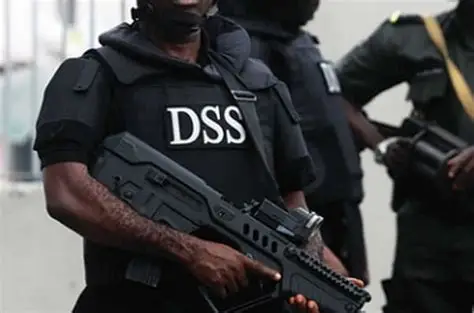
The Director-General of the Department of State Services (DSS), Adeola Ajayi, has barred operatives of the agency from arresting individuals over civil disputes, declaring that the secret police must increasingly rely on the courts rather than coercive powers in matters that do not constitute criminal offences.
Ajayi said the directive was part of wide-ranging reforms aimed at strengthening the rule of law, improving the agency’s human rights record, and drawing a firm line between civil and criminal matters.
Speaking during an interview with selected media executives on Thursday, the DSS boss said the agency had undergone significant changes since he assumed office, with reforms focused on law enforcement, inter-agency cooperation, accountability, respect for human rights, as well as infrastructural and administrative improvements.
According to him, one of the major changes is a clearer distinction between civil disputes and criminal offences, acknowledging that the DSS had, in the past, sometimes conflated the two.
Ajayi stressed that the coercive powers available to a security agency should not be deployed to settle civil disagreements, adding that even some criminal cases could be handled without the use of force.
“You cannot apply the use of force in civil matters. Even some criminal matters don’t require force,” he said.
The DSS chief cited the case involving political economist, Prof. Pat Utomi, over his move to establish what he described as a “shadow government”, as an example of the agency’s new approach.
Rather than arresting Utomi, Ajayi said the DSS approached the judiciary for an interpretation of the legality of the initiative.
“Rather than arrest him, we sought judicial interpretation,” he said.
“And the court ruled that his adventure was unconstitutional, illegal, and a threat to national security.”
Ajayi also referred to the legal dispute involving the Socio-Economic Rights and Accountability Project (SERAP), which had accused two DSS operatives of invading its premises.
He said the agency allowed the matter to proceed through the courts without resorting to arrests.
In May 2026, a court awarded N100 million in damages to two DSS officials over alleged defamation arising from the dispute, although SERAP has since appealed the judgement.
Ajayi said the handling of the two cases reflected a deliberate shift towards judicial resolution of disputes and away from the use of arrest as a first response.
He disclosed that he had issued clear instructions to DSS personnel that no individual should be arrested in connection with a purely civil matter.
The DSS director-general extended the new approach to disputes involving the media, saying the agency would resort to the courts rather than arrest journalists over civil issues.
According to him, journalists and intelligence officers perform related functions and should therefore regard one another as professional colleagues.
Ajayi said while journalists gather information to inform the public, the DSS gathers intelligence to inform the government, describing the two professions as operating on different sides of a similar information-gathering responsibility.
Discover more from Keeping Them Honest
Subscribe to get the latest posts sent to your email.