

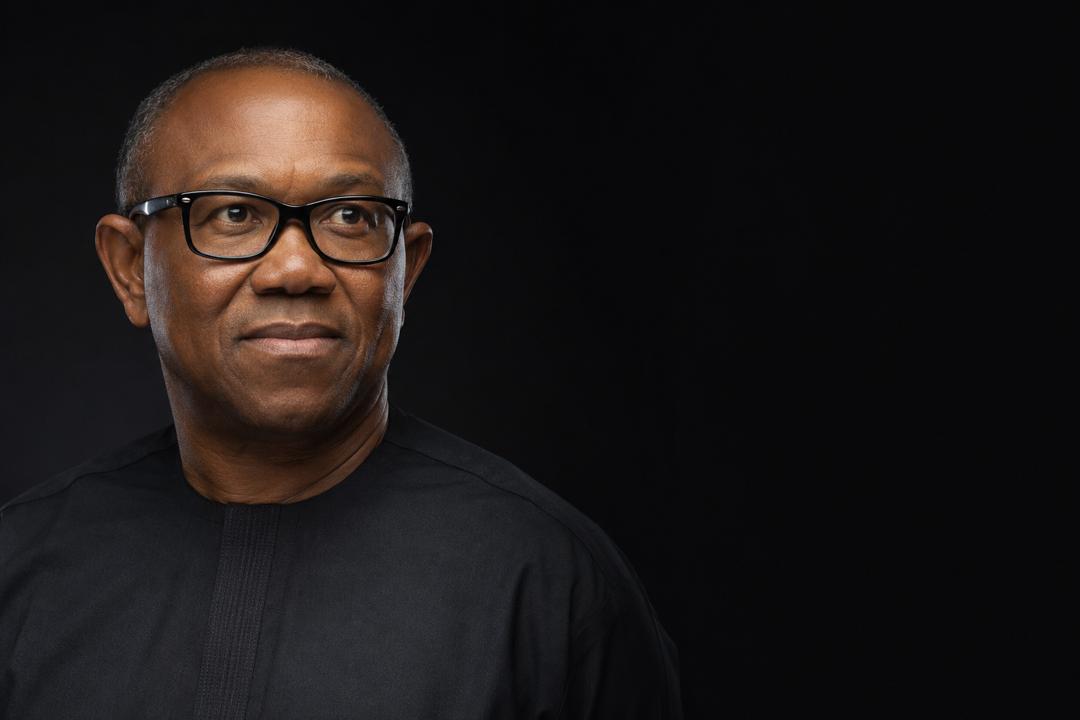
…Renewed Hope group moves to enlist Anyaoku, Ukiwe, Ohanaeze to persuade NDC candidate to step down
By Chike Ofili
Pressure is mounting on Peter Obi in the South-East over his pledge to serve only one term if elected President in 2027, with a pro-Tinubu political group launching a fresh initiative to persuade the Nigeria Democratic Congress (NDC) candidate to withdraw from the race and support President Bola Tinubu for a second term.
The Renewed Hope for Greater Nigeria (RHGN), South-East chapter, said at the weekend that it would approach some of the region’s most respected elder statesmen and the leadership of Ohanaeze Ndigbo to intervene in the increasingly contentious debate over Obi’s presidential ambition and the future political interests of the region.
The group wants former Commonwealth Secretary-General, Chief Emeka Anyaoku; former Chief of General Staff, Commodore Ebitu Ukiwe; and the Ohanaeze Ndigbo leadership under Senator John Azuta Mbata to lead a delegation to Obi and persuade him to reconsider his 2027 bid.
Its proposal comes amid growing debate across the South-East over the reported political understanding between Obi and his running mate, Senator Rabiu Musa Kwankwaso, under which Obi would serve a single four-year term if elected before power returns to the North.
While some political figures have defended Obi’s right to make such a commitment, others argue that the arrangement could leave the South-East with only four years in the presidency after decades of agitation for the country’s highest political office.
RHGN is proposing a different political calculation: that the South-East should back Tinubu in 2027, help him complete the South’s current presidential cycle, and use that support to negotiate a stronger claim to the presidency in 2031.
South-East leader of the group, Mazi Franklin Ngoforo, disclosed the plan in Owerri on Saturday following a regional meeting on strategies to mobilise support for Tinubu across the five South-East states.
Ngoforo said the proposed intervention by Igbo leaders was not intended to diminish Obi’s political standing or question his right to contest, but to persuade him to consider what the group regards as the longer-term strategic interests of Ndigbo.
According to him, Obi should weigh the benefits of contesting in 2027 against the possibility of building a political alliance with the South-West that could strengthen the South-East’s claim to the presidency after Tinubu.
With Tinubu constitutionally barred from seeking another term if re-elected in 2027, RHGN argues that the South-East has an opportunity to negotiate what it described as a reciprocal political compact with the South-West ahead of 2031.
“The issue is bigger than one election and bigger than one individual,” Ngoforo said, arguing that the fundamental question for the region should be how to transform present-day alliances into future political advantage.
The group’s intervention has brought renewed attention to the controversy generated by Obi’s one-term pledge, which has become a major talking point among political leaders and organisations in the South-East.
Kwankwaso has said Obi agreed to serve only four years before power would return to the North, an arrangement supporters of the NDC ticket see as a mechanism for reassuring the North and preserving the principle of power rotation.
But several Igbo political figures have challenged the premise of the arrangement, arguing that Obi has no mandate to surrender a constitutionally permissible second term on behalf of the South-East.
Founding National Chairman of the All Progressives Grand Alliance (APGA), Chief Chekwas Okorie, has repeatedly maintained that any one-term commitment by Obi is personal to him and cannot bind Ndigbo.
“Peter Obi did not sign the agreement for the Igbo; he signed for himself,” Okorie said.
According to him, even if an Obi-led NDC government were to return its presidential ticket to the North after four years, that would remain an internal decision of the party and could not prevent another South-Easterner from seeking the presidency on a different platform.
Former Minister of Labour and Employment, Senator Chris Ngige, has similarly described the arrangement as an NDC affair, distancing the wider South-East from it.
Former Managing Director of the National Inland Waterways Authority, Dr George Moghalu, said the controversy reflected competing interpretations of the region’s political interests.
While some see a one-term Obi presidency as a practical route to breaking the South-East’s long absence from the presidency, others believe accepting four years would deny the region the opportunity to enjoy the maximum eight years available to presidents from other zones.
Prominent businessman and Igbo leader, Chief Modestus Umenzekwe, has been particularly emphatic in rejecting a shortened presidency for the region.
“As a proud Igbo man, why should we stay for four years instead of eight years like others? It is not in favour of the Igbo,” he said.
The Coalition of South-East Youth Leaders (COSEYL) has also warned that no individual politician should negotiate political arrangements in the name of the entire Igbo nation without broad consultation.
Its President-General, Comrade Goodluck Ibem, said personal political commitments should not be presented as the collective position of the South-East.
However, the argument is by no means one-sided.
Former National Vice Chairman of Ohanaeze Ndigbo in the South-East, Ichie Damian Okeke-Ogene, has maintained that agreements freely entered into by political actors should be respected. He argued that if Obi indeed made the commitment, he should honour it if elected.
Ogbako Ndigbo Worldwide has also said the arrangement should be treated primarily as an agreement among political actors, noting that some Igbo people would accept a single term if that were the realistic route for the South-East to finally produce an elected President.
But pro-Tinubu politicians in the region have seized on the controversy to make a broader case against Obi’s 2027 candidacy.
South-East Leader of the Tinubu Support Organisation (TSO), Dr George Agbakahi, had earlier described the one-term pledge as a “half-measure” that undermines the South-East’s longstanding aspiration for the presidency.
Agbakahi argued that after more than six decades of waiting, the region should not settle for what he described as a “symbolic and abbreviated stint” in power.
He recalled that the only Igbo leader to occupy Nigeria’s highest office since independence was Major-General Johnson Aguiyi-Ironsi, whose military government lasted barely six months in 1966.
According to him, accepting another deliberately shortened tenure would raise the question of why a major geopolitical bloc should voluntarily settle for less time in office than others.
He also questioned how the Obi-Kwankwaso pact could be enforced, noting that the Constitution permits an elected President to seek a second term and that private political agreements cannot override that right.
The same argument was advanced this month by Imo State APC chieftain and Convener/National Secretary of the Igbo People’s Action Congress, Hon. Dennis Adikwuru, who questioned both the practicality and enforceability of the proposed arrangement.
Adikwuru said there was no constitutional mechanism capable of compelling Obi to leave office after four years should he win in 2027 and subsequently decide to seek re-election.
He also questioned whether Obi entered into the arrangement strictly for himself or purportedly on behalf of the South-East.
“On whose behalf was the agreement signed? Who are the witnesses to the agreement?” Adikwuru asked, arguing that the purported pact could not automatically be presented as serving the interests of Ndigbo.
For RHGN, however, the debate goes beyond whether Obi would keep a one-term promise.
The group believes the political arithmetic of 2027 itself requires a reassessment by the South-East, arguing that a fragmented opposition could ultimately favour Tinubu and leave the region outside the winning national coalition.
It contends that rather than invest its political capital in an uncertain presidential contest and voluntarily restrict any possible Obi presidency to four years, the South-East should negotiate from a longer-term perspective.
The group also points to what it describes as signs of growing federal attention to the region under Tinubu, including the appointment of former Ebonyi State governor, Senator Dave Umahi, as Minister of Works and ongoing federal road projects across the zone.
Ngoforo said these developments should form part of the considerations as South-East political leaders determine where the region’s interests are best served in 2027 and beyond.
The RHGN proposal is, however, already facing resistance.
Pro-Obi and Igbo presidency advocates reject the argument that the South-East should abandon another opportunity to seek the presidency in exchange for a future political understanding whose fulfilment cannot itself be guaranteed.
The Igbo Heroes and Icons Foundation (IHIF), for instance, has rejected calls for Obi to withdraw, insisting that he has a democratic right to contest and countering that it is Tinubu who should step aside for the South-East.
Political observers say the competing positions have crystallised the strategic choice confronting the South-East ahead of 2027: whether to rally behind Obi’s one-term presidential project and pursue an immediate shot at the presidency, or support Tinubu’s final constitutional term and seek to build a broader inter-regional alliance for an Igbo presidential bid in 2031.
Analysts also believe RHGN’s decision to seek the intervention of Anyaoku, Ukiwe and Ohanaeze could significantly widen the conversation, turning what began as a controversy over Obi’s four-year pledge into a larger debate over the South-East’s political strategy, its alliances with other geopolitical zones and its route to the Nigerian presidency.
Discover more from Keeping Them Honest
Subscribe to get the latest posts sent to your email.